654 indexed papers · 430 research notes

Research archive

Reset
Figure 1 from Introducing Aurora: A New Black Hole Seeding Model With Explicit Environmental Coupling

2026-11-03 · 2611.01315v1 · Research note

Introducing Aurora: A New Black Hole Seeding Model With Explicit Environmental Coupling

Harry George Chittenden, Darren Croton, Karl Glazebrook, et al.

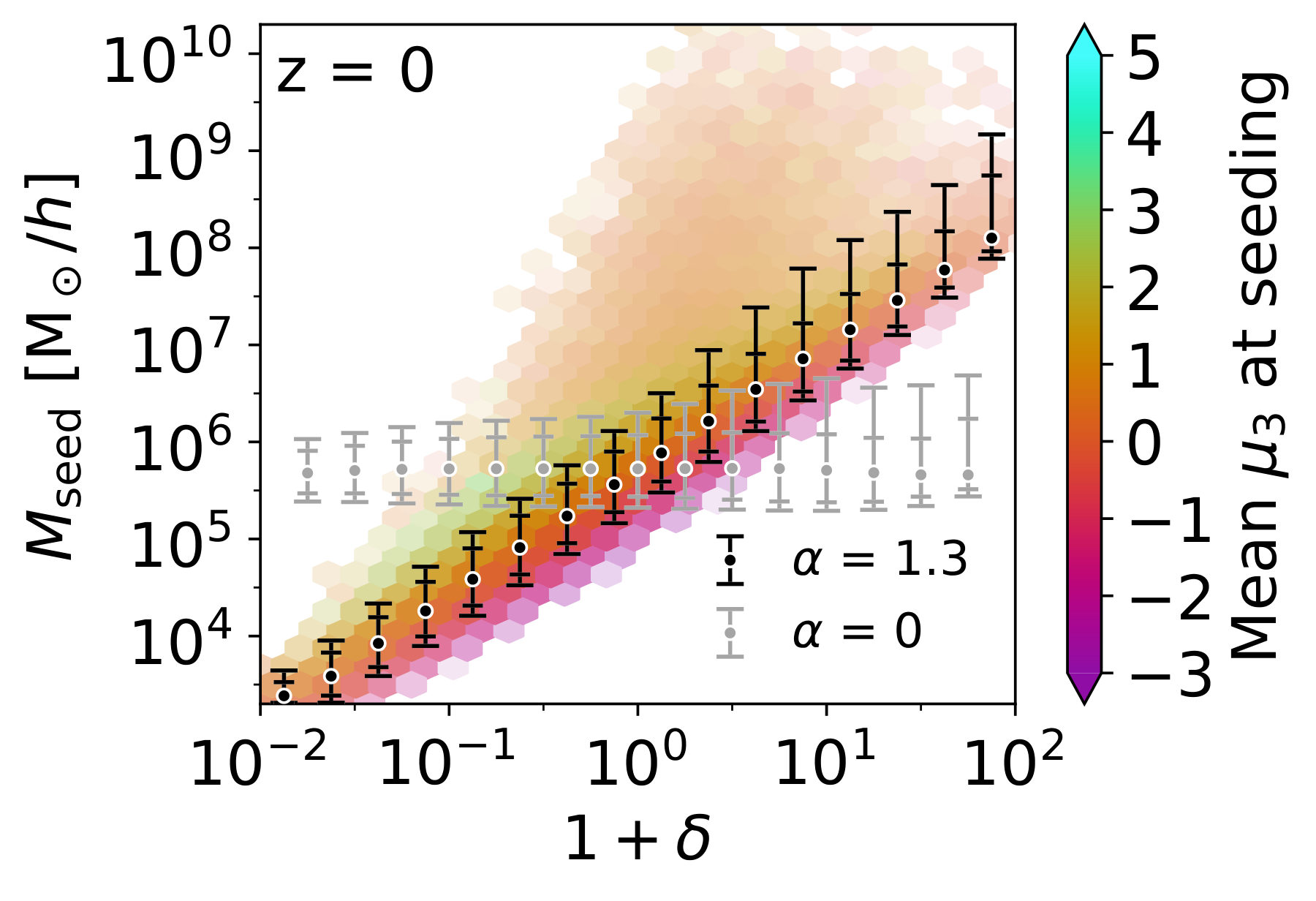
Aurora assigns black-hole seed masses continuously from halo overdensity, radial skewness, and seeding mass. In Millennium/Sage merger trees, this produces an environment-linked minority of seed-dominated massive centrals and enhances predicted quiescence in dense massive haloes near z≈3.1.

Figure 2 from Little Red Dots as a Transient Phase of Self-Interacting Dark Matter Assisted Black Hole Growth

2026-09-18 · 2609.20021v1 · Research note

Little Red Dots as a Transient Phase of Self-Interacting Dark Matter Assisted Black Hole Growth

Yu Rong, Shuang-Nan Zhang, Jian-Min Wang, et al.

This theory paper proposes that gas inflow compresses self-interacting dark matter (SIDM) around a pre-existing black hole while an optically thick nuclear disk obscures and reprocesses its emission. It reproduces two representative LRD continua, but does not establish SIDM observationally.

2026-09-10 · 2609.09265v1 · Research note

A Spectral Framework for Testing the Quasi-Star Hypothesis in Little Red Dots I: Weighing LRDs by Their Super-Eddington Luminosity Ratios---No Signs of Overmassive Black Holes

Olivia Curtis, Nikko J. Cleri, Jakob M. Helton, et al.

Photospheric fits to 4 absorption-feature LRDs and 82 archival objects yield predominantly super-Eddington ratios. Coupled quasi-star envelope models place black-hole mass caps below local BH–host expectations, but the inference remains model- and host-prior-dependent.

Figure 1 from Small-Scale Clustering of Primordial Black Holes: The Little Red Dot Mass Function and the High-Redshift Galaxy Tension

2026-09-09 · 2609.09078v1 · Research note

Small-Scale Clustering of Primordial Black Holes: The Little Red Dot Mass Function and the High-Redshift Galaxy Tension

Borui Zhang, Wei-Xiang Feng, Haipeng An

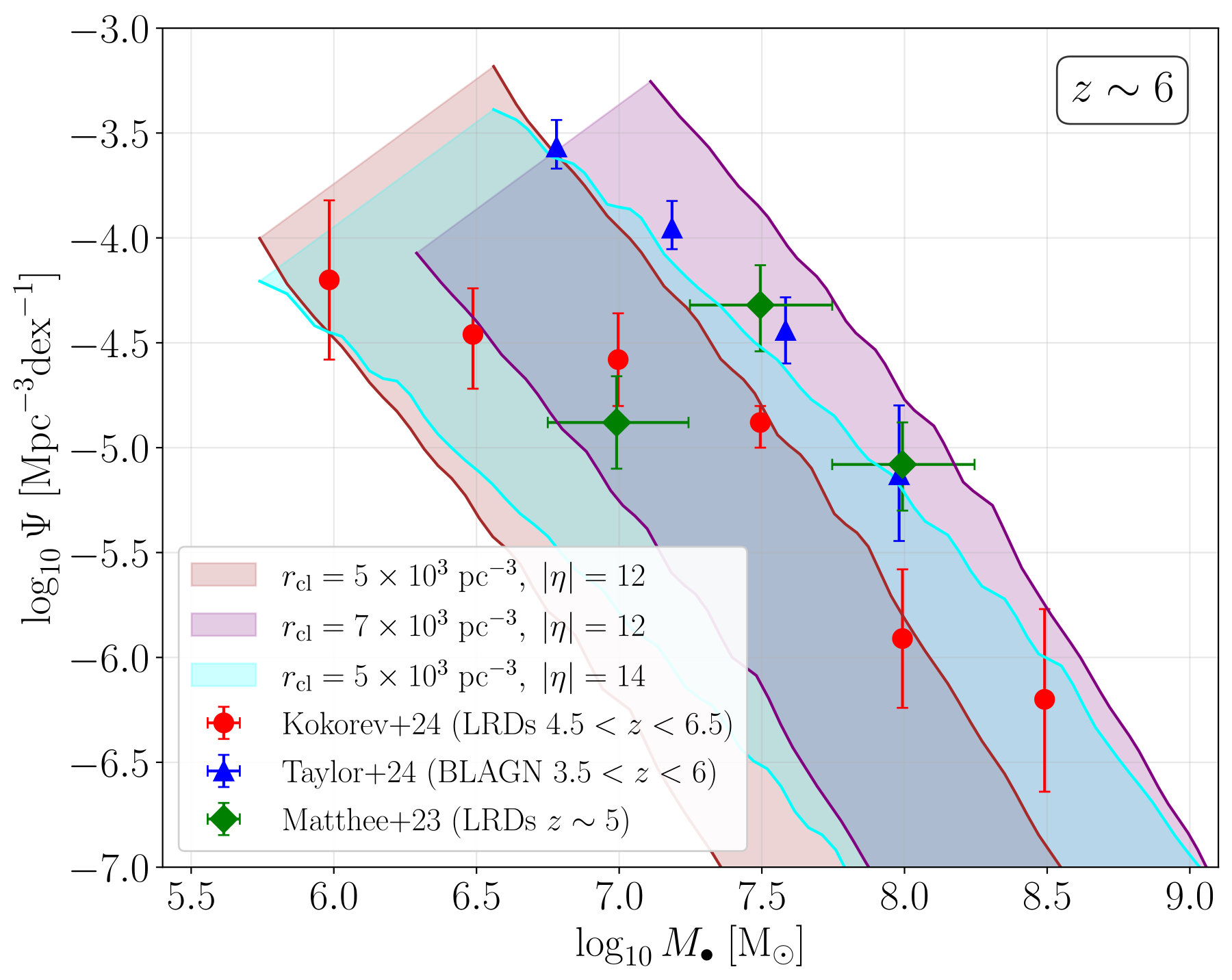
This analytic PBH-cluster framework claims that runaway mergers can reproduce the LRD SMBH mass function with a 1–10% accretion duty cycle while linking overmassive, compact hosts to seed-driven halo evolution; key gas dynamics remain unmodeled.

Figure 3 from Between Little Red Dots and Star-Forming Galaxies: A Sequence in the Optical Continuum Slope

2026-09-08 · 2609.07025v1 · Research note

Between Little Red Dots and Star-Forming Galaxies: A Sequence in the Optical Continuum Slope

Kristiphong Boonmee, Akio K. Inoue, Masafusa Onoue, et al.

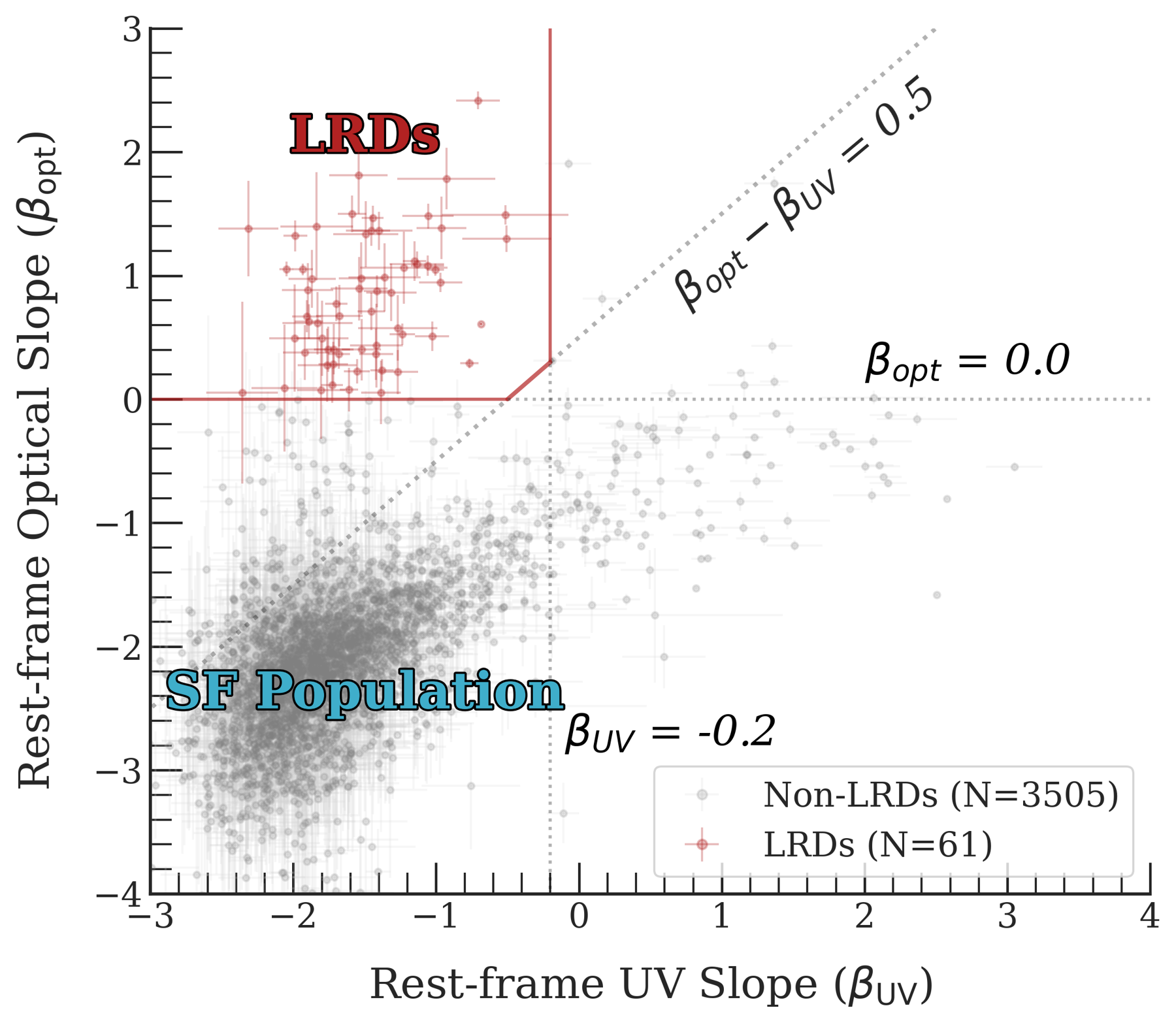
In 3,566 JWST/NIRSpec galaxies at z=3.0–8.1, UV–optical continuum slopes reveal a continuously populated path from star-forming galaxies to LRDs. The authors interpret it as changing host/BH* continuum contributions, while stressing model-dependent mass-ratio limits.

Figure 2 from Weighing Little Red Dots with Transient Events

2026-09-02 · 2609.00113v1 · Research note

Weighing Little Red Dots with Transient Events

Vinh Tran, Xuejian Shen, Oliver Zier, et al.

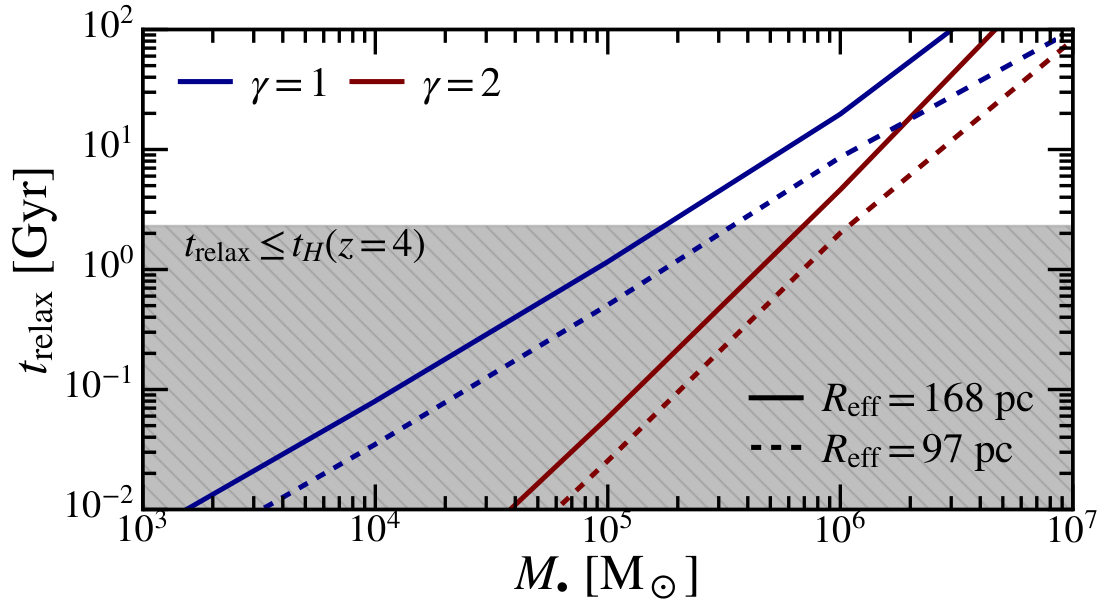
This modelling study proposes tidal-disruption and quasi-periodic-eruption event rates as population-level probes of LRD black-hole masses. Its predictions depend strongly on assumed stellar cusps, black-hole–stellar-mass relations, and the possibility that most LRDs are obscured.

2026-08-25 · 2608.23498v1 · Research note

The Road to Normalcy: Environment-Driven Evolutionary Pathways for Primordial Black Holes

Saiyang Zhang, Junehyoung Jeon, Boyuan Liu, et al.

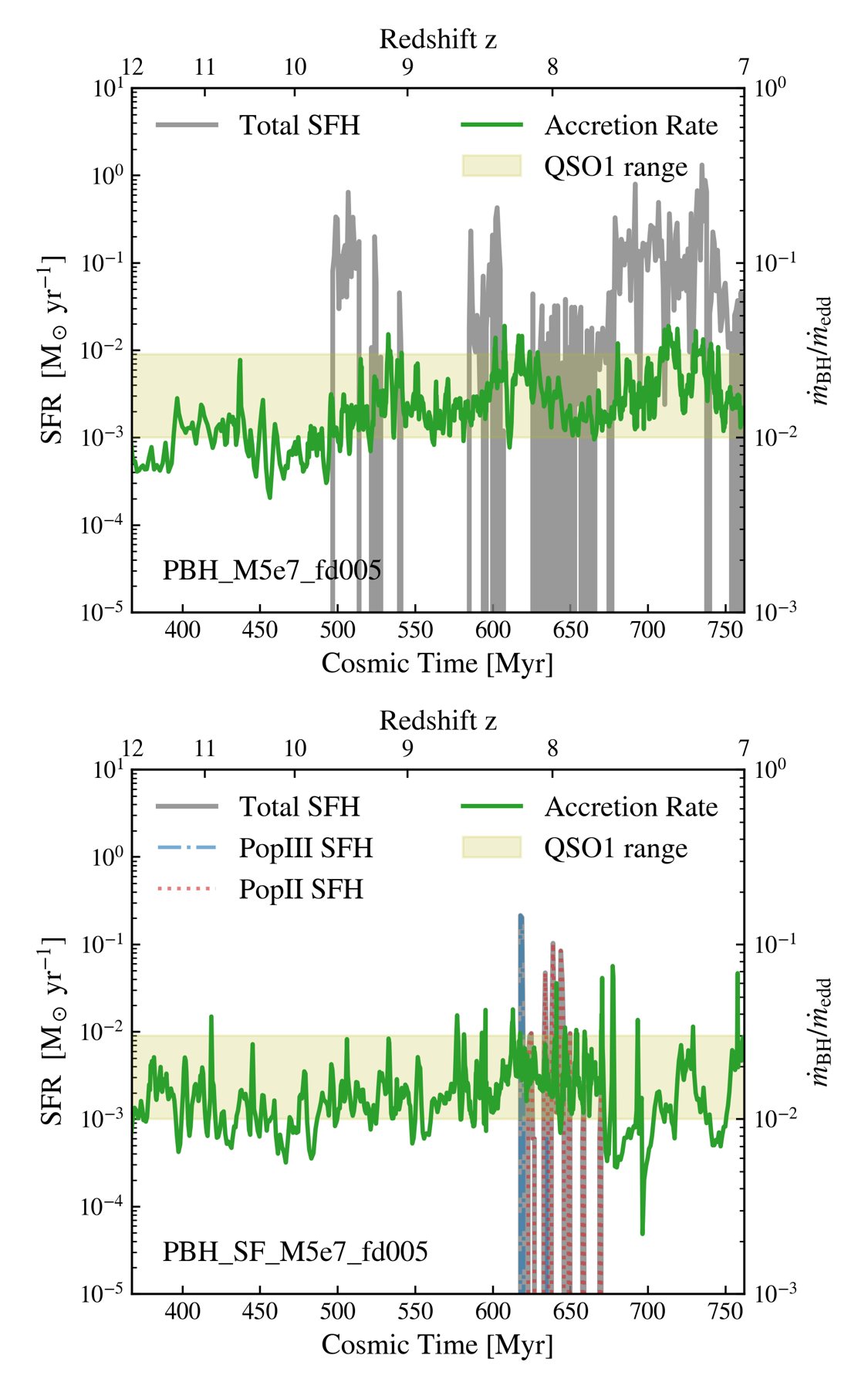
Cosmological hydrodynamical simulations suggest PBH-seeded hosts can briefly be compact and BH dominated, then become more conventional galaxy–AGN systems when overdense environments accelerate stellar assembly. The result is pathway-dependent rather than a unique prediction for Little Red Dots.

Figure 2 from How to raise a supermassive black hole: interpreting early JWST AGN with the AESOPICA simulations

2026-07-30 · 2607.26177v1 · Research note

How to raise a supermassive black hole: interpreting early JWST AGN with the AESOPICA simulations

Sophie Koudmani, Jan Scholtz, Anthony J. Taylor, et al.

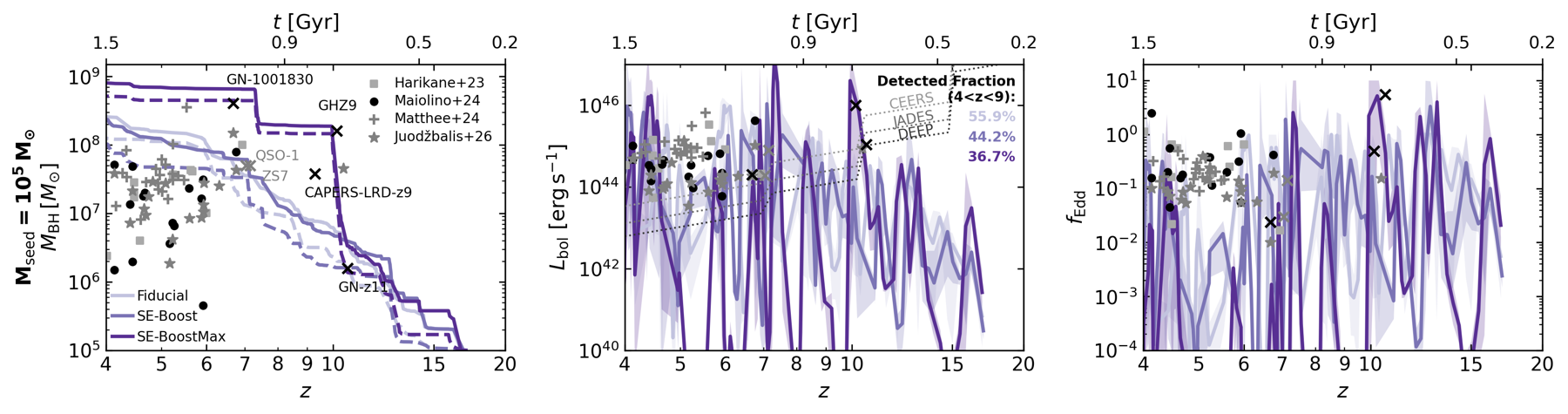
AESOPICA forward-models JWST broad-line selection in 12 cosmological simulations, finding that selection can yield apparently overmassive AGN from several seed scenarios; very light seeds nevertheless require unusually efficient, intermittently super-Eddington growth in the explored models.

Figure 1 from Little Red Dots as Intermediate Mass, Super-Eddington Engines: Insights from Type IIn Supernovae and The 1837-1856 Great Eruption of $η$ Carinae

2026-07-01 · 2606.30711v1 · Research note

Little Red Dots as Intermediate Mass, Super-Eddington Engines: Insights from Type IIn Supernovae and The 1837-1856 Great Eruption of $η$ Carinae

Rohan P. Naidu, Jorryt Matthee, Anna de Graaff, et al.

The authors propose that Little Red Dots are dense-wind, super-Eddington engines analogous to Type IIn supernova interaction phases, rather than virial broad-line AGN. Their escape-velocity interpretation gives a typical-engine upper limit below 10^5 solar masses.

Figure 4 from A Rapid Evolution in the Observed Mbh/M* Relation at z > 3 Revealed via Spectro-photometric SED-Modeling

2026-06-01 · 2605.30414v1 · Research note

A Rapid Evolution in the Observed Mbh/M* Relation at z > 3 Revealed via Spectro-photometric SED-Modeling

Ansh R. Gupta, Anthony Taylor, Emma Curtis-Lake, et al.

Using AGN-aware fits to JWST spectra, the authors report that non-LRD broad-line AGN shift from elevated observed M_BH/M* above z≈4.5 to the local relation by z≈3.5; LRD host-mass inferences remain substantially less secure.

Figure 4 from Testing the BH$^*$ Model: a UV-to-Optical Spectral Fitting of The Cliff

2026-05-08 · 2605.07976v1 · Research note

Testing the BH$^*$ Model: a UV-to-Optical Spectral Fitting of The Cliff

Rosa M. Mérida, Marcin Sawicki, Gaia Gaspar, et al.

UV-to-optical fitting of one z=3.55 little red dot, The Cliff, admits a BH* envelope plus low-mass, dusty, metal-poor host. The result depends materially on Balmer-absorption and dust prescriptions, while AGN UV leakage remains unconstrained.

2026-05-01 · 2605.00763v1 · Research note

Life After the Quasar: Overmassive Black Holes and Remnant Ionised Bubbles in and Around Two z~6.6 Galaxies

Romain A. Meyer, Pascal A. Oesch, Callum Witten, et al.

JWST/NIRSpec spectra of two z~6.6 ultra-luminous Lyα emitters reveal broad Balmer-line black-hole masses near 2×10^8 M⊙ and double-peaked Lyα, which the authors interpret as brief post-quasar phases inside relic ionised bubbles.

2026-04-22 · 2604.20966v1

Light, heavy, primordial: exploring the diversity of black hole seeding and growth mechanisms in the JWST era

Pratika Dayal

Dayal cross-compares astrophysical light (~100 M⊙) and heavy (~10^3–10^5 M⊙) seeds (via DELPHI) with cosmological primordial black holes (10^{0.5–6} M⊙; PHANES) against z≈5–10 observables. The only scenario the data rule out is Eddington-limited accretion onto light seeds; high black hole–to–stellar mass ratios (Mbh/M*≈0.3–1) are achievable with PBHs or heavy seeds under super-Eddington growth. Crucially, only PBHs and Eddington-limited heavy seeds can simultaneously recover the observed Mbh, M*, and extremely low host metallicities (Z≤0.01 Z⊙) at z≈7–10. PBHs also predict a distinctive decline of Mbh/M* with increasing halo mass and occupancy of 10^9–10^11 M⊙ halos, motivating a clustering-based test selecting z≈7 systems with Mbh/M*>0.1 and Lbol≈10^{44–46} erg s⁻¹.

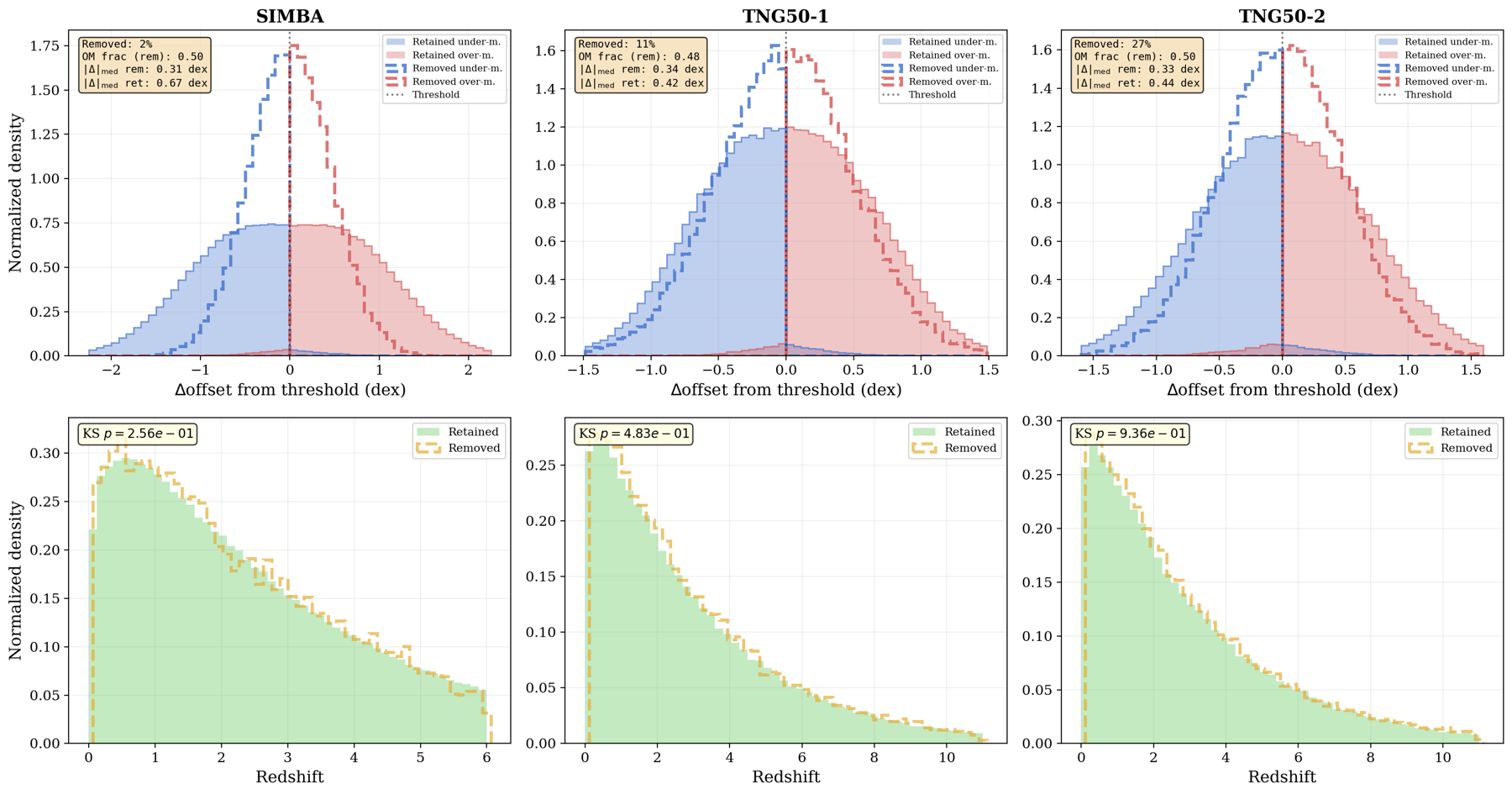
Figure 1 from Classifying Supermassive Black Hole Growth Regimes to Observables Across Cosmological Simulations with Forecasts for LSST

2026-04-16 · 2604.16539v1 · Research note

Classifying Supermassive Black Hole Growth Regimes to Observables Across Cosmological Simulations with Forecasts for LSST

Hitaishi Chillara

Forward-modelled LSST photometry from cosmological simulations can classify simulated black holes as over- or under-massive relative to their host relation at 91–94% accuracy, but transfer and forward-model assumptions remain material obstacles to applying this result to survey galaxies.

2026-04-10 · 2604.09177v1 · Research note

The Cliff: A Metal-Poor Little Red Dot Hosting an Overmassive Black Hole at $z = 3.55$

Lucy R. Ivey, Francesco D'Eugenio, Roberto Maiolino, et al.

JWST/NIRSpec-IFU spectroscopy of the single z=3.55 Little Red Dot The Cliff yields a very low narrow-line metallicity, Z=0.017±0.004 Z⊙, while broad Hβ-based virial estimates place its black hole above local host-scaling expectations.

2026-03-30 · 2603.28682v1

How Overmassive Black Holes Formed at Cosmic Dawn

Muhammad A. Latif, Daniel J. Whalen, Sadegh Khochfar, et al.

This paper asks whether the newly discussed overmassive black hole galaxies at cosmic dawn can arise naturally from early direct-collapse black-hole formation rather than from a more exotic late-time assembly path. The main result is that a 70,000-solar-mass DCBH formed at very high redshift can grow into a system with the black-hole-to-stellar-mass ratio, metallicity, star-formation rate, and broad spectral properties seen in objects like UHZ1 and GHZ9 by z around 10. The paper matters because it offers a concrete physical channel for the broader JWST overmassive-black-hole population that sits adjacent to the little-red-dot and early-AGN discussion.

2026-03-23 · 2603.22425v1 · Research note

A large population of over-massive black hole quasars at z=0.3-0.8 revealed by eROSITA

Johannes Buchner, Isabelle Gauger, Qiaoya Wu, et al.

In a 140 deg² eROSITA field, the authors identify eight z=0.3–0.8/1 quasars with inferred M•/M⋆>5%. Their abundance supports recurrent black-hole/host offsets among rapidly accreting AGN, but single-epoch masses and often upper-limited host masses temper the conclusion.

2026-03-18 · 2603.17967v1 · Research note

JWST Reveals Two Overmassive Black Hole Candidates in Dwarf Galaxies at z $\approx$ 0.7: Pushing Black Hole Searches into the Dwarf-Galaxy Regime

E. Iani, P. Rinaldi, A. Torralba, et al.

Two z≈0.7 compact dwarfs combine blue, burst-dominated UV–optical emission with a MIRI hot-dust excess. SED-inferred AGN luminosities imply candidate black holes disproportionately massive for ≈10^7 M⊙ hosts, but masses depend strongly on the assumed Eddington ratio.

Figure 4 from Merger-driven buildup of the $M_{\rm BH}$ - $M_*$ relation bridging high-$z$ overmassive black holes with the local relation

2026-03-12 · 2603.11747v1 · Research note

Merger-driven buildup of the $M_{\rm BH}$ - $M_*$ relation bridging high-$z$ overmassive black holes with the local relation

Takumi S. Tanaka, John D. Silverman, Kazuhiro Shimasaku, et al.

Monte Carlo merger evolution can reduce an assumed 0.8–1.0 dex scatter in the z~6 black-hole–stellar-mass relation to the ~0.3 dex local scatter, but the result depends strongly on merger mass ratios and rates; major mergers alone are insufficient.

Figure 4 from You can't see me: super-Eddington growth hindering X-ray detection in high-z broad-line AGNs

2026-02-25 · 2602.22305v1 · Research note

You can't see me: super-Eddington growth hindering X-ray detection in high-z broad-line AGNs

Alessandro Trinca, Alessandro Lupi, Francesco Haardt, et al.

Joint modelling of broad lines and Chandra non-detections for 14 JWST high-redshift broad-line AGNs favors low-mass, highly super-Eddington black holes with over-cooled coronæ over massive, weakly accreting alternatives, but the inference remains model-dependent and bimodal.

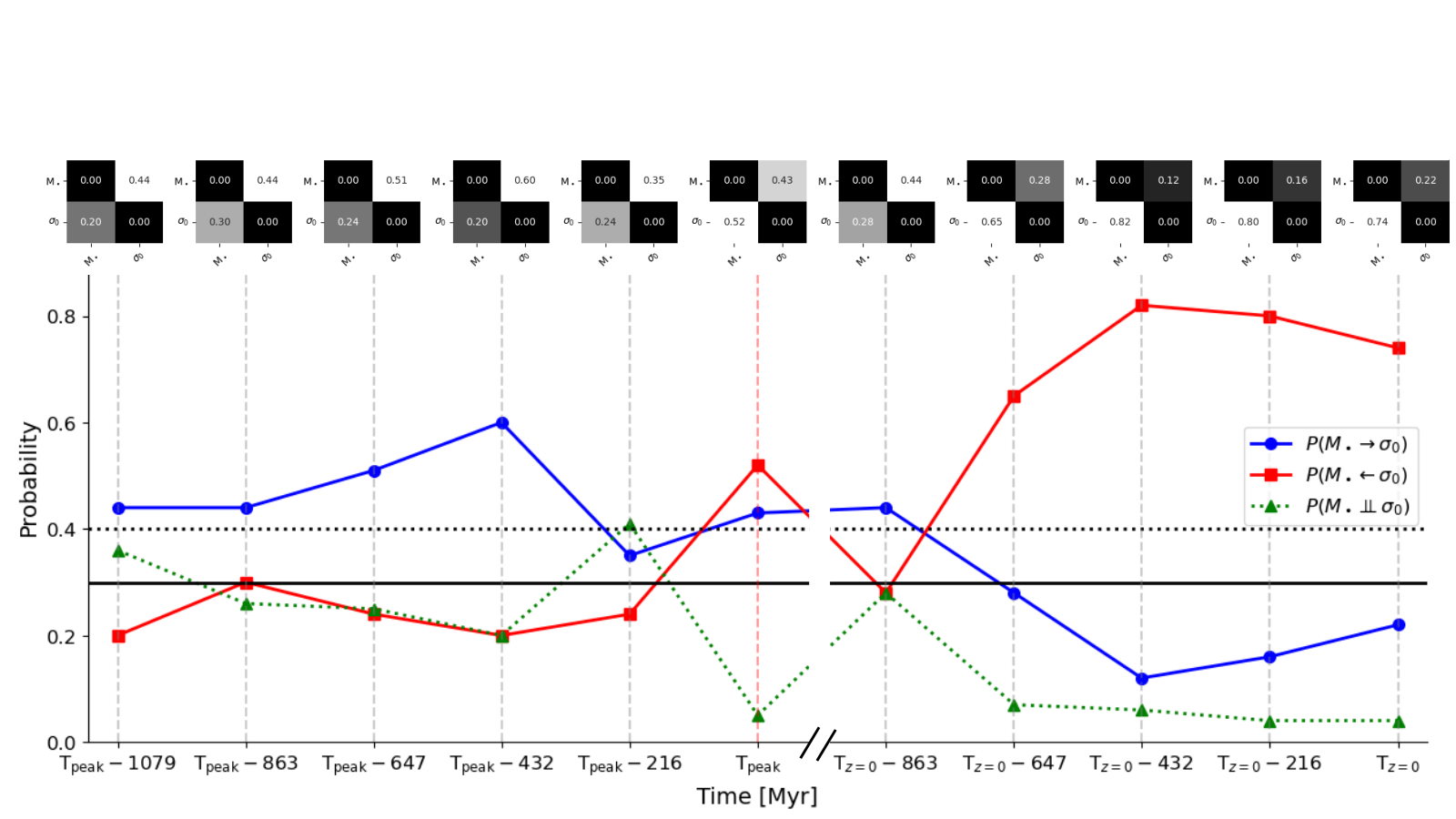
Figure 5 from Causal Reversal in the $M_\unicode{x25CF}\unicode{x2013}σ_0$ Relation: Implications for High-Redshift Supermassive Black Hole Mass Estimates

2026-02-18 · 2602.16775v1 · Research note

Causal Reversal in the $M_\unicode{x25CF}\unicode{x2013}σ_0$ Relation: Implications for High-Redshift Supermassive Black Hole Mass Estimates

Benjamin L. Davis, Saakshi More, Zehao Jin, et al.

NIHAO simulations suggest that the inferred causal direction of the black-hole mass–velocity-dispersion relation changes across star-forming and quenched phases. Applying a star-forming calibration to 13 z=4.1–10.6 systems lowers their estimated black-hole masses by a median 1.93±0.51 dex.

2026-02-17 · 2602.15952v1

Gas Accretion versus BH Merger driven Growth Modes of Supermassive Black Holes and Implications for the Little Red Dots

Paramita Barai

Cosmological hydrodynamical boxes (50 Mpc)^3 are used to separate merger- from gas-accretion–driven SMBH growth and test feedback choices against SMBH–host coevolution. Seeded at 10^5 Msun, black holes first build up via BH–BH mergers to ~10^7 Msun; only after 7–9 Gyr does accretion reach Eddington, triggering 600–700 Myr bursts that amplify masses by 10^2–10^3 to 10^9–10^10 Msun. AGN-feedback-driven central gas depletion then curtails growth, keeping SMBHs below 10^10 Msun by z=0 and moving systems upward toward the M_BH–M_star relation from below. Implication for JWST little red dots: normal-mass objects are consistent with merger-dominated histories, while overmassive systems require Eddington or super-Eddington accretion episodes.

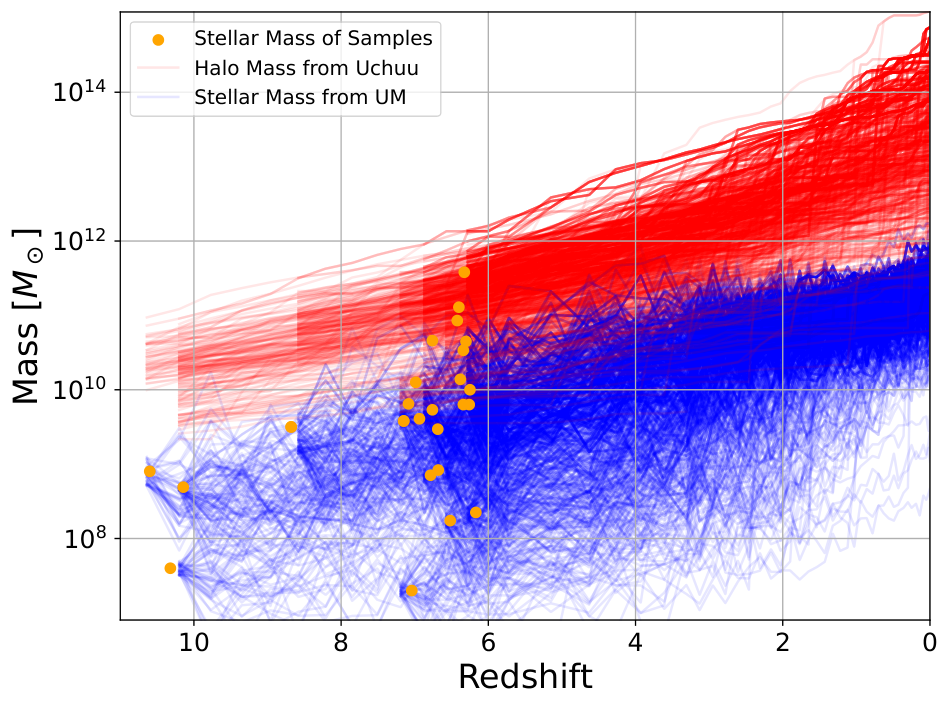
Figure 2 from Back to Normal Again: Possible Destinies of JWST overmassive SMBHs and "Little Red Dots" in the View of Shin-Uchuu Simulation

2026-02-16 · 2602.14496v1 · Research note

Back to Normal Again: Possible Destinies of JWST overmassive SMBHs and "Little Red Dots" in the View of Shin-Uchuu Simulation

Haojie Hu, Hiroto Yanagisawa, Moka Nishigaki, et al.

Using halo merger histories plus empirical prescriptions, the authors project 26 z>6 JWST overmassive SMBHs/LRDs toward lower BH-to-stellar mass ratios by z=0. This is a model-dependent extrapolation, not evidence that individual observed systems will converge.

2026-01-30 · 2601.23250v1 · Research note

Too many or too massive? Investigating the high-$z$ demography of active SMBHs from JWST

Daniel Roberts, Francesco Shankar, Vieri Cammelli, et al.

A data-driven demographic consistency test finds that the abundant faint JWST AGN at z≈5.5 can be explained by moderately elevated black-hole–stellar-mass scaling relations and ∼50% duty cycles, without requiring the most extreme inferred black-hole masses.

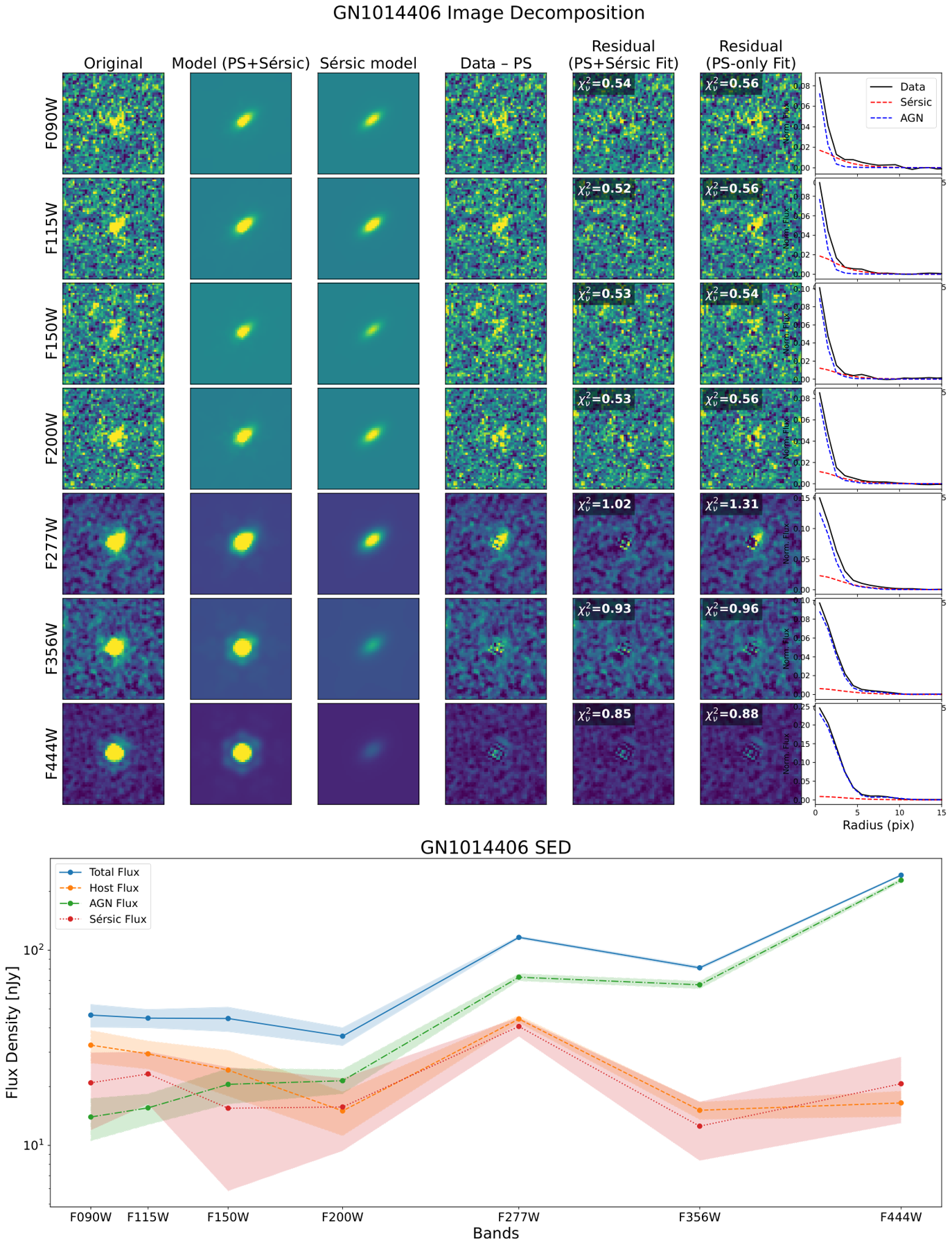
Figure 2 from Undermassive Hosts of $z = 4-6 $ AGN from JWST/NIRCam Image Decomposition with CONGRESS, FRESCO, and JADES

2026-01-22 · 2601.15962v1 · Research note

Undermassive Hosts of $z = 4-6 $ AGN from JWST/NIRCam Image Decomposition with CONGRESS, FRESCO, and JADES

Zheng Ma, Eichi Egami, Yongda Zhu, et al.

JWST/NIRCam decomposition detects extended host emission in 9 of 17 broad-Hα AGN at z≈4–6. Separating point-source light can reduce inferred host masses by 1–2 dex, yielding high BH-to-stellar mass ratios, although unresolved compact hosts remain a viable alternative.

2026-01-20 · 2601.14368v1 · Research note

The Little Red Dots Are Direct Collapse Black Holes

Fabio Pacucci, Andrea Ferrara, Dale D. Kocevski

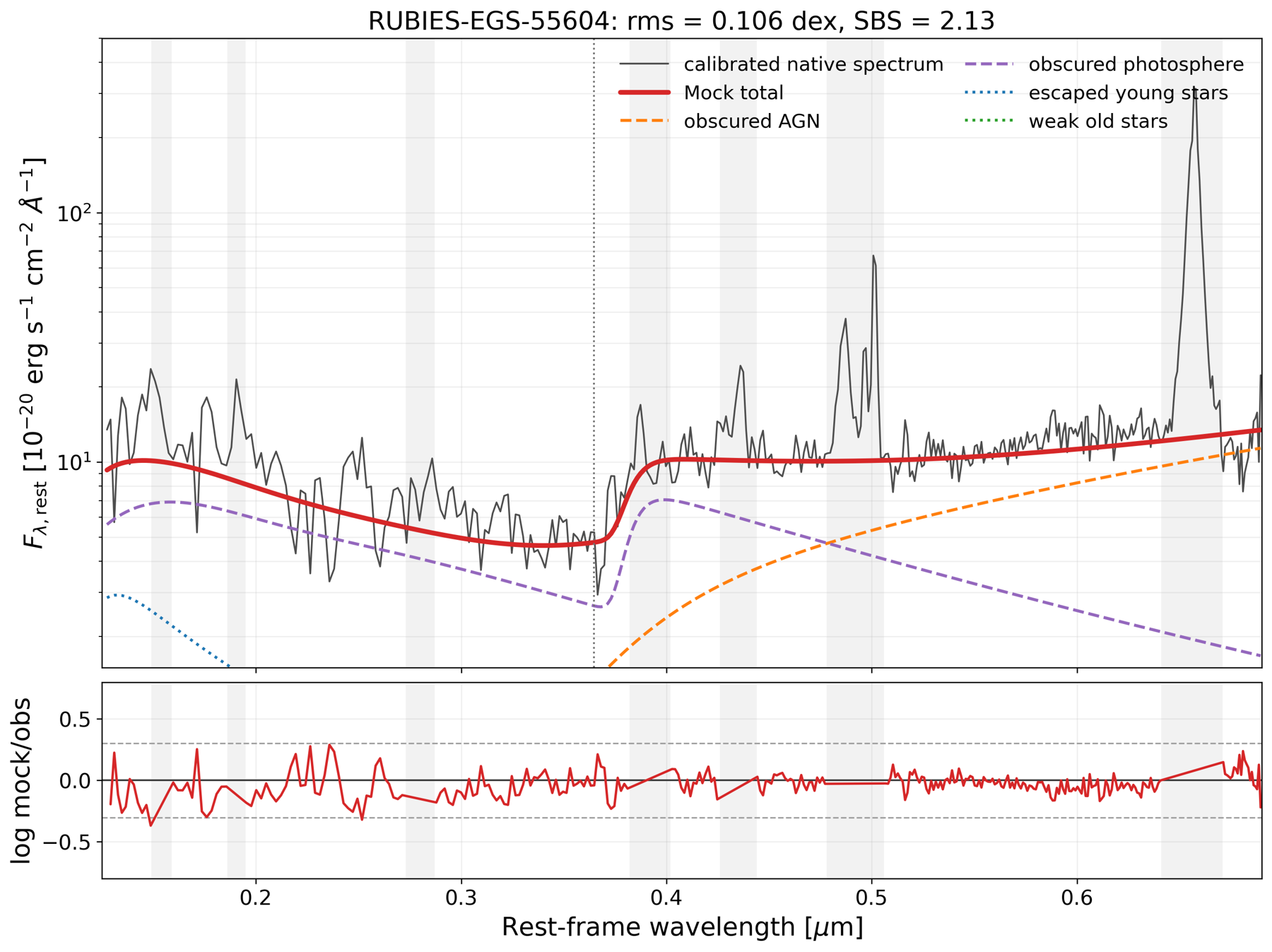
A radiation-hydrodynamic direct-collapse black-hole model can fit one prototypical Little Red Dot spectrum with low residuals while producing Compton-thick obscuration. The result is a model-based explanation, not yet a population-level demonstration that all LRDs are DCBHs.

2026-01-13 · 2601.08936v1 · Research note

A possible pathway to UHZ1-type systems at z~10 by heterogeneous mass primordial black holes as dark matter

Alexander Kashlinsky, Fernando Atrio-Barandela, Diego Martín-González

This analytic PBH-dark-matter scenario argues that PBH shot noise advances low-mass halo collapse and dynamical friction concentrates massive PBHs, potentially assembling UHZ1-like central black-hole masses by z≈10 without super-Eddington gas accretion; viability remains parameter-dependent.

2026-01-08 · 2601.04955v1 · Research note

Rapid emergence of overmassive black holes in the early Universe

Sunmyon Chon, Shingo Hirano, Tomoaki Ishiyama, et al.

A cosmological radiation-hydrodynamic zoom simulation produces two unusually massive heavy seeds in an overdense, strongly irradiated environment; their growth and transient obscuring disks offer a proposed route to overmassive high-redshift black holes and an LRD-like phase.

2026-01-06 · 2601.03338v1 · Research note

Fast rotations in galaxies at cosmic noon indicate central concentration of stars, dark matter or massive black holes

Fernanda Roman-Oliveira, Francesca Rizzo, Filippo Fraternali

Resolved ALMA gas kinematics and JWST stellar light in three ALPAKA discs reveal inner circular speeds exceeding fiducial mass-model predictions. The authors infer missing central mass, plausibly involving bulges, massive black holes, or non-standard inner halo concentrations.

Figure 4 from From ASTRID to BRAHMA -- The role of overmassive black holes in little red dots in cosmological simulations

2025-12-15 · 2512.13957v1 · Research note

From ASTRID to BRAHMA -- The role of overmassive black holes in little red dots in cosmological simulations

Patrick LaChance, Aklant Kumar Bhowmick, Rupert A. C. Croft, et al.

BRAHMA mock observations suggest that overmassive, dense-gas-enshrouded AGN can yield AGN-dominated LRD colors and an LRD density of (2.04 ± 0.32) × 10^-4 Mpc^-3 at z=5–8; this is a model-dependent explanation, not a direct detection of the proposed environments.

2025-11-10 · 2511.07578v1 · Research note

From Feedback-Free Star Clusters to Little Red Dots via Compaction

Avishai Dekel, Dhruba Dutta Chowdhury, Sharon Lapiner, et al.

This paper proposes that feedback-free cluster formation, dry cluster migration, and later wet compaction can jointly make compact, black-hole-hosting LRDs at z=4–8. The central prediction remains a partly untested synthesis because no simulation yet follows all processes together.

2025-10-16 · 2510.14779v1 · Research note

The dark side of early galaxies: $\texttt{geko}$ uncovers dark-matter fractions at $z\sim4-6$

A. Lola Danhaive, Sandro Tacchella, Andrew J. Bunker, et al.

Forward modelling of JWST grism Hα morpho-kinematics for 163 z≈4–6 galaxies yields predominantly gas-rich, dark-matter-dominated inner regions. The inferred fractions decline with stellar mass, while the nascent stellar Tully–Fisher relation has substantial scatter.

Figure 3 from The $M_{\rm BH}-M_{*}$ Relationship at $3<z<7$: Big Black Holes in Little Red Dots

2025-10-08 · 2510.07376v1 · Research note

The $M_{\rm BH}-M_{*}$ Relationship at $3<z<7$: Big Black Holes in Little Red Dots

Brenda L. Jones, Dale D. Kocevski, Fabio Pacucci, et al.

For 70 JWST broad-line AGN at 3<z<7, the authors infer black holes overmassive relative to local broad-line AGN, with the offset and BH-to-stellar-mass ratio increasing toward high redshift; LRD-rich sample composition contributes substantially.

2025-10-07 · 2510.06325v1

Preferential Accretion onto the Secondary Black Hole Strengthens Gravitational Wave Signals

Julia M. Comerford, Joseph Simon

ApJ-accepted, this paper delivers the first observationally anchored test of how preferential accretion onto the secondary SMBH reshapes binary demographics and gravitational-wave output. Using SDSS close-pair merger rates and empirical SMBH scaling inputs, the authors show that modest differential growth raises mass ratios, converting many minor galaxy mergers into major SMBH mergers and boosting the major-merger fraction by a factor of 2–3. Only ~10% total SMBH mass growth onto the secondary brings the predicted nanohertz gravitational-wave background into agreement with PTA measurements and accelerates the first continuous-wave binary detection. The effect is even stronger for LISA-era binaries in gas-rich, higher‑z environments, offering a path toward the rapid build-up of overmassive black holes seen by JWST.

Figure 1 from A z ~ 0.4 Galaxy Reflecting the high-redshift Little Red Dots: An Extended Starburst with an Overmassive Black Hole

2025-10-03 · 2510.02801v1 · Research note

A z ~ 0.4 Galaxy Reflecting the high-redshift Little Red Dots: An Extended Starburst with an Overmassive Black Hole

Xiaoyang Chen, Kohei Ichikawa, Masayuki Akiyama, et al.

Gemini/GMOS IFU plus archival SED data identify J2048 at z=0.4330 as an LRD-like AGN with spatially extended young-starburst and ionized-outflow signatures; the authors infer a ~400 M⊙ yr⁻¹ SFR and an unusually high inferred black-hole-to-stellar-mass ratio.

Figure 4 from Irony at z=6.68: a bright AGN with forbidden Fe emission and multi-component Balmer absorption

2025-09-30 · 2510.00101v1 · Research note

Irony at z=6.68: a bright AGN with forbidden Fe emission and multi-component Balmer absorption

Francesco D'Eugenio, Erica Nelson, Xihan Ji, et al.

Deep JWST/NIRSpec spectroscopy of the z=6.68 Little Red Dot Irony supports an AGN viewed through dense, stratified, multi-component gas: Balmer absorption covers both continuum and broad-line emission, while black-hole inferences remain profile-dependent.

2025-09-24 · 2509.20455v1

BlackTHUNDER: Shedding light on a dormant and extreme little red dot at z=8.50

Gareth C. Jones, Hannah Übler, Roberto Maiolino, et al.

BlackTHUNDER presents JWST/NIRSpec IFU spectroscopy of UNCOVER_20466 (z=8.50), confirming its LRD nature and an overmassive central black hole. Balmer decrements indicate little dust, yielding an Hβ-based bolometric output and Eddington ratio only ~10% of earlier estimates—consistent with a currently subdued/dormant phase. Strong Lyα (f_esc ≈ 30%) and an extreme [O III]4363/Hγ imply AGN photoionization with ultra-dense gas (n_e ~ 10^7 cm^-3). The source sits on local M_BH–σ_* and M_BH–M_dyn relations and is compatible with growth from a heavy seed (~10^3 M⊙), marking it as a likely progenitor core of a later galaxy.

2025-08-29 · 2508.21748v1

A direct black hole mass measurement in a Little Red Dot at the Epoch of Reionization

Ignas Juodžbalis, Cosimo Marconcini, Francesco D'Eugenio, et al.

Strong lensing plus JWST/NIRSpec IFS resolves narrow Hα kinematics and spectroastrometric shifts in the lensed Little Red Dot Abell2744‑QSO1 at z=7.04, enabling a direct rotation curve from ~10–200 pc. The curve is Keplerian and rules out compact extended mass profiles (e.g., MW‑like nuclear star cluster, Plummer, or a DM cusp), implying a central point mass of order 5×10^7 M⊙ consistent with Balmer‑line virial estimates. The inferred stellar content is minimal, with MBH/M* > 2, pointing to a near‑“naked” black hole in a pristine environment. This result validates virial BH masses for LRDs at the EoR and captures a massive BH seed in its earliest growth phase.

2025-08-21 · 2508.15905v1

Glimmers in the Cosmic Dawn. III. On the Photometrically Determined Black Hole Mass to Stellar Mass Relation Across Cosmic Time

Alice R. Young, Matthew J. Hayes, Alberto Saldana-Lopez, et al.

Photometric SED decomposition of 121 variability-selected HUDF nuclei using HST+JWST (0.2–4.8 μm) isolates stellar and AGN components and estimates MBH from L5100 via local scalings. AGN contributions are significant in 26 sources across 0<z<7, including a zphot=6.74 object with a lower limit log10(MBH/M⊙)>7.36. In the MBH–M* plane, low‑z sources align with local relations while higher‑z systems—and two z<1 dwarf hosts flagged as IMBH candidates—are increasingly overmassive. A NIRISS‑confirmed BL‑AGN exemplifies successful recovery, with the AGN providing ≈95% of the flux in at least one band, underscoring accelerated early BH growth relative to hosts.

2025-08-19 · 2508.14164v1

The implications of overmassive black holes at $z > 5$ for quasar and black hole growth

Judah Luberto, Steven R. Furlanetto

Analyzing recent JWST reports of ~100× overmassive black holes at z>5, the authors show that if such BHs are common, the global black hole mass density at z≈5 would already rival today’s value—unless the overmassive systems are rare or accrete with very high radiative efficiencies (implying rapid spin). Tracking representative z≈5 detections forward using average growth rates from modern models keeps them overmassive relative to the local Mbh–M⋆ relation. To land within the local scatter by z≈0, these BHs must grow at least an order of magnitude more slowly than expected. This creates tension with the rapid early growth needed to assemble them and complicates standard expectations for quasar feedback on galaxies.

2025-08-12 · 2508.08768v1

Impact of Resonance, Raman, and Thomson Scattering on Hydrogen Line Formation in Little Red Dots

Seok-Jun Chang, Max Gronke, Jorryt Matthee, et al.

The authors run 3D Monte Carlo radiative transfer to test how resonance, Raman, and Thomson scattering sculpt Balmer lines in Little Red Dots. Resonance scattering in an n=2–populated H I medium drives strong departures from Case B and distinct Hα vs Hβ shapes, but Hβ is funneled into Paα, preventing broad Hβ wings. Raman scattering of higher Lyman-series emission can explain Hα/Hβ wing-width ratios ≳1.28, whereas Ramanization of a UV continuum is disfavored by the near-constant FWHM across transitions. Thomson scattering with Te≈10^4 K and electron column ≈10^24 cm−2 reproduces the ≳1000 km s−1 wings and implies virial BH masses can be overestimated by ≳10 if widths are taken at face value.

2025-07-17 · 2507.13489v1

The $z=7.08$ quasar ULAS J1120+0641 May Never Reach a "Normal" Black Hole to Stellar Mass Ratio

Meredith A. Stone, George H. Rieke, Jianwei Lyu, et al.

JWST/NIRCam narrow–medium–wide imaging selects [O III] 5007 emitters at z≈7.08 around ULAS J1120+0641 across two 4.4 arcmin² fields, revisiting a site previously deemed underdense. The team finds 22 candidates near the quasar redshift, demonstrating a strong overdensity relative to field expectations, and sums the stellar+gas masses of the host plus neighbors with incompleteness corrections to estimate the merger-fed growth budget. Even if the black hole ceases accretion, the system is projected to retain an elevated MBH/M* ≳2.5% by z=0, far above the local relation. This implies some descendants could hide as quiescent black holes in faint galaxies at low redshift.

2025-06-21 · 2506.17641v1

Dark Bondi Accretion Aided by Baryons and the Origin of JWST Little Red Dots

Wei-Xiang Feng, Hai-Bo Yu, Yi-Ming Zhong

Proposes an SIDM-driven seeding pathway for JWST little red dots in which gravothermal core collapse, sped up by central baryons, makes a tiny seed that grows first via baryonic Eddington accretion and then rapidly through dark Bondi inflow of SIDM. Demonstrates that black holes can reach ~10^7 Msun within ~500 Myr after the formation of ~10^9 Msun halos at z≈4–11, with most of the final mass supplied by dark matter rather than gas. Fluid simulations with and without a Plummer-fit baryonic potential show that baryons substantially shorten the collapse timescale and establish conditions for efficient dark-sector Bondi growth. The framework naturally explains the overmassive BH-to-stellar ratios in LRDs and links them to SIDM cross sections consistent with galaxy-scale structure data.

2025-06-17 · 2506.14896v1

Overmassive Black holes live in compact galaxies in the early Universe

Yuxuan Wu, Tao Wang, Daizhong Liu, et al.

Uniform ALMA [CII] 158 μm size measurements for a curated sample of 22 z≈6 quasars show their hosts are systematically compact, with a median Re≈1.58 kpc versus 2.26 kpc for main-sequence SFGs measured in the same line. The hosts also have elevated MBH/M* and, for the most compact systems, reduced cold-gas content and sizes akin to massive quiescent galaxies at z≈4–5. Simple evolution over a gas-depletion timescale moves them toward the local MBH–M* relation as stellar mass builds. The compact, gas-poor subset likely marks the late stage of rapid BH growth and are prime progenitors of the first quiescent galaxies.

2025-06-17 · 2506.14870v1

JADES and BlackTHUNDER: rest-frame Balmer-line absorption and the local environment in a Little Red Dot at z = 5

Francesco D'Eugenio, Ignas Juodžbalis, Xihan Ji, et al.

Reports a broad-line Little Red Dot at z=5.077 (JADES-GS+033223.41-275404.5/159717) with NIRSpec MSA+IFU, revealing multi-component Hα including two broad Gaussians. A virial black hole mass of log(MBH/M⊙)=7.65 and a narrow [O III] λ5007-based dynamical mass of log(Mdyn/M⊙)=9.1 imply a BH overmassive relative to its host. The source sits in a 7-kpc pool of ionized gas with three neighbors (a satellite, a possible satellite/gas cloud, and a tentatively detected spatially detached outflow). A deep rest-frame Hα absorber (deeper than the continuum; v=-13 km s−1, σ=120 km s−1) appears in G395H but not G395M, with tentative EW variability over two rest-frame months (2.6σ), underscoring resolution- and time-dependent incidence of absorbers in LRDs.

2025-06-16 · 2506.13852v1

Overmassive black holes in the early Universe can be explained by gas-rich, dark matter-dominated galaxies

William McClymont, Sandro Tacchella, Xihan Ji, et al.

Using THESAN-ZOOM zoom-ins, the authors assign black-hole masses by assuming the M_BH–M_dyn relation is fundamental and then compare to JWST-selected AGN and JADES host properties at z>3. This simple prescription reproduces the observed distribution of “overmassive” black holes relative to local M_BH–M_* relations, with M_BH/M_* declining from ~0.1 at M_*≈10^6 Msun to ~0.01 at M_*≈10^10.5 Msun. The trend naturally follows the high dark-matter and gas fractions of low-mass galaxies—f_DM and f_gas decrease with M_* and show little evolution to z≈3—yielding small M_*/M_dyn and thus large apparent BH offsets; Prospector-inferred f_gas for 48,022 JADES galaxies (3<z<9) agrees with the simulations. A caveat is that BH growth and feedback are not modeled live, so full BH–galaxy co-evolution is not captured.

2025-06-13 · 2506.12124v1

JWST IFU observations uncover host galaxy continua in extremely red and obscured quasars

Yu-Ching Chen, Nadia L. Zakamska, Andrey Vayner, et al.

JWST/NIRSpec IFU datacubes of six extremely red quasars at z=2.4–2.9 plus two lower‑z dust‑obscured quasars are decomposed across wavelength to isolate host‑galaxy continua and morphologies. The hosts are compact (Re = 1.4–2.9 kpc) with stellar masses 10^10.6–10.9 Msun, and many targets show quasar–host centroid offsets of 0.4–1.3 kpc suggestive of post‑merger dynamics or patchy obscuration. ERQs sit 0.5–2 dex above the local MBH–M* relation and appear more compact, lower‑n, and lower‑mass than HST‑based inferences, underscoring the leverage of IFU‑based continuum separation. The authors note that the apparent over‑massive black holes may reflect selection bias.

2025-06-04 · 2506.04350v1

JWST Insights into Narrow-line Little Red Dots

Zijian Zhang, Linhua Jiang, Weiyang Liu, et al.

Using NIRSpec medium/high-resolution data and line-free photometry, the authors isolate five narrow-line LRDs at z≈5 (H-alpha FWHM ≈250 km/s; one ≈475 km/s) from 32 LRDs with H-alpha coverage, and show that about 20% of color-selected LRD candidates fake a V-shape continuum via strong lines. Relative to normal star-forming galaxies, these objects have higher H-alpha widths and luminosities but smaller equivalent widths. SED fits allow either dusty, compact, high-M* and high-SFR galaxies or low-mass AGN with MBH≈10^5–10^6 Msun, plausibly in an early, super-Eddington phase; the BHs are slightly overmassive vs MBH–M* yet consistent/undermassive vs MBH–sigma and MBH–Mdyn within large errors. Nearly half of high‑z broad-line AGN show V‑shape SEDs, underscoring that LRD-like photometry does not uniquely imply broad-line activity.
2025-05-28 · 2505.22567v1

A black hole in a near-pristine galaxy 700 million years after the Big Bang

Roberto Maiolino, Hannah Uebler, Francesco D'Eugenio, et al.

JWST/NIRSpec-IFS dissects the triply imaged Little Red Dot Abell2744-QSO1 at z=7.04, isolating the narrow Hβ to map line ratios. [OIII]5007 is exceptionally weak—[OIII]/Hβn ≈ 0.6 within r<150 pc and <0.32 at 150–300 pc—implying Z ≈ 8×10^-3 Z⊙ centrally and Z<6×10^-3 Z⊙ in the extended gas, while broad Balmer lines/variability yield MBH ≈1.5×10^7 M⊙ in a host with Mdyn ≈10^7.1–10^8 M⊙. This places a massive black hole in an almost pristine, very low-mass galaxy only ~700 Myr post-Big Bang. The chemistry and mass budget strain heavy-seed or super‑Eddington growth paths, motivating alternatives such as primordial black-hole seeds that remain to be fully tested.

2025-05-20 · 2505.14676v1

A JWST View of the Overmassive Black Hole in NGC 4486B

Behzad Tahmasebzadeh, Matthew A. Taylor, Monica Valluri, et al.

Using JWST/NIRSpec IFU stellar kinematics plus archival long-slit data, the authors model the compact elliptical NGC 4486B and resolve a double nucleus with a velocity-dispersion peak offset from the photometric center. Axisymmetric Schwarzschild modeling of the full LOSVD yields M_BH = 3.6 ± 0.7 × 10^8 M_sun and a host ratio M_BH/M_* ≈ 4–13%, firmly placing the black hole in the overmassive regime. Dark matter within 1 kpc is weakly constrained (M_DM/M_* < 0.5), and the inferred M_BH is unchanged with or without a halo. The system’s location deep in Virgo supports a stripped-core origin, with the caveat that non-equilibrium double-nucleus dynamics are not modeled, so the mass may be a lower limit.

2025-05-09 · 2505.06198v1

The "Dark-Matter Dominated" Galaxy Segue 1 Modeled with a Black Hole and no Dark Halo

Nathaniel Lujan, Karl Gebhardt, Richard Anantua, et al.

Orbit-based dynamical models of Segue 1 favor a central intermediate-mass black hole of 4 ± 1.5 × 10^5 M⊙, reproducing the stellar kinematics with a near-isotropic orbital structure. Zero–black-hole models both fit worse and require an extremely compact dark halo (scale radius ~100 pc) plus highly radial stellar orbits, while the BH model is also supported by a central rotation spike of 9.0 ± 2.4 km s−1. The tracer profile is built from number counts with tidal-stream subtraction and deprojection, and the stellar mass-to-light ratio remains poorly constrained, underscoring non-stellar mass dominance. Taken together, Segue 1 looks like a tidally stripped nuclear remnant and a nearby analog of Little Red Dots with overmassive black holes.

2025-04-04 · 2504.03551v1

JADES: comprehensive census of broad-line AGN from Reionization to Cosmic Noon revealed by JWST

Ignas Juodžbalis, Roberto Maiolino, William M. Baker, et al.

Using JADES spectroscopy, the authors assemble a uniform census of 34 broad-line (Type 1) AGN spanning 1.5<z<9 with virial black-hole masses of 10^6–10^9 M⊙ and bolometric luminosities down to 10^43 erg s^-1, generally at sub-Eddington rates (<0.5 L_Edd). These AGN are typically in low-mass (M⋆≈10^8 M⊙) hosts whose black holes are overmassive relative to the local M_BH–M⋆ relation yet consistent with the local M_BH–σ⋆ relation, enabling a view of how these scalings emerge across cosmic time. The team shows that standard narrow-line diagnostics would miss many counterparts—especially at low metallicity or with attenuated/soft ionizing continua—complicating Type 2 selection. They also find strong cosmic-variance sensitivity in the UV luminosity function and rule out electron/Balmer scattering as the origin of broad Balmer components, arguing BH masses are not severely overestimated.

2025-03-31 · 2504.00172v1

Evidence for evolutionary pathway-dependent black hole scaling relations

Jonathan H. Cohn, Emmanuel Durodola, Quinn O. Casey, et al.

This letter benchmarks secure dynamical black hole masses in a z~2 lensed quiescent galaxy and six local red‑nugget relics against recent 4<z<11 AGN, quasar, and Little Red Dot samples on the M_BH-M_star and M_BH-sigma_* planes. The relics and the z~2 quiescent system land on both the local bulge M_BH-M_star relation and the 4<z<7 Pacucci et al. relation, while luminous QSOs and broad-line AGN follow Pacucci et al. more closely and LRDs scatter across all three; on M_BH-sigma_* most sources sit above the local median except the lensed system. The authors argue the bulge relation was already in place at high z and that differing evolutionary pathways—compact-core assembly by z~2 followed by dry-merger stellar-mass growth versus ongoing BH and star formation in AGN—govern positions on scaling planes. Given large systematics in single‑epoch high‑z masses, they emphasize dynamical detections in relics and strongly lensed galaxies as a complementary, less biased probe of early scaling relations.

2025-03-14 · 2503.11752v1

BlackTHUNDER strikes twice: rest-frame Balmer-line absorption and high Eddington accretion rate in a Little Red Dot at $z=7.04$

Francesco D'Eugenio, Roberto Maiolino, Michele Perna, et al.

BlackTHUNDER re-analyzes JWST/NIRSpec-IFS G395H data for the Little Red Dot Abell2744-QSO1 at z=7.04, focusing on the Hα region. The Hα profile is distinctly non-Gaussian, requiring at least two broad Gaussians plus a narrow component, and shows strong rest-frame Balmer-line absorption (EW ≈22 Å) centered at the systemic velocity of the broad line; the absorber’s dispersion (σ_abs ≈110 km s⁻¹) matches that inferred from the Balmer break, arguing for a long‑lived, non-flowing structure. An Hα-based virial mass of log(MBH/M⊙) ≈7.2 and a deconvolved narrow-line width σ_n ≈22 km s⁻¹ yield MBH/Mdyn = 0.15–1.2, confirming an overmassive black hole with limited room for a host galaxy. The revised mass implies high accretion, λ_Edd ≈0.7–1.6 (potentially super‑Eddington at the low‑mass end), tying Balmer-break strength directly to Balmer-line absorption in LRDs.