654 indexed papers · 430 research notes

Research archive

Reset

2026-11-10 · 2611.10140v1 · Research note

Probing circumstellar interaction with spectroscopy of ZTF hydrogen-rich superluminous supernovae

Yang Hu, Ragnhild Lunnan, Priscila J. Pessi, et al.

Across 304 ZTF optical spectra of 106 H-rich superluminous supernovae, Balmer-line modeling and comparisons support dense circumstellar interaction, but reveal no line morphology unique to SLSNe-IIn; blue-excess objects are typically fainter and favor faster fitted emitting shells.

Figure 1 from On the importance of medium-resolution continuum spectroscopy for JWST's extragalactic legacy

2026-11-06 · 2611.07070v1 · Research note

On the importance of medium-resolution continuum spectroscopy for JWST's extragalactic legacy

Adam C. Carnall, Ho-Hin Leung, Struan D. Stevenson, et al.

This planning paper argues that deep JWST/NIRSpec medium-resolution continuum spectroscopy can turn high-redshift galaxy surveys from emission-line detections into measurements of stellar populations, neutral gas, and kinematics; its empirical EXCELS-based exposure scaling motivates a 1,000-hour survey concept.

2026-11-06 · 2611.07020v1 · Research note

The obscured nucleus of NGC3256 S. I. Anisotropic AGN near-IR radiation field traced by CO v=1-0 with JWST/NIRSpec

Miguel Pereira-Santaella, Eduardo González-Alfonso, Ismael García-Bernete, et al.

JWST/NIRSpec CO v=1–0 emission across NGC 3256 S’s outflow base implies that the obscured AGN’s 4.7-μm radiation is anisotropic and likely collimated, though the inferred geometry depends on radiative-transfer assumptions.

2026-11-06 · 2611.07006v1 · Research note

Black Hole Seeds and Little Red Dots: Connecting Formation and Growth with a JWST Multi-Cycle Treasury Program

Fabio Pacucci, Raffaella Schneider, Harley Katz, et al.

This white paper proposes a coordinated, multi-cycle JWST program to determine whether Little Red Dots trace accreting black holes and to separate black-hole seeding signatures from later growth through uniform spectroscopy, imaging, and time-domain data.

2026-11-05 · 2611.06334v1

Supermassive black holes and nuclear star clusters in galaxies: constraining formation and co-evolution with SHARP and MICADO

E. Dalla Bonta', E. Portaluri, C. Arcidiacono, et al.

This SHARP and MICADO science case sets out a unified, parsec-scale program to measure supermassive-black-hole masses, nuclear-star-cluster kinematics and populations, nuclear structure, and gas-inflow signatures in nearby galaxy nuclei. The central aim is to distinguish in-situ cluster growth, star-cluster infall, and black-hole-driven cusp formation, while mapping the transition from low-mass nuclei where clusters can regulate gas supply and black-hole growth to massive core galaxies shaped by mergers and black-hole binaries. Its key practical result is to define the black-hole-mass and distance regimes in which ELT/SHARP can resolve the sphere of influence and nuclear-cluster scales beyond JWST/NIRSpec capabilities. Nearby systems are explicitly presented as a local physics laboratory rather than direct evolutionary analogues of compact active nuclei at high redshift.
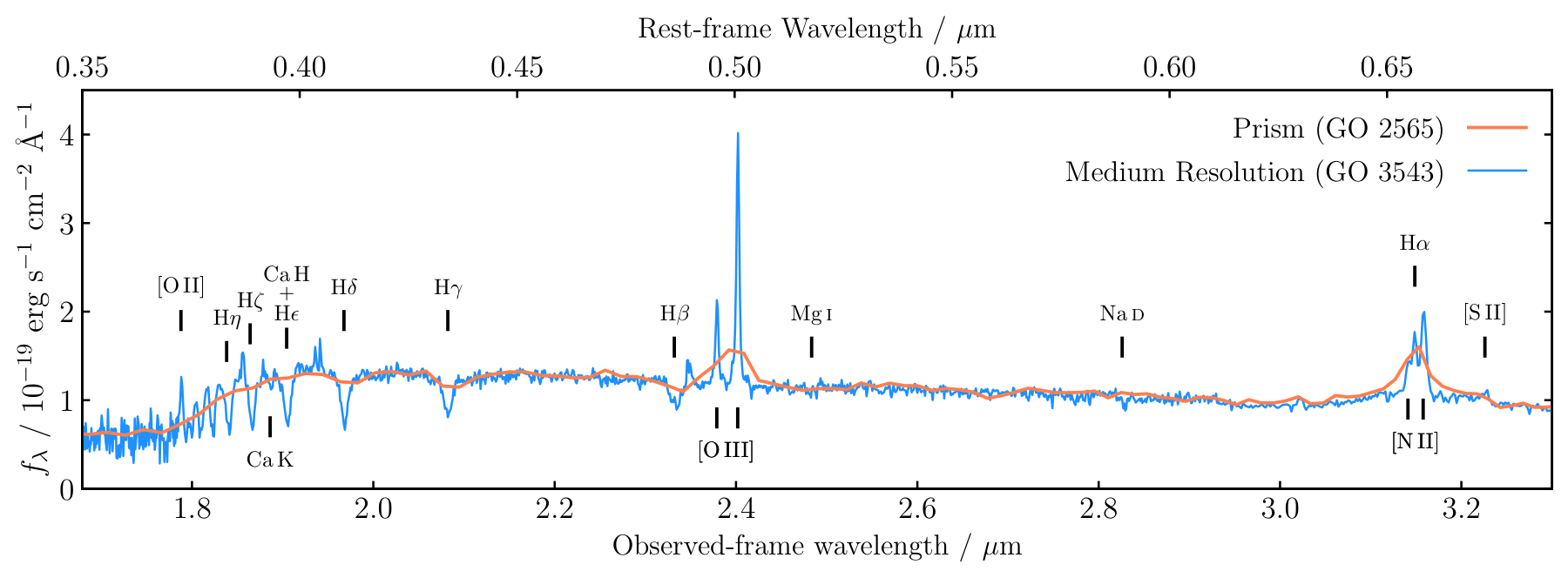
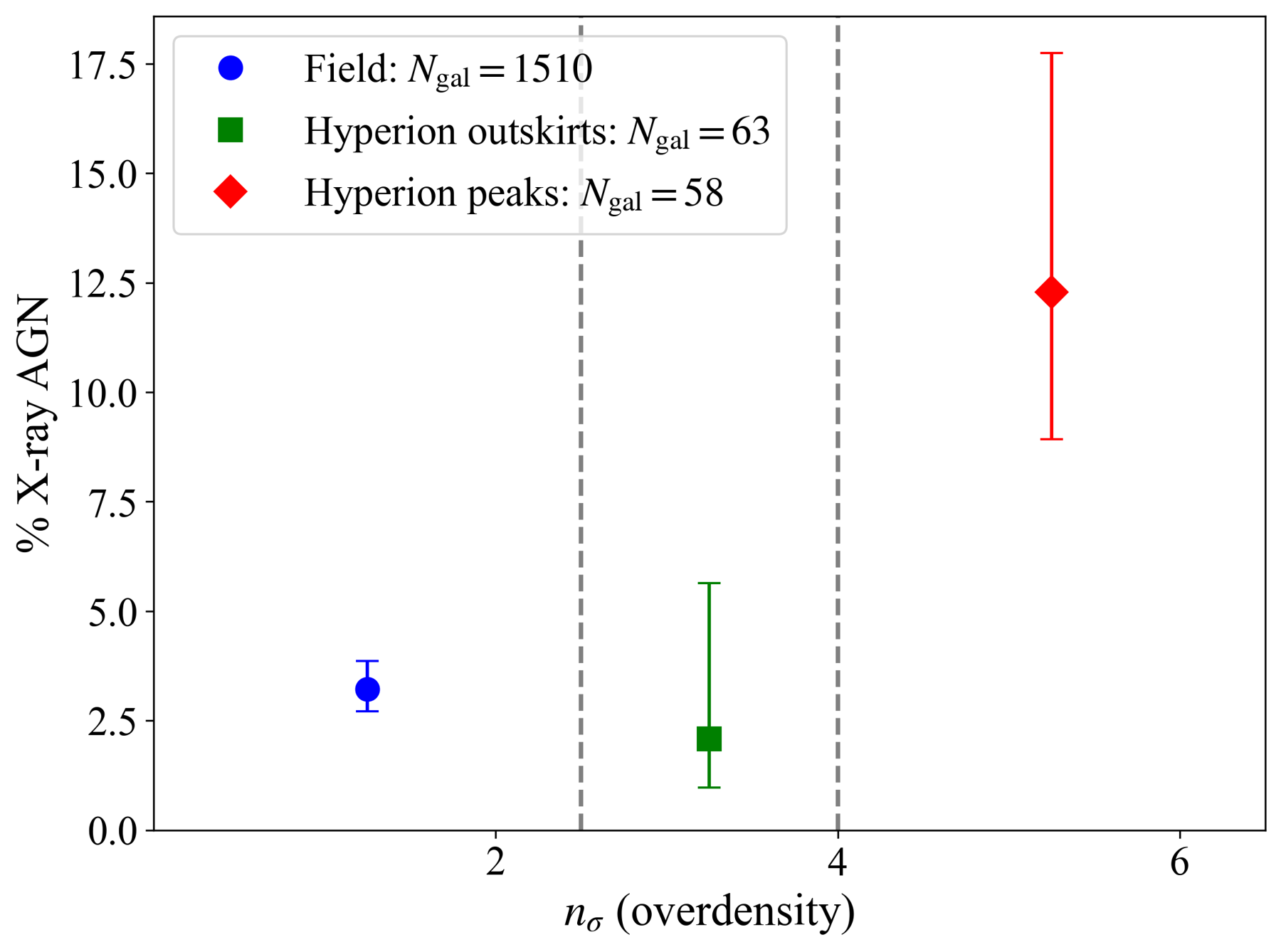
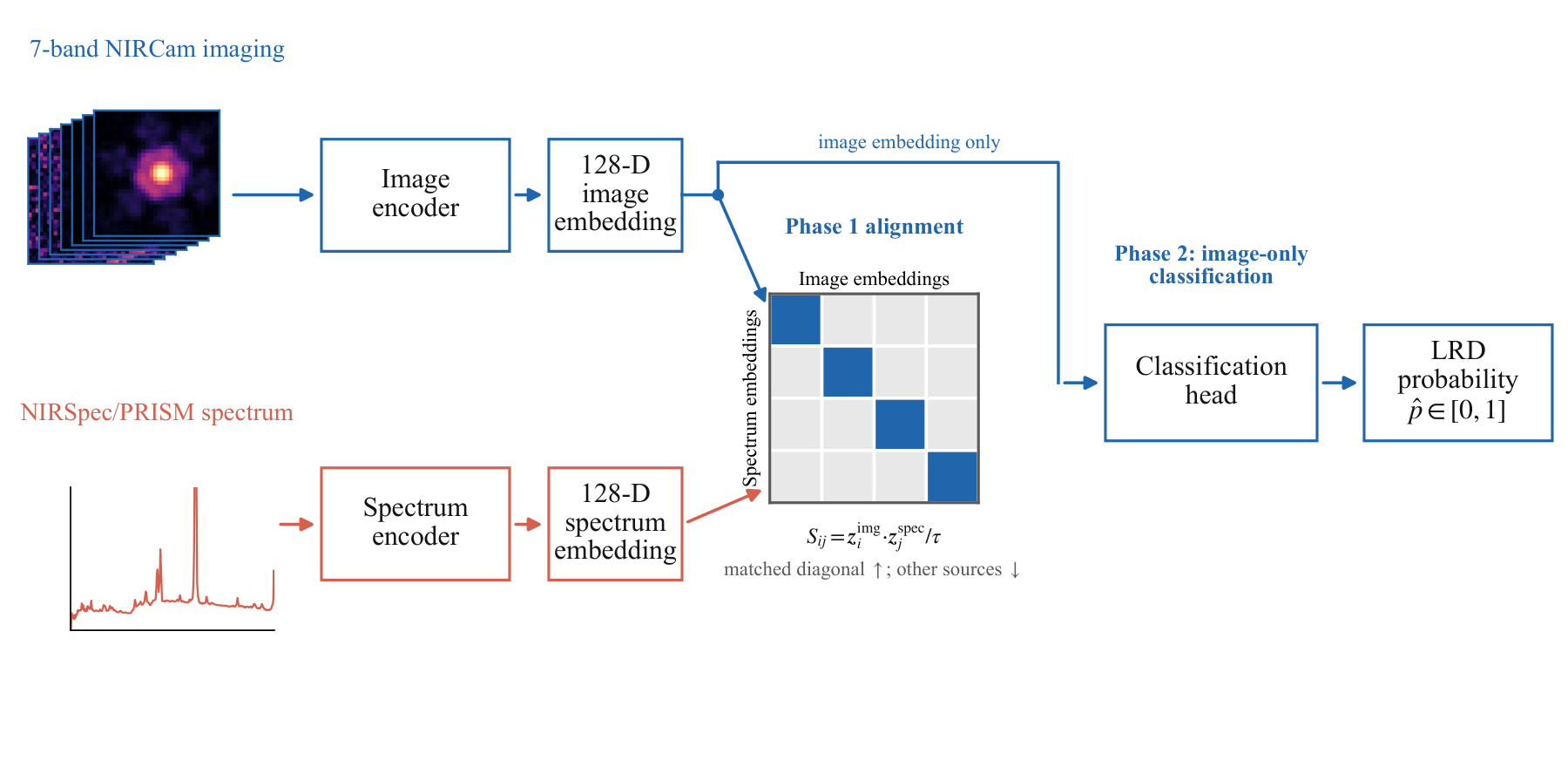
Figure 1 from Spectroscopy-informed Deep Learning Searches for Photometric Little Red Dots in JWST Surveys

2026-11-05 · 2611.06026v1 · Research note

Spectroscopy-informed Deep Learning Searches for Photometric Little Red Dots in JWST Surveys

Chenxuan Zhang, Huanian Zhang, Qingwen Wu

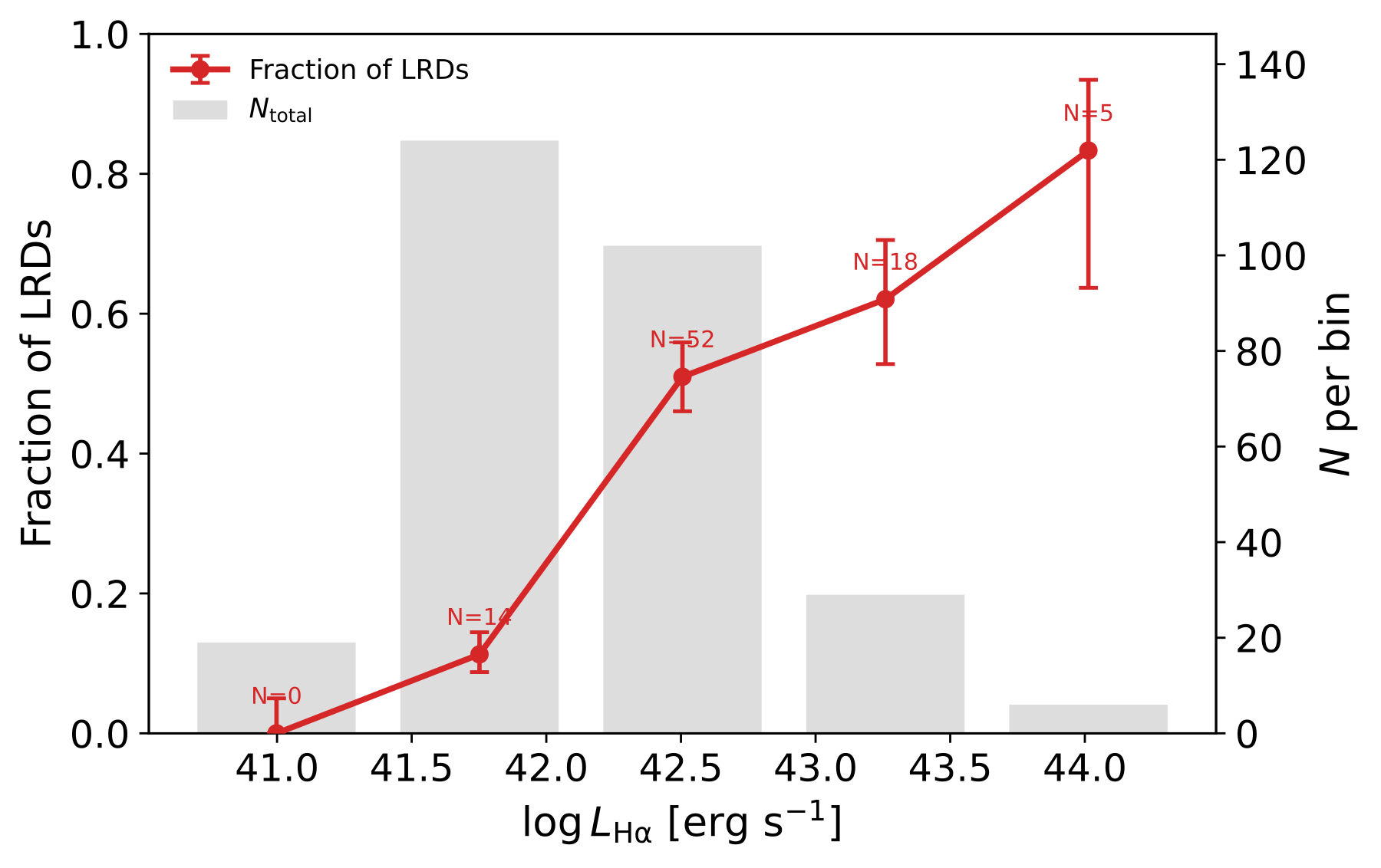
A two-stage, spectroscopy-informed NIRCam classifier finds LRD candidates beyond standard color selections. Held-out recall/precision are 0.92/0.79, while broad Hα in 10 of 13 grating-observed candidates supports—without confirming—the LRD interpretation of many new selections.

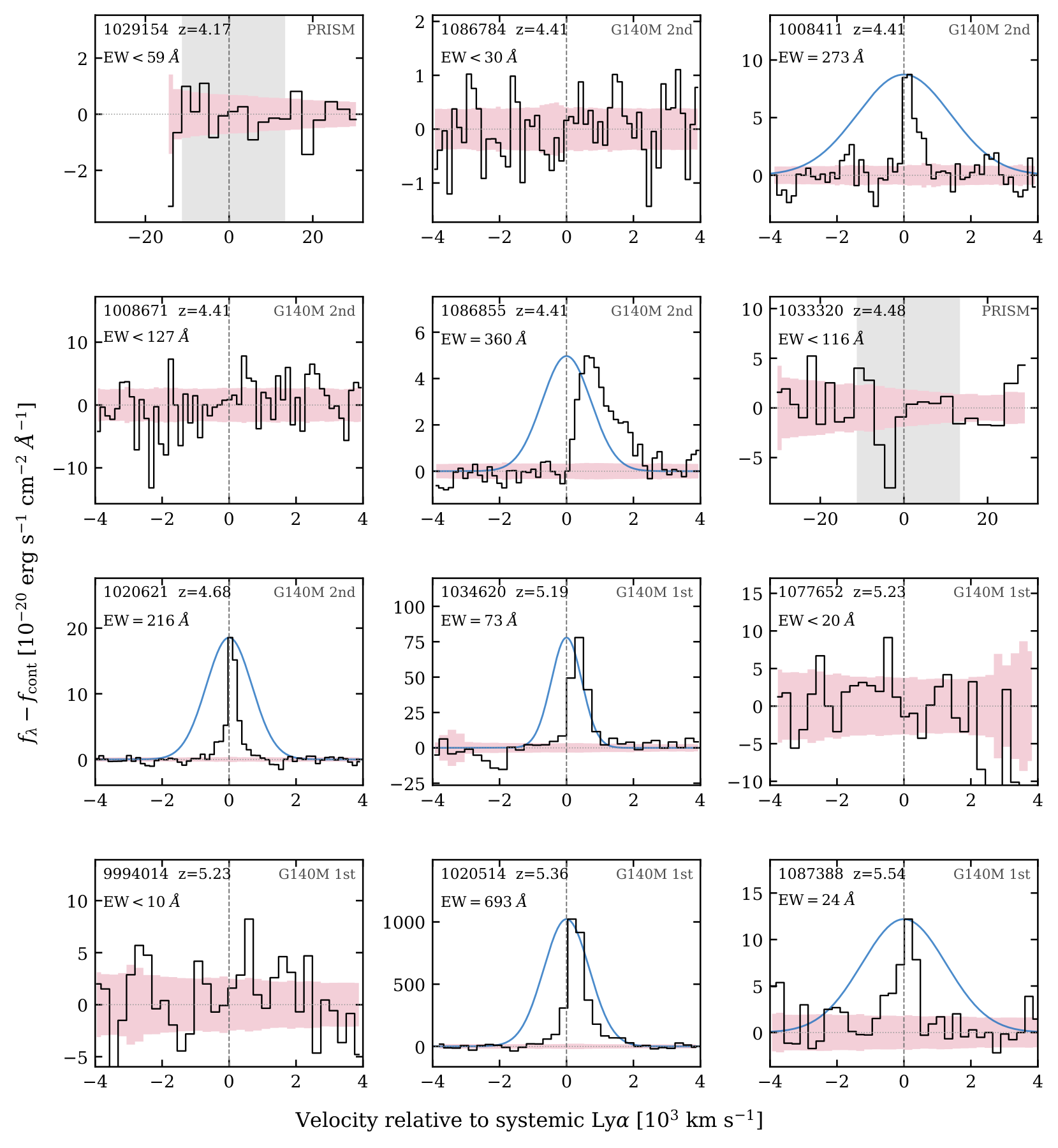
Figure 1 from Ly$α$ in Compact Broad-Line Emitters, Including Little Red Dots, Is More Closely Linked to the Host Galaxy than to the Broad-Line Nucleus

2026-11-04 · 2611.03801v1 · Research note

Ly$α$ in Compact Broad-Line Emitters, Including Little Red Dots, Is More Closely Linked to the Host Galaxy than to the Broad-Line Nucleus

Yongda Zhu, Zheng Ma, Xiaojing Lin, et al.

In 12 z=4.17–5.54 compact broad-line emitters, Lyα is detected in six and is systematically narrower than broad Hα. Host-SED predictions correlate more closely with observed Lyα than nuclear Hα/UV, although excess Lyα permits nuclear emission.

Figure 1 from EMBER: A Little Red Dot Candidate at $z_{\rm spec}=10.36$ in the Seed Black Hole Era

2026-11-03 · 2611.00195v1 · Research note

EMBER: A Little Red Dot Candidate at $z_{\rm spec}=10.36$ in the Seed Black Hole Era

Takumi S. Tanaka, Hollis B. Akins, John D. Silverman, et al.

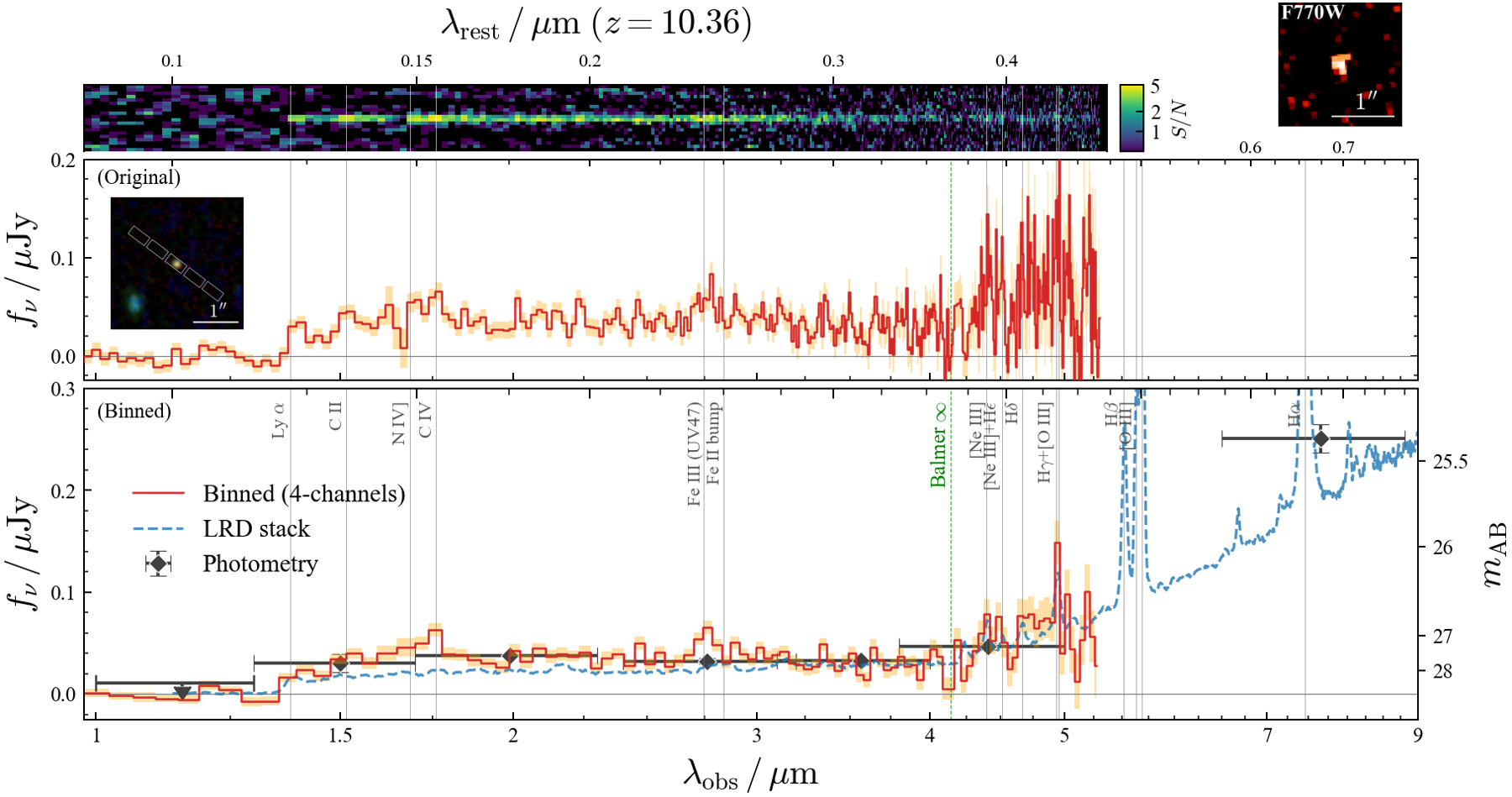
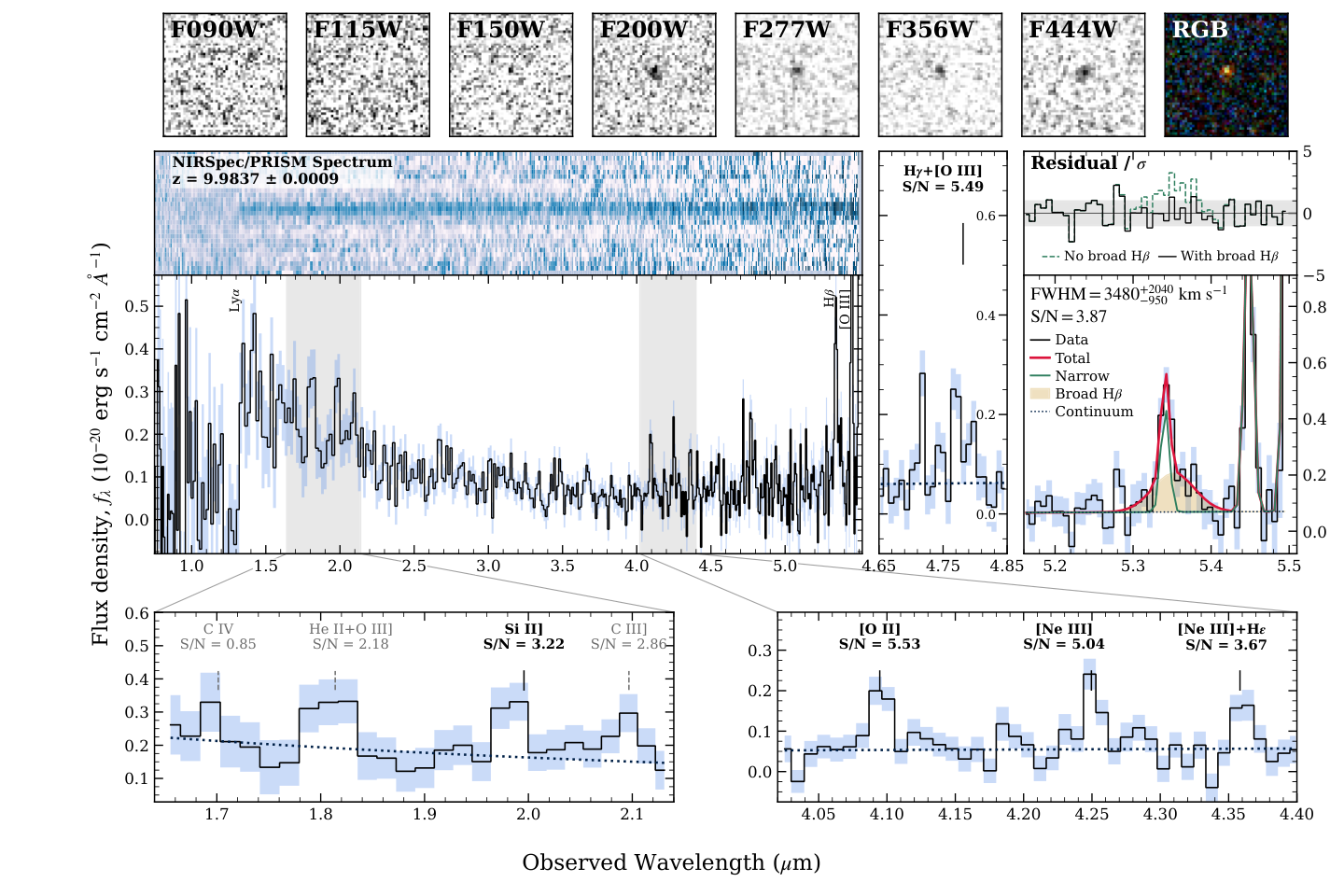
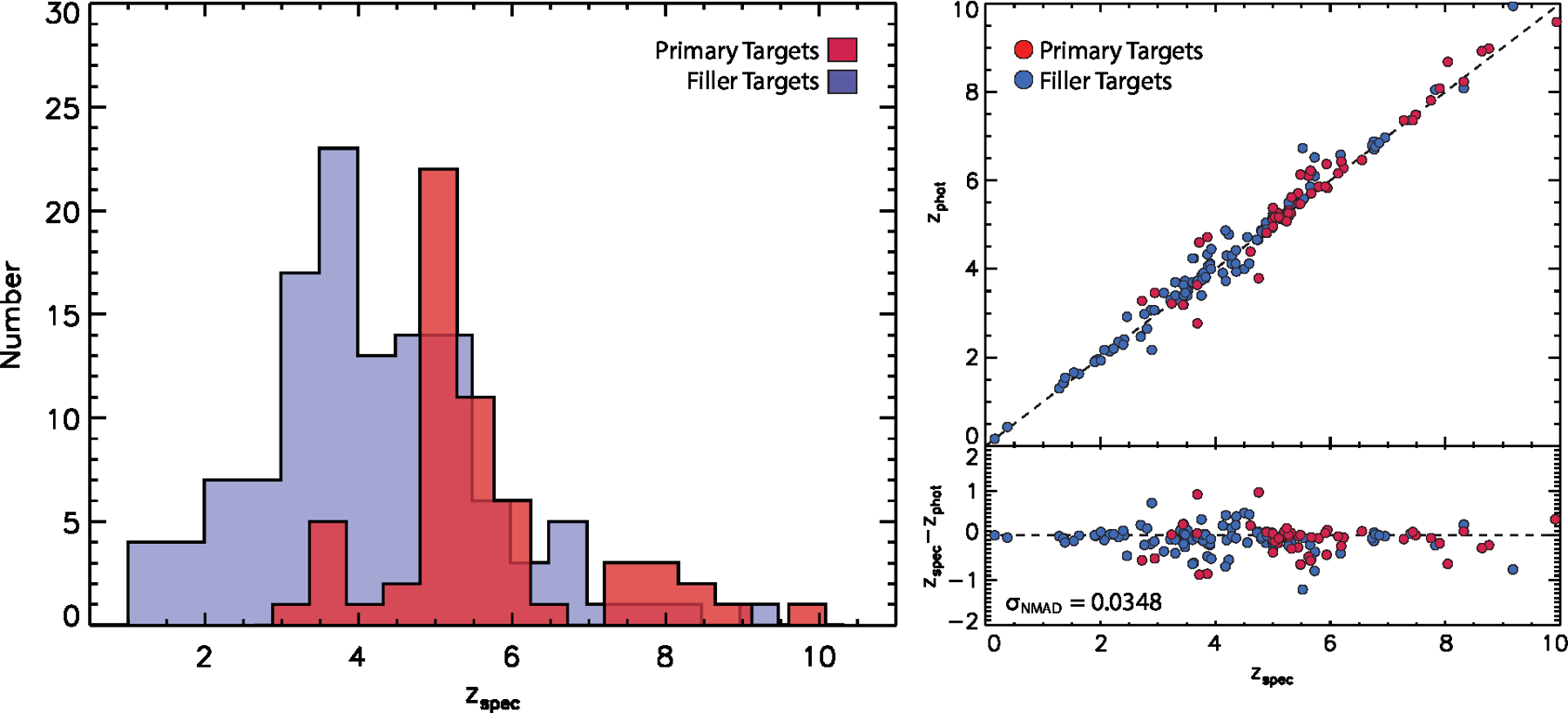
JWST/NIRSpec finds CW-LRD-z10 at zspec=10.361, with a Balmer-limit V-shaped continuum and tentative high-ionization/auroral lines. It is a strong z>10 LRD candidate, but present spectroscopy does not unambiguously establish either broad-line or AGN status.

Figure 3 from Beyond Point Photo-$z$ Estimates: Normalizing Flows for Tomographic $N(z)$ Reconstruction with DESI DR1

2026-11-03 · 2611.00121v1 · Research note

Beyond Point Photo-$z$ Estimates: Normalizing Flows for Tomographic $N(z)$ Reconstruction with DESI DR1

Zhuo Chen, Antoine Rocher, Kwan Chuen Chan, et al.

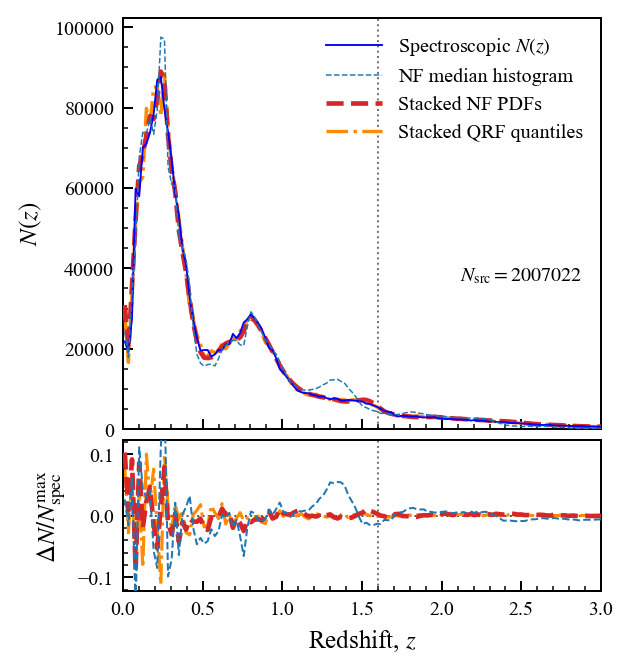
On a spatially independent DESI DR1 test set, conditional normalizing-flow redshift PDFs generally reconstruct tomographic N(z) better than quantile random forests, especially at high redshift; calibration improves several low-z mean-redshift biases but leaves population-transfer and residual-calibration limitations.

2026-11-03 · 2610.33154v1 · Research note

A Composite Rest-Frame UV Spectrum of Galaxies at $5.7 < z < 6.9$: Ionization, Outflows, and Implications for Intergalactic Metal Enrichment

David DePalma, Robert A. Simcoe, Anna-Christina Eilers, et al.

A 104-galaxy JWST composite at mean z=6.50 finds ≈180–200 km s⁻¹ blueshifted interstellar absorption. A simple wind-propagation model places most material only 3–9 proper kpc away, challenging bright [O III]-selected galaxies as the dominant source of widespread intergalactic metals.

2026-10-28 · 2610.37564v1 · Research note

Little Red Dots with Broad H$β$ Lines Reveal the Black Hole Mass Function at 7<z<9.5

Anthony J. Taylor, Steven L. Finkelstein, Hollis B. Akins, et al.

A systematic JWST/NIRSpec PRISM search finds 20 broad-Hβ emitters at 7<z<9.5, all photometrically/morphologically consistent with LRDs. Completeness-corrected mass-function evolution and inferred BH accretion density are conditional on broad Hβ being a virial black-hole-mass tracer.

Figure 1 from $El\ Ascua$: An ultra-luminous, radio-loud, Compton-thick AGN at $z\sim 3.8$ hiding in plain sight revealed by MINERVA multi-band MIRI observations

2026-10-27 · 2610.33155v1 · Research note

$El\ Ascua$: An ultra-luminous, radio-loud, Compton-thick AGN at $z\sim 3.8$ hiding in plain sight revealed by MINERVA multi-band MIRI observations

Aidan P. Cloonan, Edgar P. Vidal, Alexandra Pope, et al.

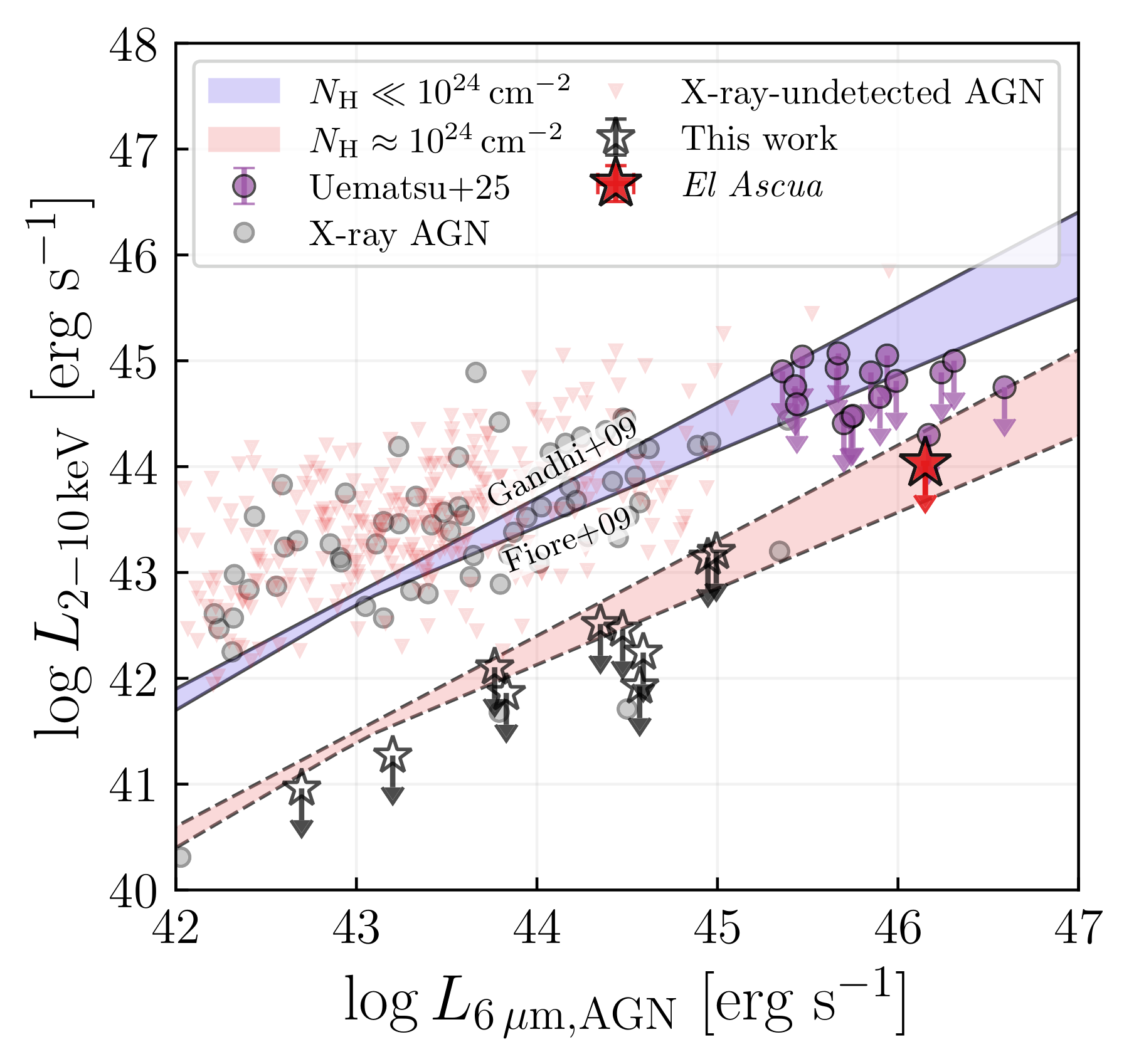
MINERVA/MIRI identifies el Ascua at z~3.8 as a mid-IR-dominant, X-ray-undetected Compton-thick AGN candidate. UV-to-radio SED fitting indicates rapid black-hole growth and a probable AGN radio excess, but obscuration and radio-loudness remain indirect inferences.

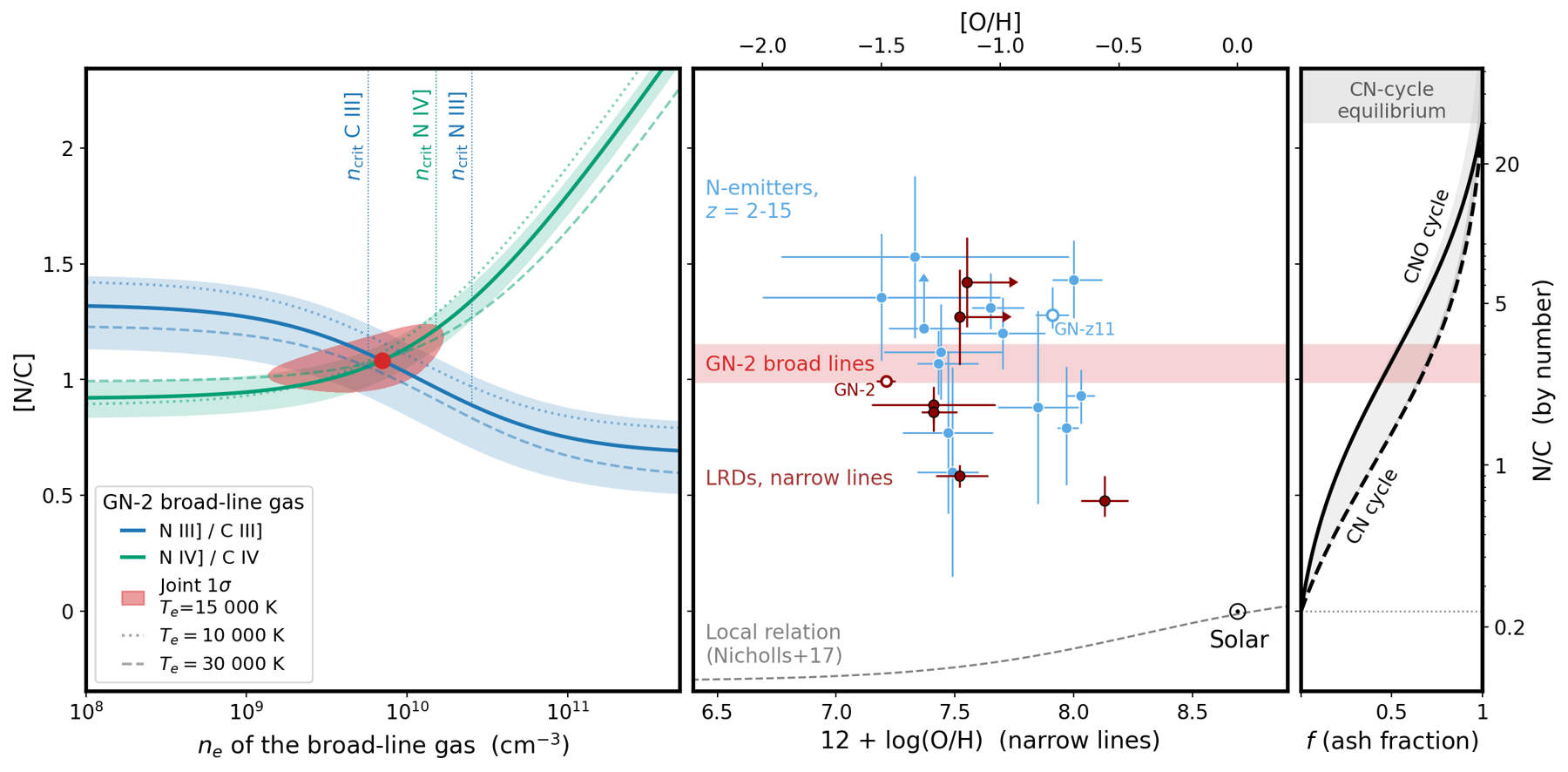
Figure 3 from A Little Red Dot emerging from a nitrogen-rich UV-luminous galaxy with Very Massive Stars

2026-10-22 · 2610.29887v1 · Research note

A Little Red Dot emerging from a nitrogen-rich UV-luminous galaxy with Very Massive Stars

Alberto Torralba, Jorryt Matthee, Rui Marques-Chaves, et al.

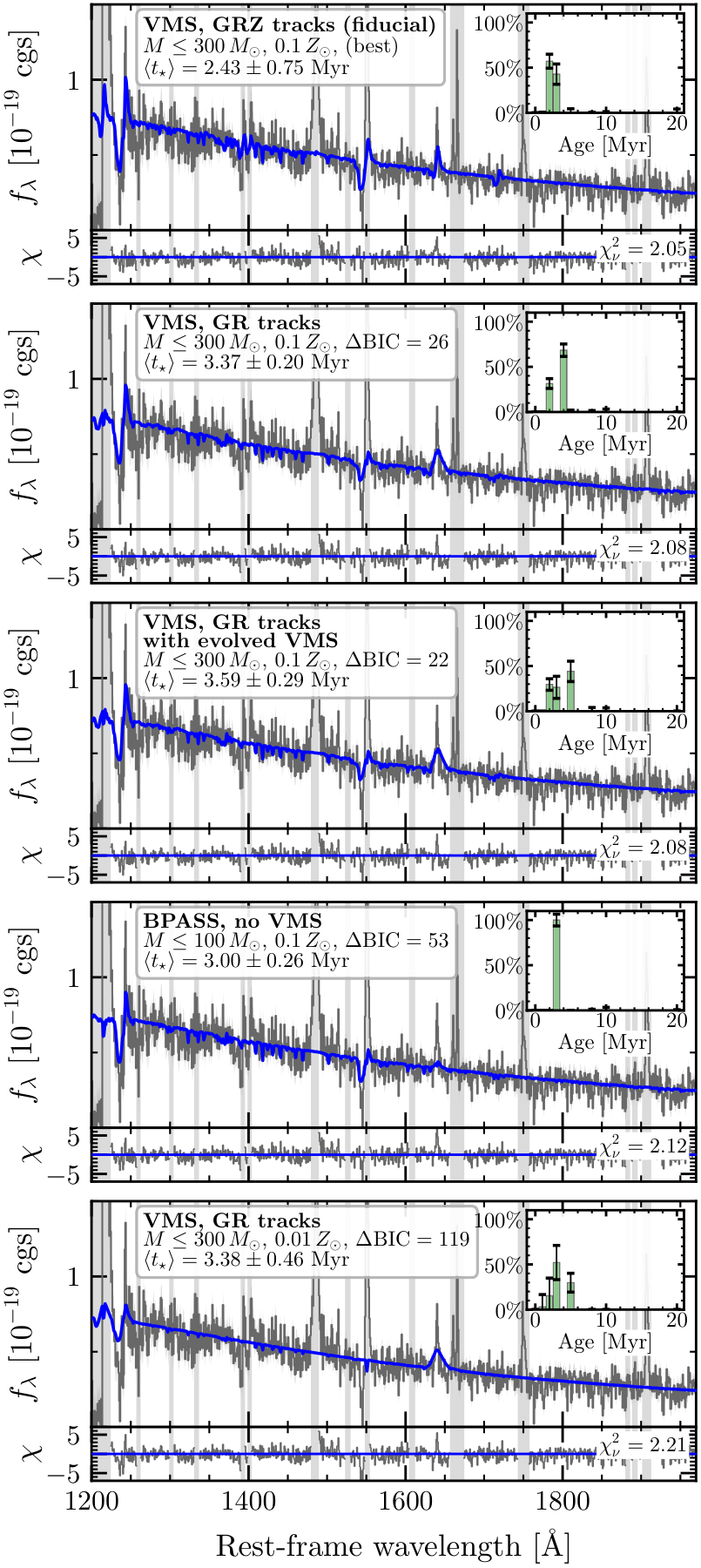
Medium-resolution JWST/NIRSpec spectroscopy of the single z=6.6 galaxy COLA1 links a very young, VMS-favored UV population, extreme nitrogen enrichment, and LRD-like optical Balmer structure; the proposed evolution into an LRD remains model-dependent.

Figure 3 from Dual and lensed AGN at sub-arcsecond separations uncovered by ERIS

2026-10-21 · 2610.27086v1 · Research note

Dual and lensed AGN at sub-arcsecond separations uncovered by ERIS

M. V. Zanchettin, F. Mannucci, Q. D'Amato, et al.

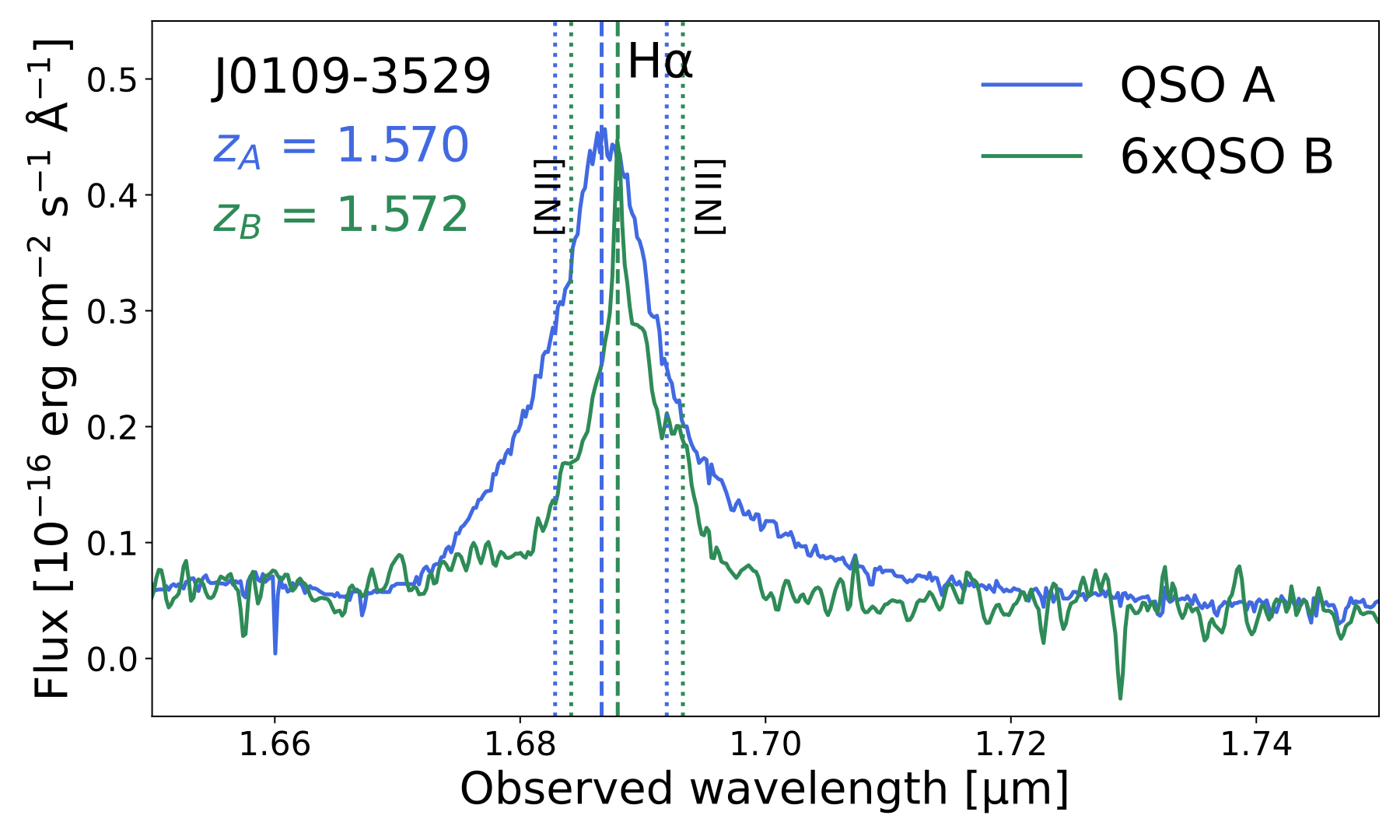
AO-assisted ERIS/SPIFFIER spectroscopy of 34 Gaia Multi-Peak candidates resolves six sub-arcsecond dual AGN and seven lensed quasars, but foreground-star superpositions dominate the non-multiple outcomes and broad-line velocity offsets do not securely measure systemic pair velocities.

Figure 2 from A heterogeneous set of unusual quasars selected from astrometry and broad-band photometry

2026-10-15 · 2610.19838v1 · Research note

A heterogeneous set of unusual quasars selected from astrometry and broad-band photometry

C. Cheng, K. Valeckas, L. Christensen, et al.

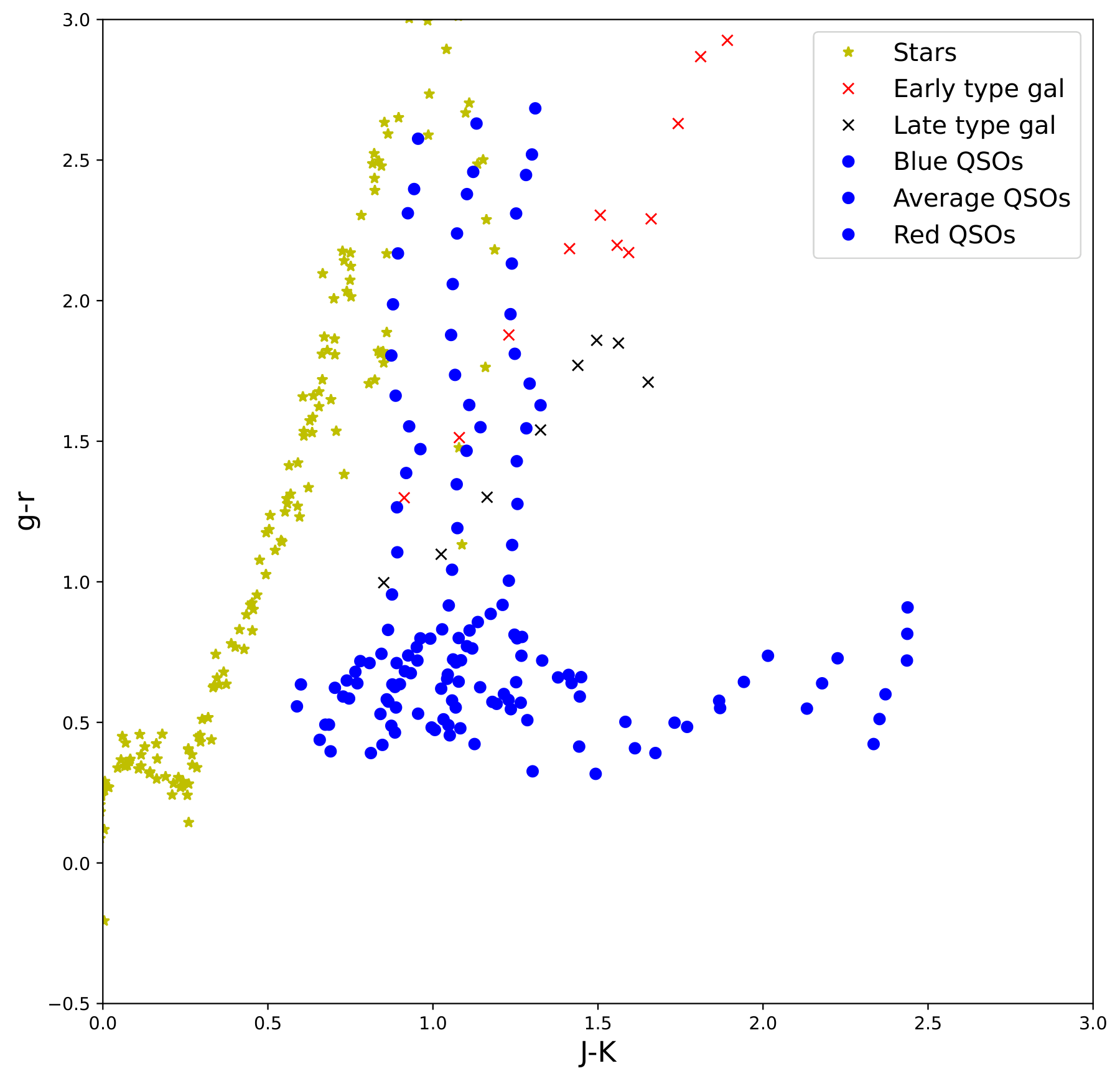
Gaia zero-motion selection plus broad-band colours and spectroscopy confirmed 21 quasars among 24 candidates, disproportionately finding BAL quasars in photometrically transitional regions. One low-redshift normal quasar is described as LRD-like, but this is not a high-redshift LRD sample.

2026-10-15 · 2610.19320v1 · Research note

Large-scale Environmental Dependence of AGN Activity Revealed by JWST Pa$α$ Emitters

Danyang Jiang, Linhua Jiang, Shuqi Fu, et al.

Using JWST Paα spectroscopy, the authors find that radio-bright AGNs at z=1.1–1.5 occupy denser ∼1.5 pMpc environments than matched controls; density also correlates with accretion indicators, while environmental Paα luminosity functions are elevated and flatter at the faint end.

Figure 3 from Deep X-ray View of a Distant Protocluster Anchored by a Quasar at $z=6.63$: No Evidence for Enhanced X-ray AGN Activity

2026-10-15 · 2610.19317v1 · Research note

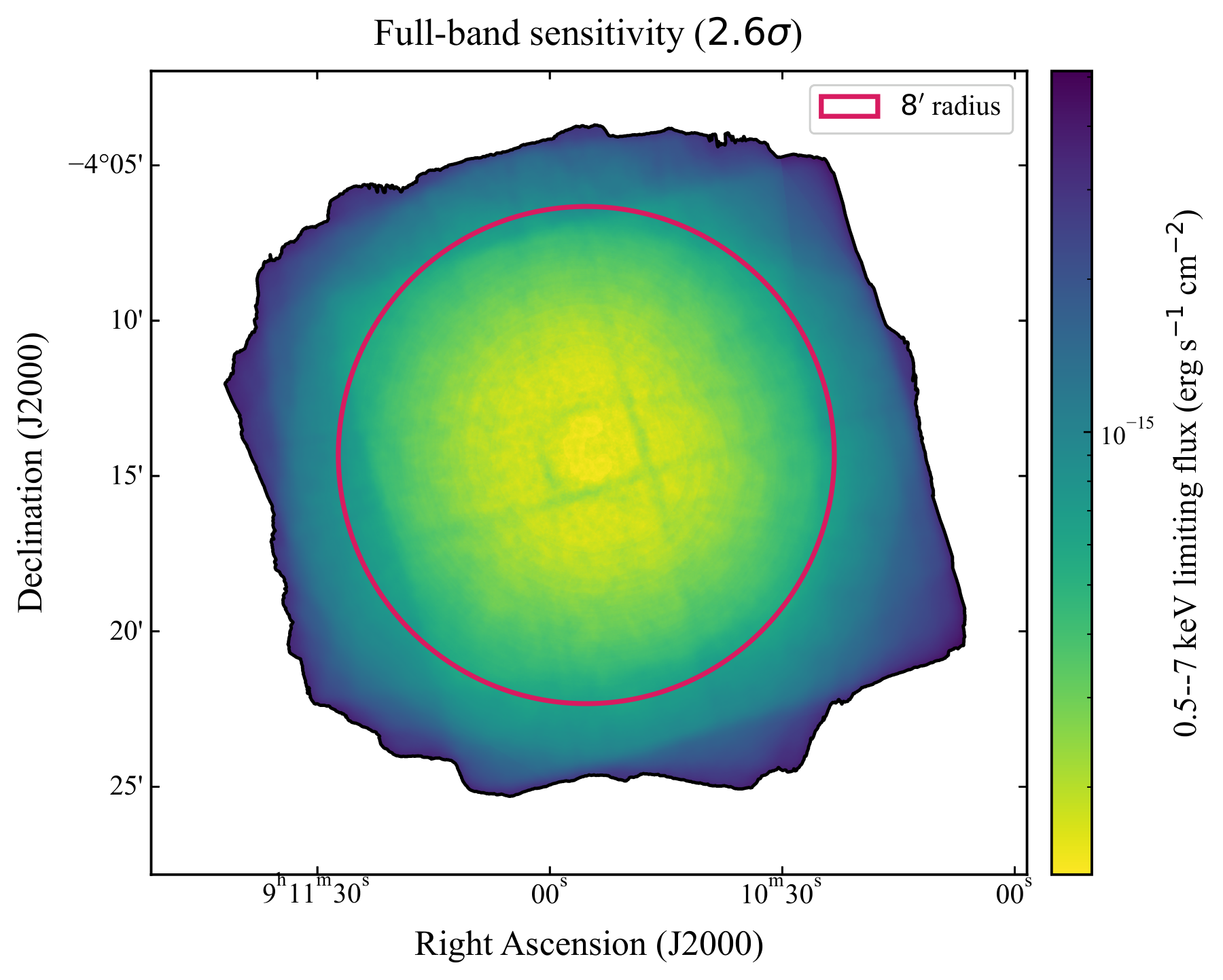
Deep X-ray View of a Distant Protocluster Anchored by a Quasar at $z=6.63$: No Evidence for Enhanced X-ray AGN Activity

Shouyi Wang, Feige Wang, Jinyi Yang, et al.

In 865 ks of Chandra imaging, no X-ray AGN is detected among 21 confirmed non-quasar members of the z=6.63 J0910−0414 protocluster. The resulting limits do not establish environmental enhancement, but still allow substantial excess activity.

2026-10-15 · 2610.18968v1 · Research note

The Dance of the Little Red Dots: Spectroscopy of Two Blue Companions at z = 3.9 and 5.5 Reveals Young, Metal-Poor Starbursts Merging with Their LRDs within a Few Hundred Myr

Fabio Pacucci, Pierluigi Rinaldi

Spectroscopy of two LRD–blue-companion pairs confirms small line-of-sight velocity offsets and young, metal-poor companion starbursts. Orbital modeling favors a merger for Tango and conditionally for Waltz, while the proposed heavy-seed connection remains interpretive.

2026-10-12 · 2610.13218v1 · Research note

The Population of Type~1 Active Galactic Nuclei in Dark Energy Spectroscopic Instrument. I. Profile-dependent Measurements of the Low-redshift Sample

Zhu-Heng Yao, Wei-Jian Guo, Shuo Zhai, et al.

DESI DR1 analysis of 114,754 z≤0.9 type 1 AGNs shows that broad-Balmer profile choice systematically shifts Hβ widths, virial masses, accretion rates, and narrow-line diagnostics, while preserving an apparent continuous NLS1-to-broader-line accretion sequence.

Figure 2 from Widespread steep X-ray spectra of luminous $z\simeq5.85-7.6$ quasars and their implications for future X-ray surveys

2026-10-08 · 2610.10522v1 · Research note

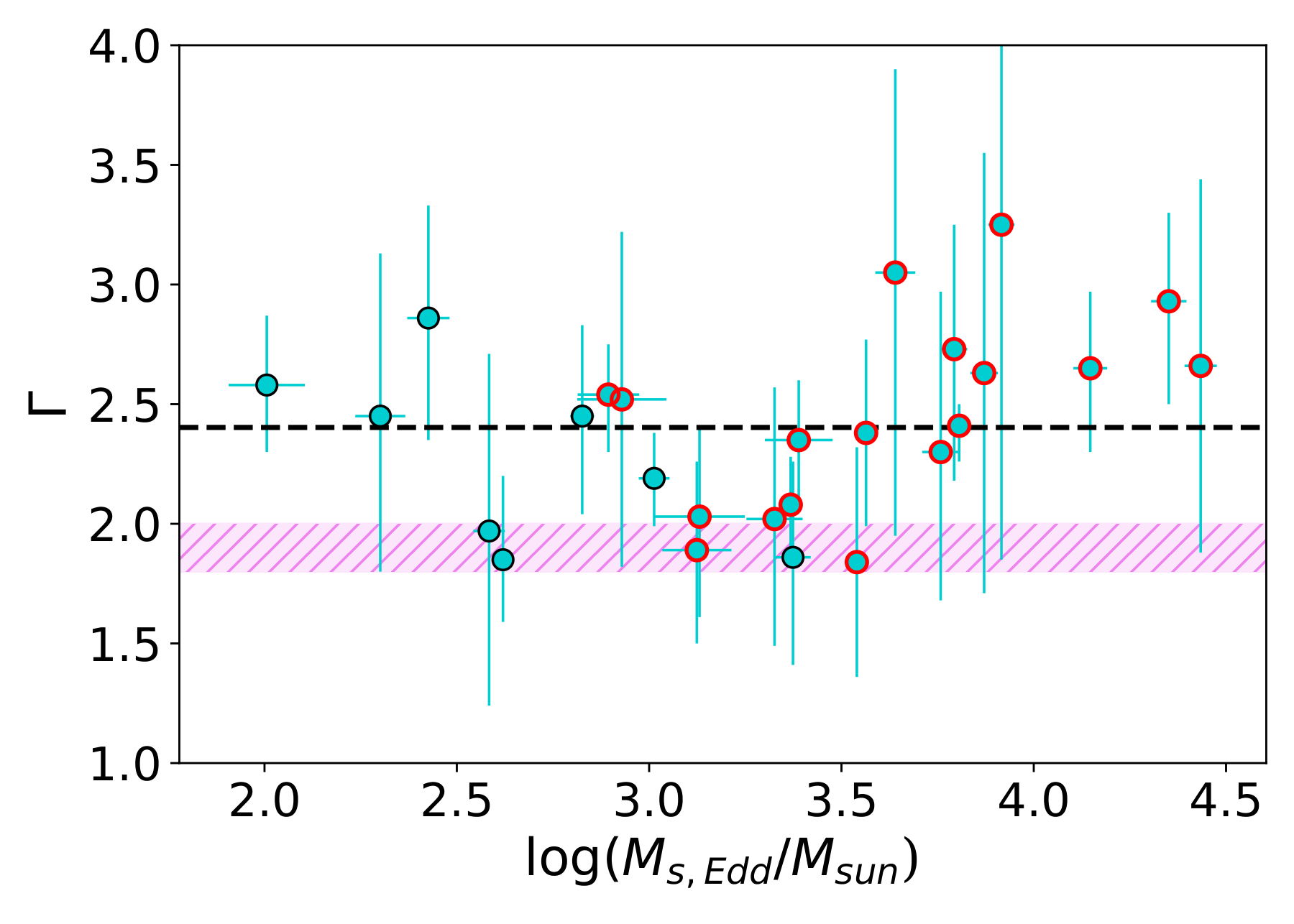
Widespread steep X-ray spectra of luminous $z\simeq5.85-7.6$ quasars and their implications for future X-ray surveys

A. Tortosa, L. Zappacosta, E. Piconcelli, et al.

Across 28 luminous quasars at z=5.85–7.56, X-ray continua are systematically steep, yet show no significant dependence on black-hole growth indicators. The inferred spectral shapes could modestly to severely reduce high-redshift survey count rates.

Figure 1 from MUSE-ALMA Haloes XVI: a census of the condensed baryons in z~0.5 HI absorption-selected galaxies

2026-10-08 · 2610.10117v1 · Research note

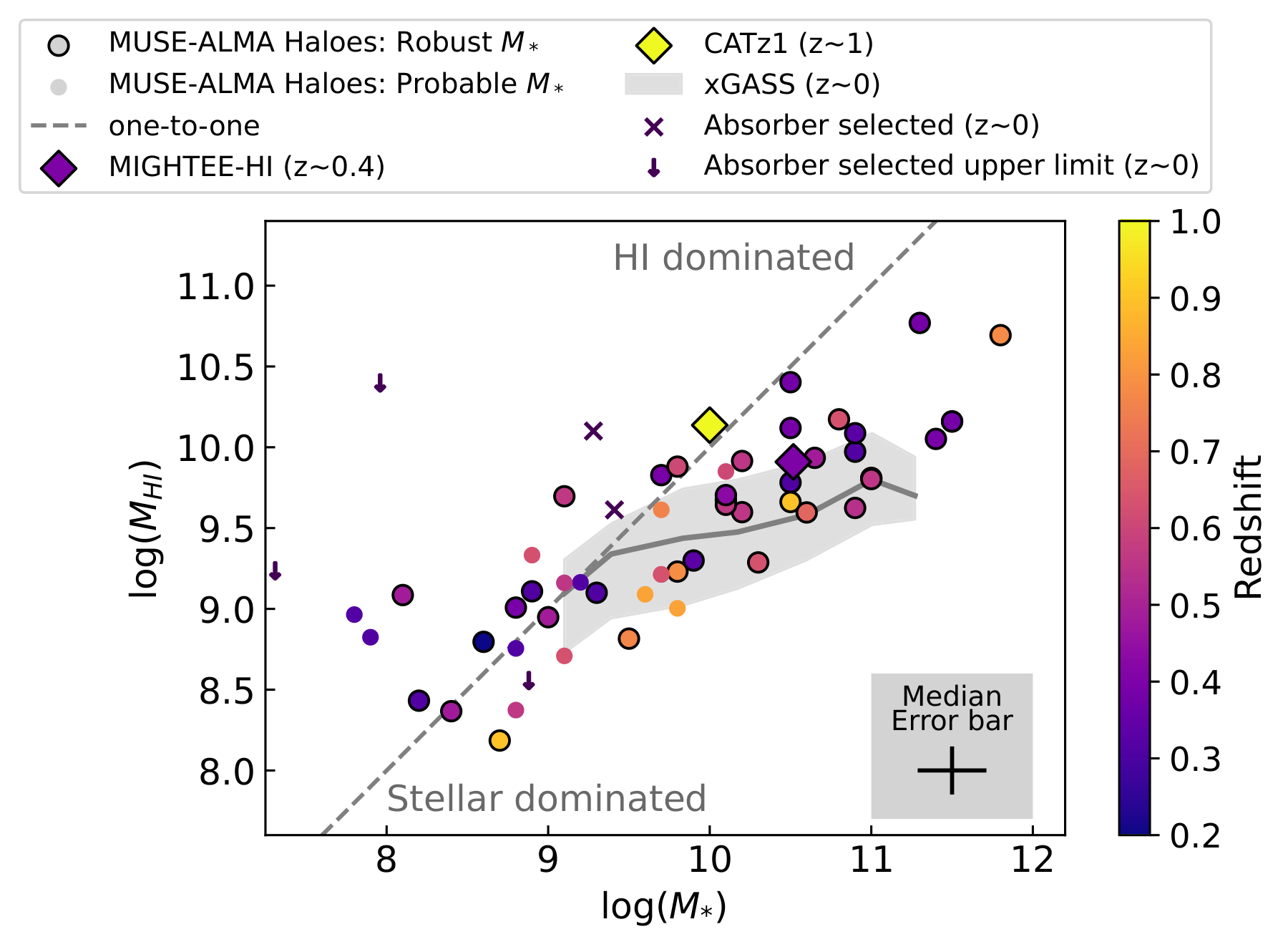
MUSE-ALMA Haloes XVI: a census of the condensed baryons in z~0.5 HI absorption-selected galaxies

T. O'Beirne, C. Péroux, M. Zwaan, et al.

Across 79 H I absorber-selected galaxies at 0.2<z<1.2, the authors combine multiwavelength data to inventory stars and cold gas, finding broadly consistent indirect H I estimators at small impact parameter but environmentally driven scatter and mass-dependent gas fractions.

2026-10-01 · 2609.38430v1 · Research note

Cosmic Collisions I: Optical Morphologies for MIRI-selected galaxies from the PRIMER survey

Gregory Troiani, Allison Kirkpatrick, Leyna Bajaj, et al.

JWST/MIRI F770W selection and volunteer classifications of 14,657 PRIMER galaxies at 1<z<3 reveal morphology trends unlike optical/near-IR samples, while wavelength-dependent structure and unresolved mid-IR cores complicate physical interpretation.

Figure 2 from Caught in the act: diffuse stellar and Ly$α$ emission around a halo-less quasar in the assembling cluster CARLA J0800+4029 at z=2

2026-09-30 · 2609.37445v1 · Research note

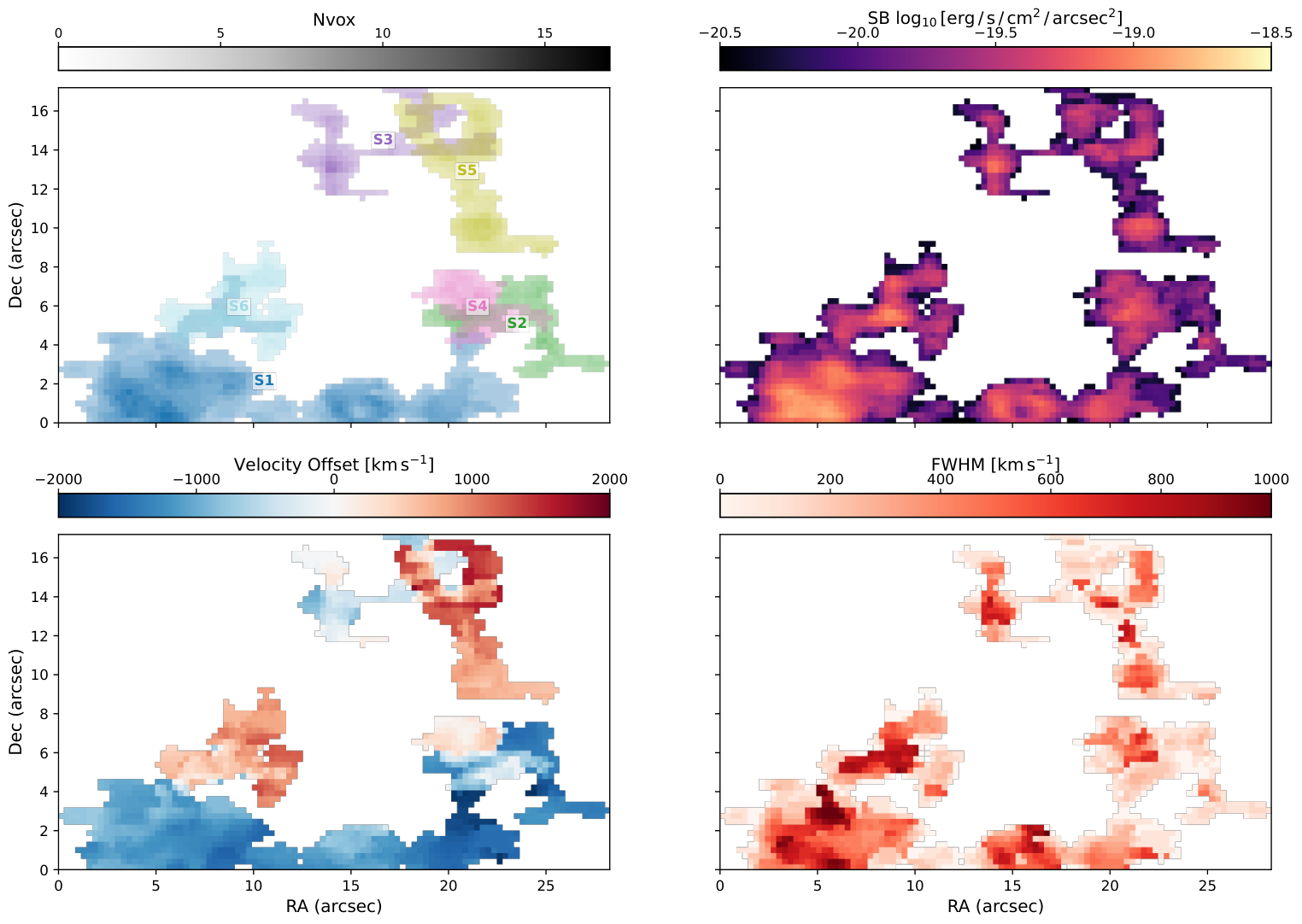
Caught in the act: diffuse stellar and Ly$α$ emission around a halo-less quasar in the assembling cluster CARLA J0800+4029 at z=2

Sofia G. Gallego, Simona Mei, Emanuele Daddi, et al.

KCWI and HST reveal that CARLA J0800+4029’s dominant Lyα reservoir is tidal and offset from its radio-loud quasar, while a matched-area quasar-halo limit is 3.4 times lower, consistent with spatially redistributed baryons during cluster assembly.

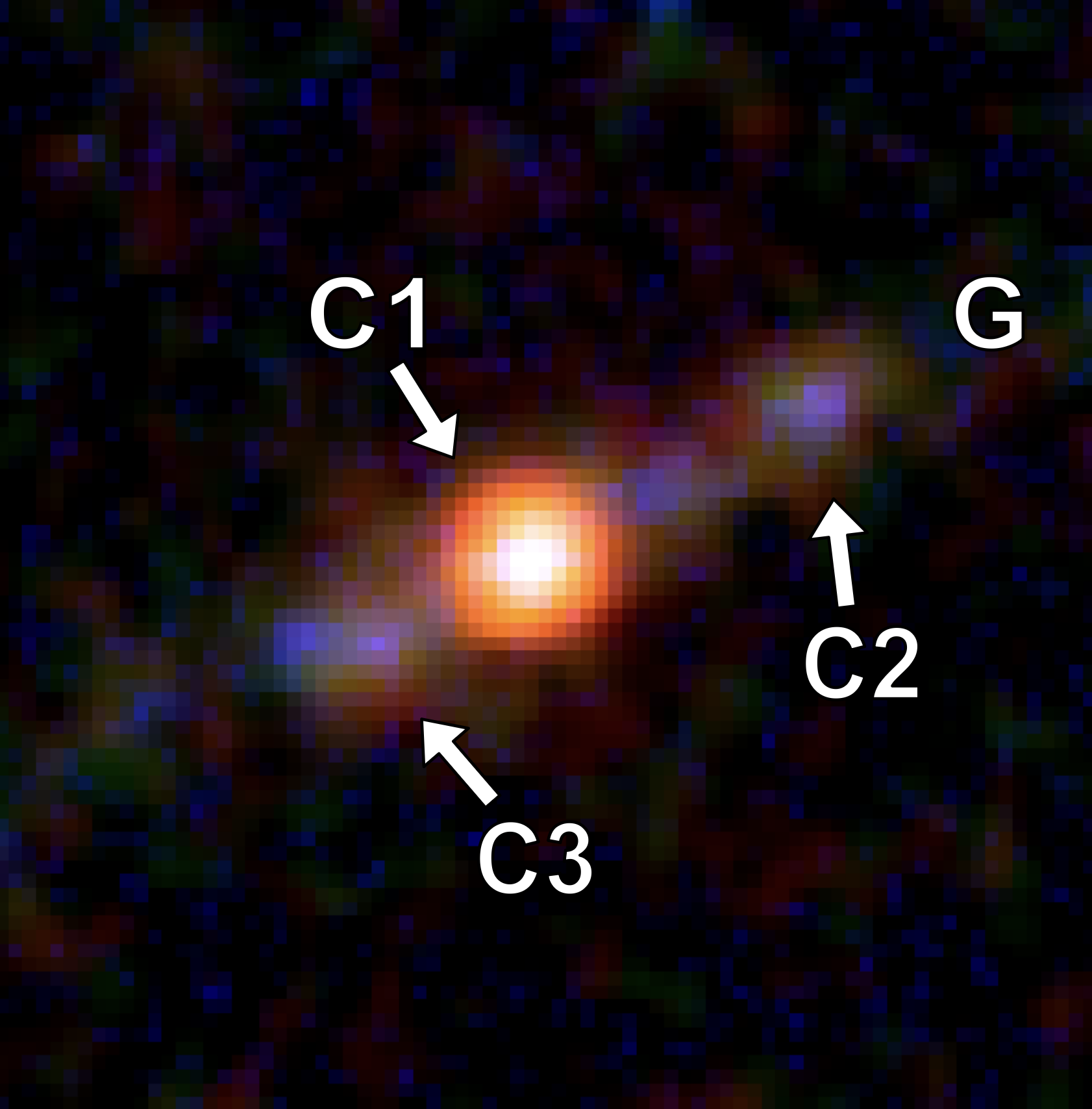
Figure 1 from SN Helios: A Multiply Imaged Type II Supernova Opening Time-Delay Cosmography beyond redshift of 3

2026-09-28 · 2609.30440v1 · Research note

SN Helios: A Multiply Imaged Type II Supernova Opening Time-Delay Cosmography beyond redshift of 3

Seiji Fujimoto, Conor Larison, Justin D. R. Pierel, et al.

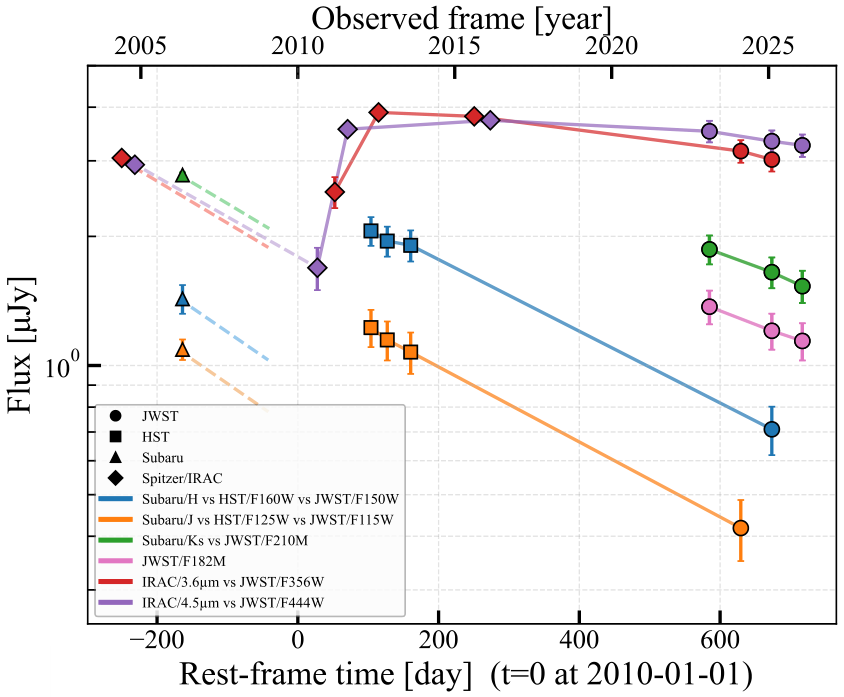
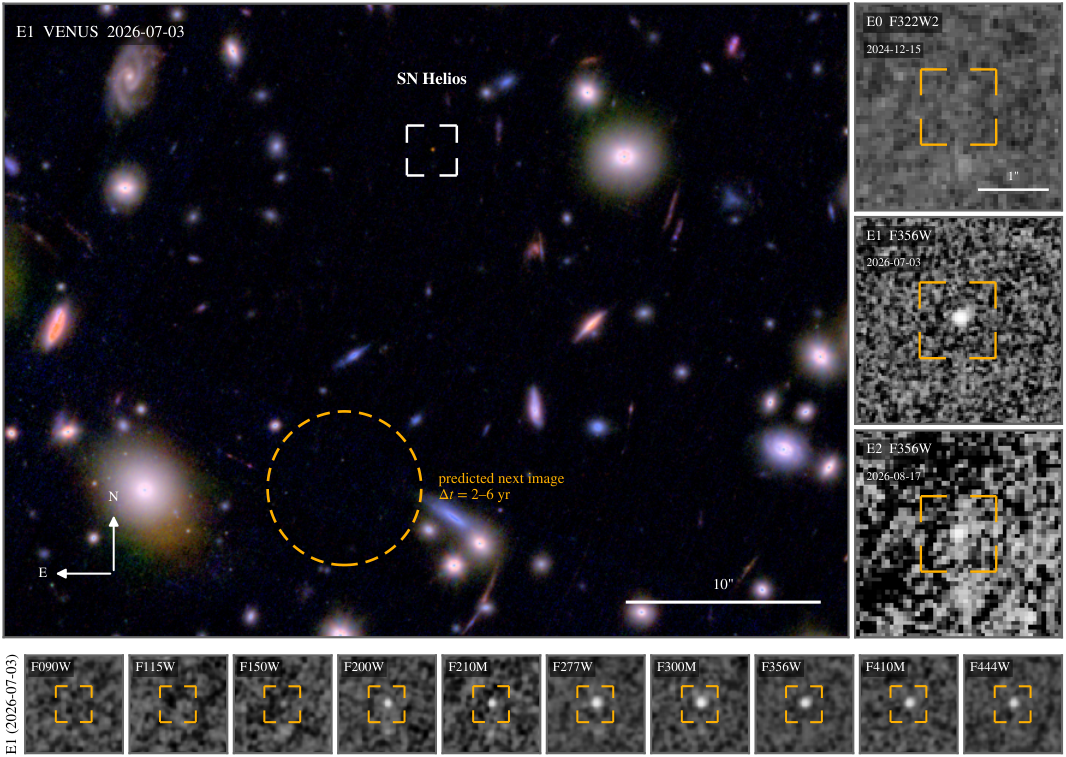
SN Helios is a spectroscopically confirmed, strongly lensed Type II supernova at z=3.34. Its predicted 2–6 yr reappearance could enable time-delay cosmography, but current lens-model spread and the absence of a measured delay preclude an H0 result.

Figure 1 from Breaking the Blend: A multi-tracer kinematic decomposition method for IFS data applied to disentangling the AGN outflow and circumnuclear ring in NGC 5728 with JWST

2026-09-25 · 2609.30232v1 · Research note

Breaking the Blend: A multi-tracer kinematic decomposition method for IFS data applied to disentangling the AGN outflow and circumnuclear ring in NGC 5728 with JWST

Oscar Veenema, Niranjan Thatte, Dimitra Rigopoulou, et al.

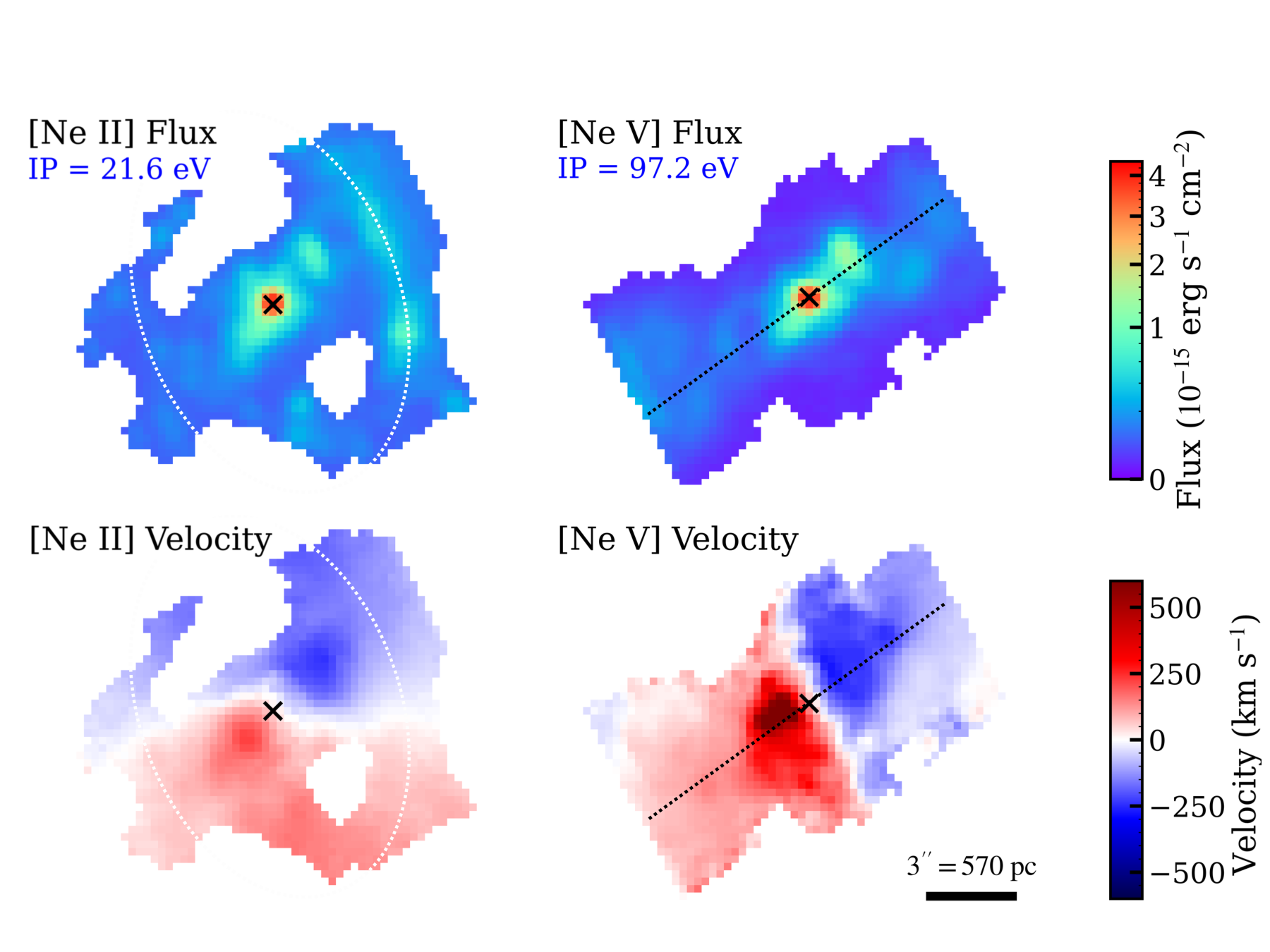
Using JWST mid-infrared IFS of NGC 5728, the authors decompose blended circumnuclear line emission into a star-forming ring and AGN bicone. Stacking twelve tracers yields spatial flux fractions that are stable across tested weighting choices.

Figure 4 from Search for High-Ionization Nebular Emission (SHINE). I. A Systematically Selected [Ne V] Sample at z > 3 with JWST/NIRSpec PRISM

2026-09-24 · 2609.27130v1 · Research note

Search for High-Ionization Nebular Emission (SHINE). I. A Systematically Selected [Ne V] Sample at z > 3 with JWST/NIRSpec PRISM

Shobita Satyapal, Sara Doan, Daniel Schaerer, et al.

SHINE identifies 25 luminous [Ne V] emitters at z=3.06–9.44 from >9,000 JWST/NIRSpec PRISM galaxies. Their hard-ionization lines favor accretion, but heterogeneous selection and incomplete diagnostic overlap preclude an intrinsic AGN-incidence measurement.

2026-09-24 · 2609.26931v1 · Research note

Radio Quasars in the Cosmic Dawn: A Spectroscopic Sample from the DESI Survey

Anniek J. Gloudemans, Jinyi Yang, David M. Alexander, et al.

DESI spectroscopy plus 144-MHz LOFAR imaging identifies 83 radio-detected quasars at 4.7<z<6.7, including 26 radio-loud objects. Their UV spectra are broadly similar to non-detections; tentative weak-line excesses and BAL trends remain statistically inconclusive.

Figure 5 from LATED: Ly$α$-anchored photometric selection of candidate metal-free and extremely metal-poor star formation from the end of reionisation to cosmic noon

2026-09-22 · 2609.24588v1 · Research note

LATED: Ly$α$-anchored photometric selection of candidate metal-free and extremely metal-poor star formation from the end of reionisation to cosmic noon

Mingyu Li, Zheng Cai, Roberto Maiolino, et al.

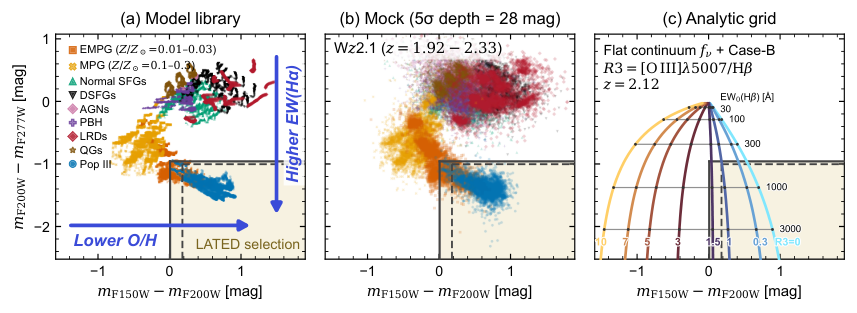
LATED uses Lyα-selected sources and three-band Hα/[O III]+Hβ/continuum colours to prioritize extremely metal-poor or Pop III-like candidates at z=1.92–6.60. Tests recover AMORE6 and identify three Abell 2744 candidates, but photometry cannot prove metal-free stars.

2026-09-22 · 2609.22623v1 · Research note

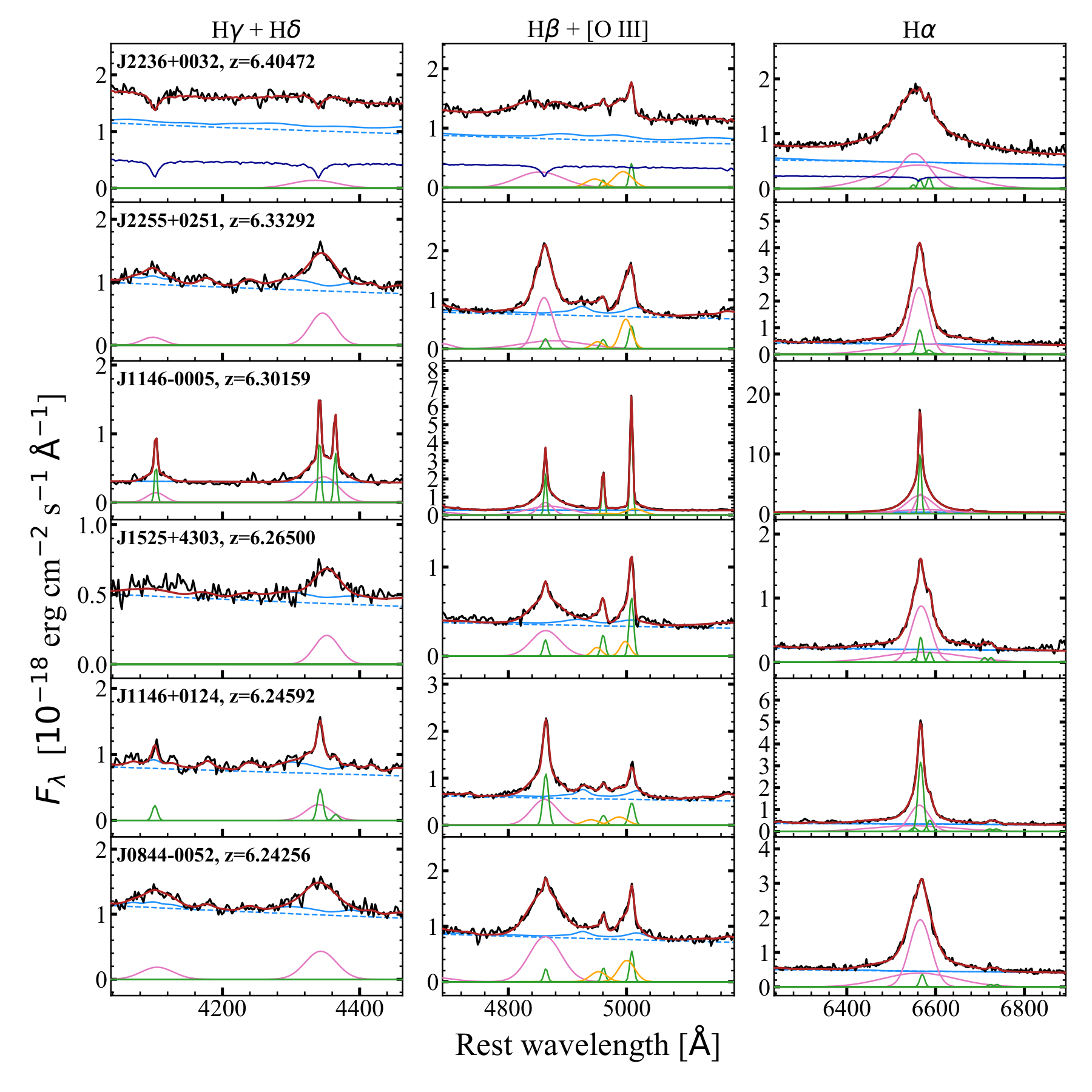
Balmer Absorption Series and Broad Metal Lines in Two Luminous Little Red Dots

Bingjie Wang, Jenny E. Greene, Hanpu Liu, et al.

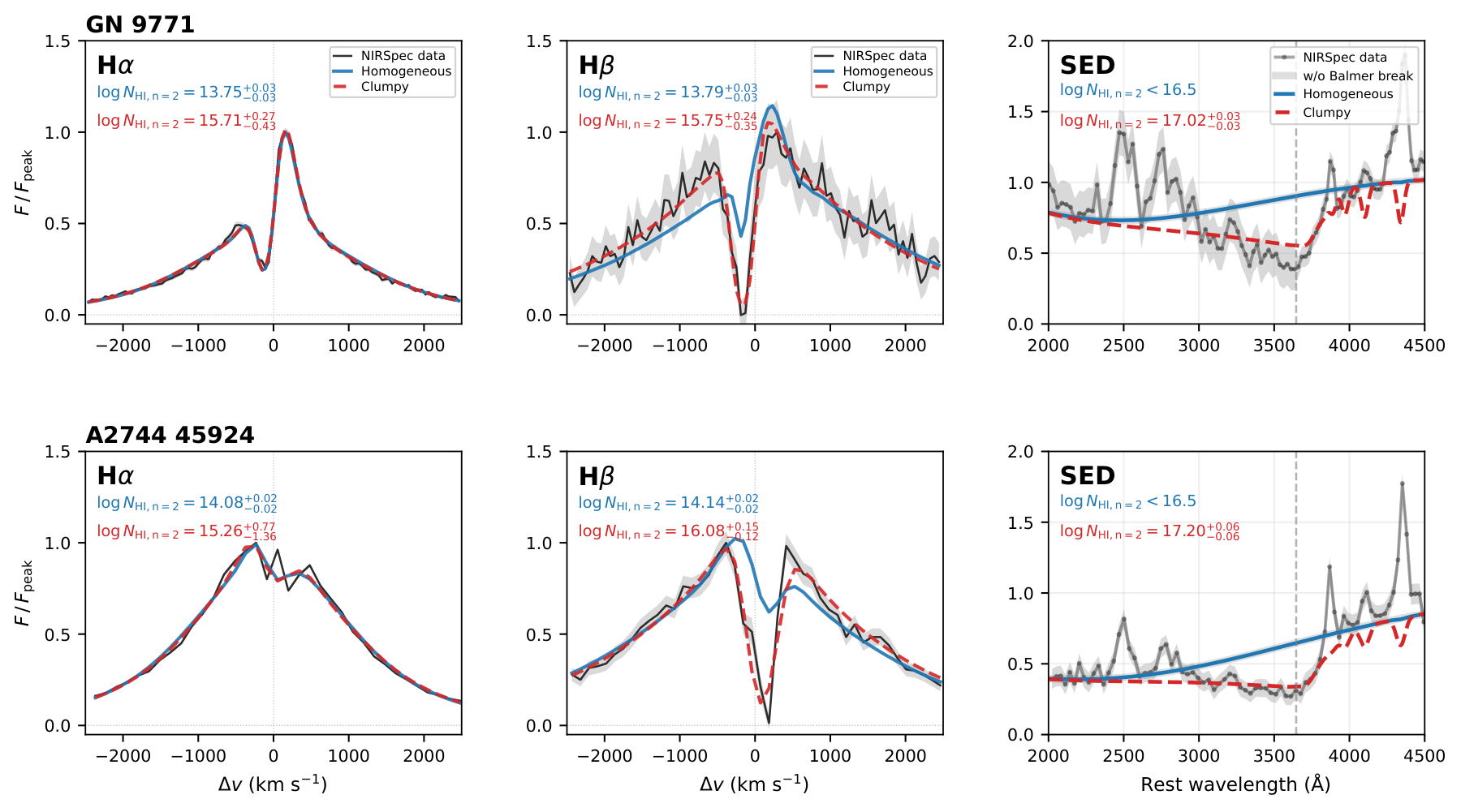
Deep JWST/NIRSpec spectra of two luminous LRDs resolve Hα–Hδ absorption near systemic velocity, with higher-order troughs redder and unexpectedly persistent. Broad metal lines and diagnostic ratios favor dense gas, while a stratified failed wind remains an interpretation rather than a detection.

2026-09-22 · 2609.22428v1 · Research note

Star Formation and Nebular Attenuation from Pa$α$, Br$α$, and Br$β$ in Massive Dust-obscured Galaxies at Cosmic Noon using JWST

Virginia Vanicek, Jed McKinney, Alexandra Pope, et al.

JWST MIRI/Spitzer hydrogen-line measurements in 27 dusty z~1–2 infrared galaxies yield directly inferred nebular attenuation declining from ~3 mag near 2 μm to ~1 mag near 4 μm, yet IR-based SFRs remain ~2.5 times higher.

2026-09-18 · 2609.19459v1 · Research note

Extreme Enrichment at Cosmic Dawn: Three FeII-Strong Quasars at z > 6 from the JWST Aether survey

Anniek J. Gloudemans, Emanuele Paolo Farina, Roberto Decarli, et al.

JWST/NIRSpec IFU spectra identify three z>6 quasars with extreme optical Fe II relative to Hβ, supporting rapid early enrichment while leaving accretion rates and nearby line-emitting structures materially uncertain.

Figure 2 from A dense, metal-rich absorber driven by a heavily dust-obscured galaxy: The direct evidence of CGM enrichment at $z\sim7$

2026-09-17 · 2609.17680v1 · Research note

A dense, metal-rich absorber driven by a heavily dust-obscured galaxy: The direct evidence of CGM enrichment at $z\sim7$

Qinyue Fei, Seiji Fujimoto, Gabriel Brammer, et al.

A single z=7.03 galaxy–absorber pair links a dusty, intensely star-forming galaxy to unusually strong multiphase metal absorption at 16 kpc. Blueshifted gas is consistent with an outflow, while abundance evidence for Population III enrichment remains suggestive rather than decisive.

Figure 3 from Host Galaxy UV Emission and Dust Reddening in Little Red Dots

2026-09-15 · 2609.13444v1 · Research note

Host Galaxy UV Emission and Dust Reddening in Little Red Dots

Emmanuel Durodola, Ryan C. Hickox, Jonathan Cohn, et al.

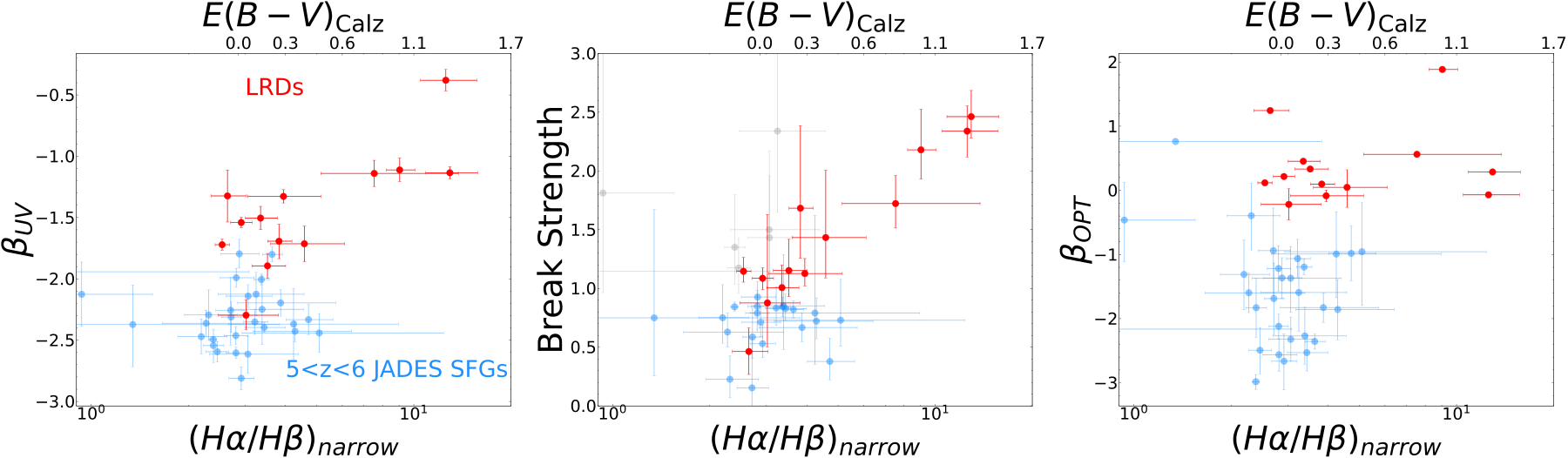
Medium-resolution JWST spectra of 13 LRDs link narrow-line Balmer decrements to UV slope and Balmer-break strength, which the authors interpret as host-scale dust reddening of predominantly stellar UV emission; extreme-break, flat-UV LRDs form a distinct subgroup.

Figure 1 from Nitrogen-Loud Quasars from the Dark Energy Spectroscopic Instrument. I. Sample Selection and Basic Properties

2026-09-11 · 2609.11104v1 · Research note

Nitrogen-Loud Quasars from the Dark Energy Spectroscopic Instrument. I. Sample Selection and Basic Properties

Shuo Zhai, Wei-Jian Guo, Yong-Jie Chen, et al.

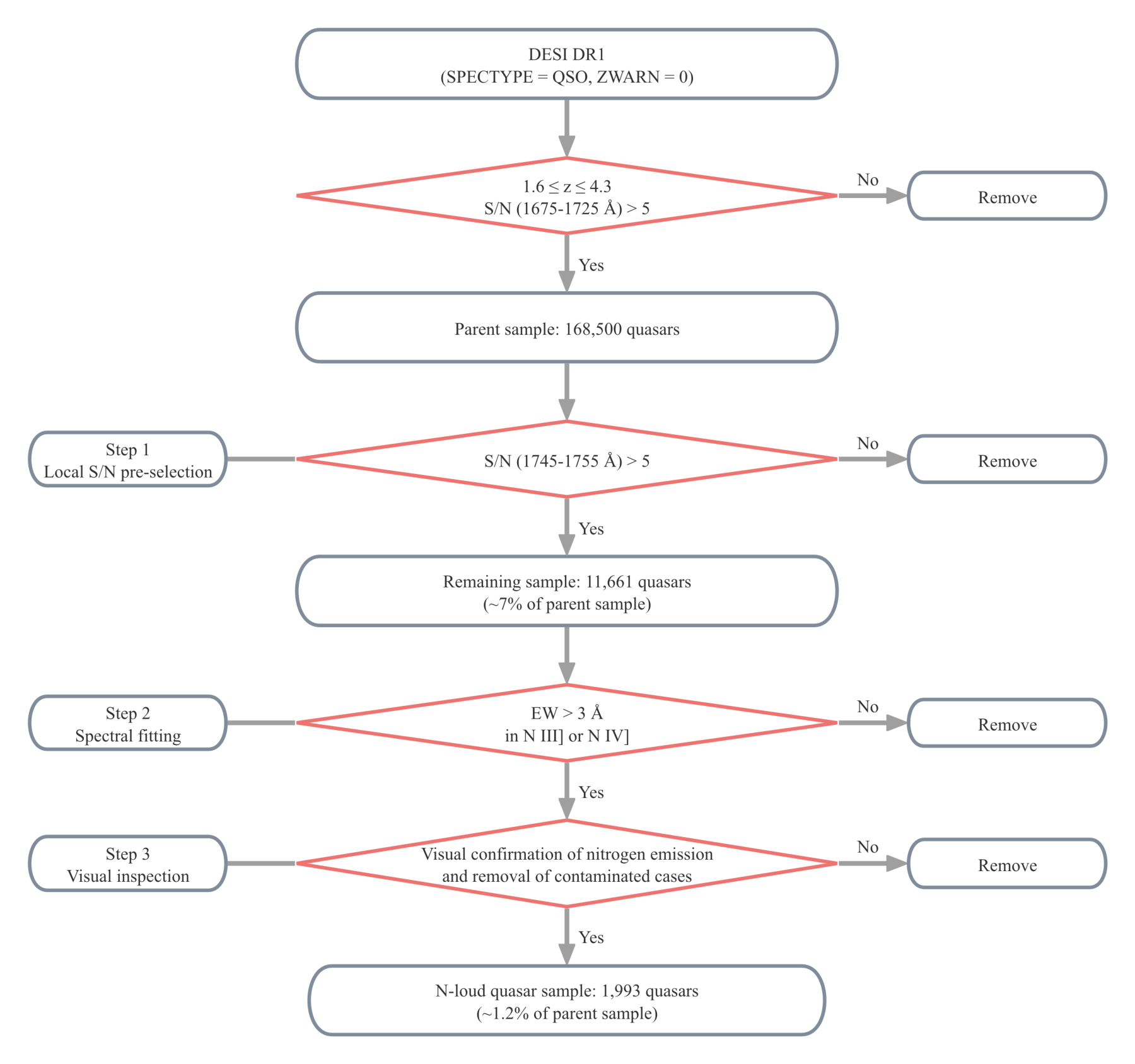
DESI DR1 yields 1,993 nitrogen-loud quasars at 1.6<z<4.3 (1.2% of the parent sample). Matched-control comparisons associate nitrogen-loud spectra with narrower broad lines, lower virial masses, and higher inferred Eddington ratios.

2026-09-11 · 2609.11094v1 · Research note

SPURS: An Ultra-deep View Inside the Compact, Nitrogen-Enriched Nuclei of Little Red Dots

Mengtao Tang, Daniel P. Stark, Charlotte A. Mason, et al.

Ultra-deep JWST/SPURS rest-UV spectra of four UV-bright Little Red Dots find dense, nitrogen-enhanced, neutral-gas-embedded nuclei and diverse broad-line/wind signatures. The authors infer compact nuclear activity, while stellar and AGN contributions remain degenerate.

2026-09-11 · 2609.10803v1 · Research note

The THRILS Factor: Investigating the properties of Little Red Dots (LRDs) at 3<z<6 with JWST/NIRSpec

Ananya Ganapathy, Rebecca L. Larson, Erini Lambrides, et al.

Deep JWST/NIRSpec spectra of nine z=3–6 LRDs favor electron-scattering-like broad-line profiles in five cases, implying substantial ionized columns but ∼50% covering fractions; this challenges unity-covering cocoon models while supporting an AGN-related origin.

Figure 4 from Extending the Little Red Dot population at intermediate redshift with VIPERS

2026-09-10 · 2609.10319v1 · Research note

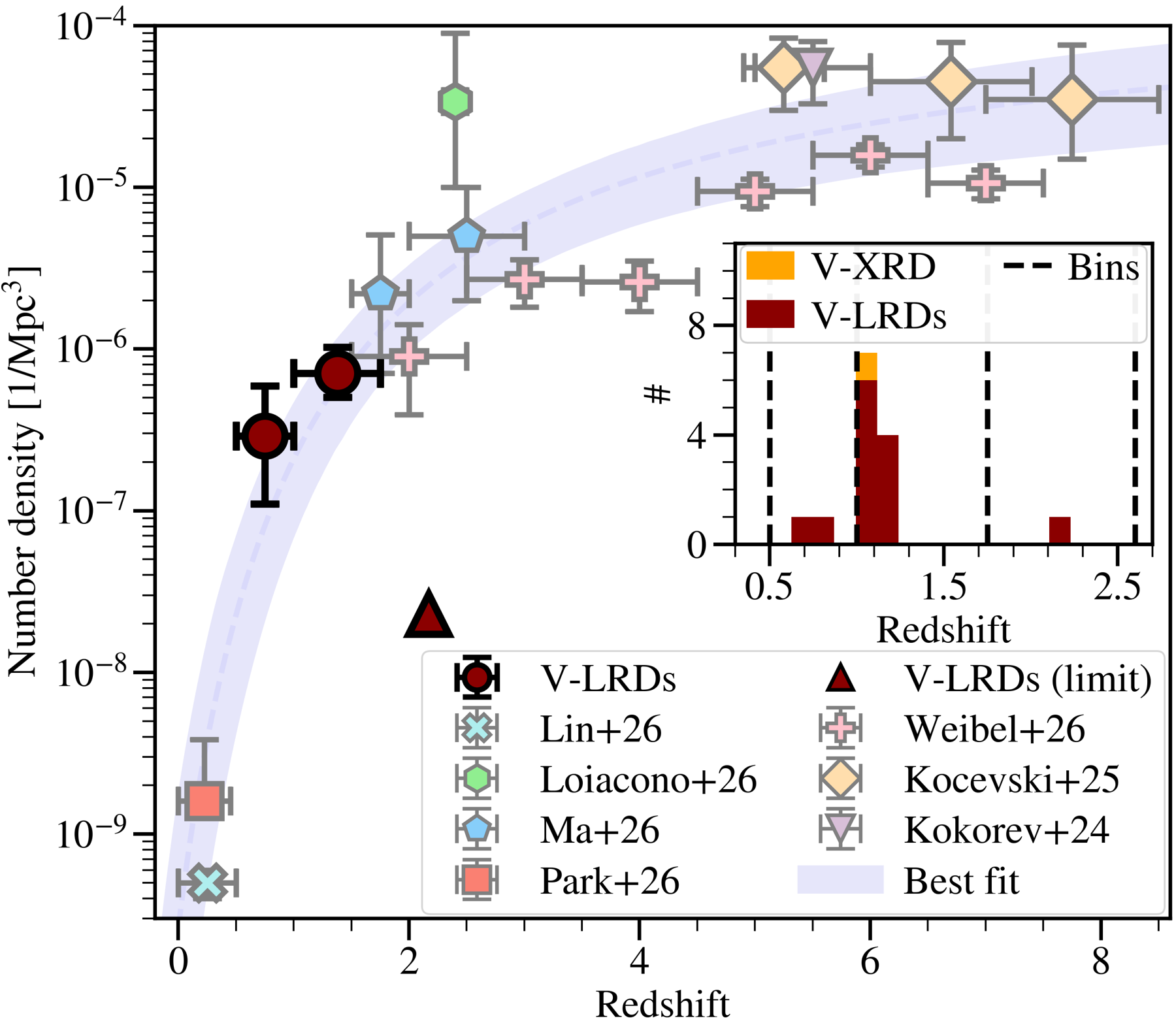
Extending the Little Red Dot population at intermediate redshift with VIPERS

Krzysztof Lisiecki, Krzysztof Hryniewicz, Francesco Pistis, et al.

VIPERS yields 14 compact, LRD-like sources at 0.5<z<1.75 selected through V-shaped photometric slopes and broad lines. Their inferred abundance declines sharply below z~1, while one unresolved X-ray source is consistent with a low-inclination, radiatively efficient disk.

2026-09-10 · 2609.09271v1 · Research note

The Ashes of Supermassive Stars: Globular Cluster-like Aluminum Enhancement in Little Red Dots

V. Kokorev, J. Chisholm, R. P. Naidu, et al.

Deep JWST spectroscopy of four z~7 LRDs finds Al-rich, Mg-poor, ~1% solar gas. The authors interpret its globular-cluster-like abundance pattern as hot hydrogen burning by ≥10^4-solar-mass supermassive stars, while saturation and small-sample uncertainties remain.

Figure 3 from SHELLQs. Black Hole Mass and Eddington Ratio Distributions of Intermediate-Luminosity Quasars at 6<z<7

2026-09-10 · 2609.09266v1 · Research note

SHELLQs. Black Hole Mass and Eddington Ratio Distributions of Intermediate-Luminosity Quasars at 6<z<7

Masafusa Onoue, John D. Silverman, Yoshiki Matsuoka, et al.

Near-IR spectroscopy of intermediate-luminosity SHELLQs quasars finds lower median virial black-hole masses and higher Eddington ratios than luminosity-matched z≈1.3 quasars, with 11–22% inferred near/super-Eddington depending on the single-epoch mass calibration.

2026-09-10 · 2609.09265v1 · Research note

A Spectral Framework for Testing the Quasi-Star Hypothesis in Little Red Dots I: Weighing LRDs by Their Super-Eddington Luminosity Ratios---No Signs of Overmassive Black Holes

Olivia Curtis, Nikko J. Cleri, Jakob M. Helton, et al.

Photospheric fits to 4 absorption-feature LRDs and 82 archival objects yield predominantly super-Eddington ratios. Coupled quasi-star envelope models place black-hole mass caps below local BH–host expectations, but the inference remains model- and host-prior-dependent.

2026-09-09 · 2609.07825v1 · Research note

A Dusty Quenching-candidate AGN host at z=5.7: massive quiescent galaxies may quench already during the dust-obscured phase

Francesco D'Eugenio, Matilde Brazzini, Roberto Maiolino, et al.

RUBIES-EGS-9809 is a single, heavily obscured broad-line AGN host at z=5.7 whose resolved Balmer break and declining-SFR SED fit make it a quenching candidate, not a confirmed post-starburst. Outflow signatures make AGN feedback plausible but unproven.

Figure 3 from Between Little Red Dots and Star-Forming Galaxies: A Sequence in the Optical Continuum Slope

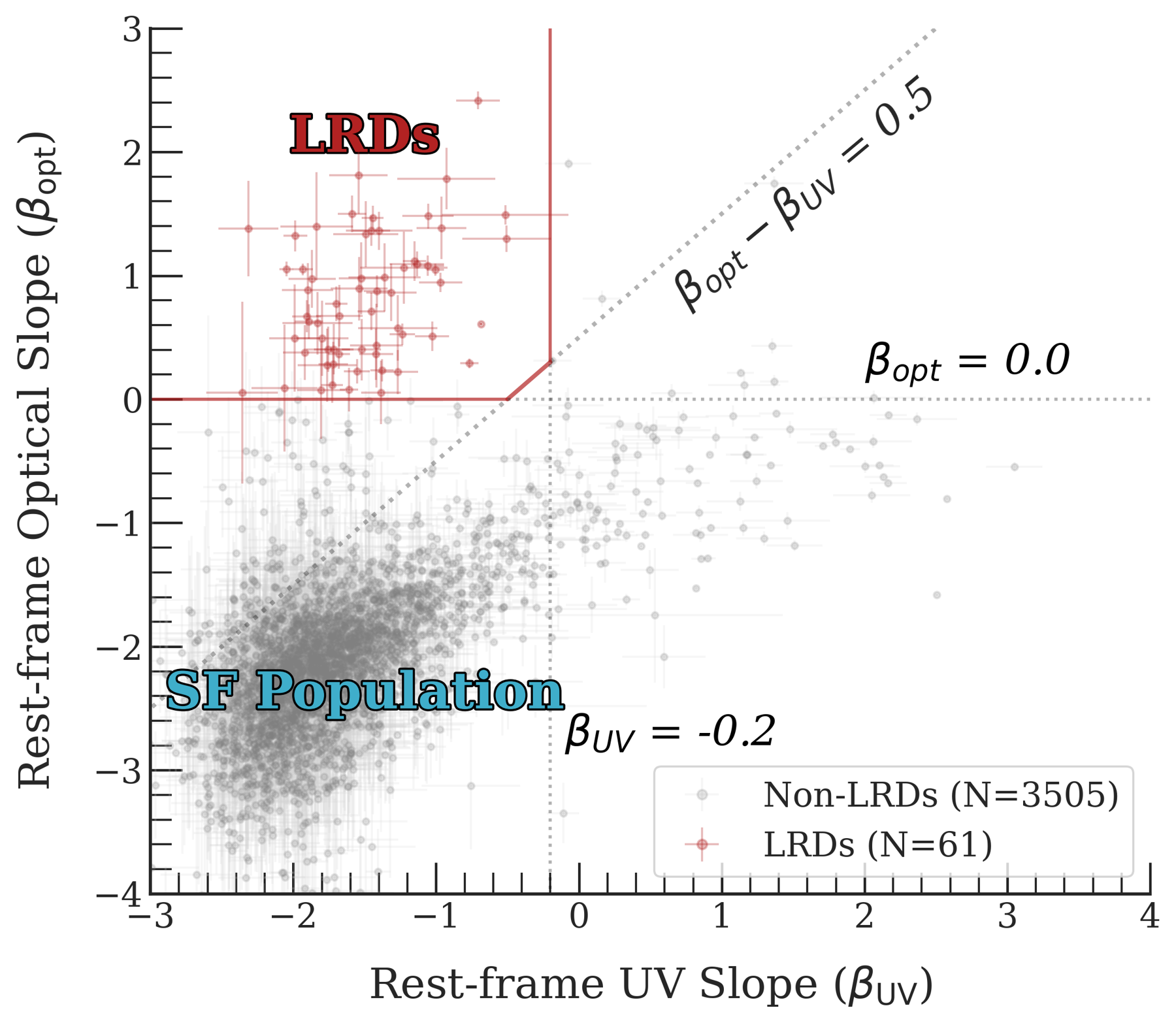
2026-09-08 · 2609.07025v1 · Research note

Between Little Red Dots and Star-Forming Galaxies: A Sequence in the Optical Continuum Slope

Kristiphong Boonmee, Akio K. Inoue, Masafusa Onoue, et al.

In 3,566 JWST/NIRSpec galaxies at z=3.0–8.1, UV–optical continuum slopes reveal a continuously populated path from star-forming galaxies to LRDs. The authors interpret it as changing host/BH* continuum contributions, while stressing model-dependent mass-ratio limits.

2026-09-03 · 2609.01711v1 · Research note

JWST Reveals a Candidate Supermassive Black Hole Binary at z=4.3 in the Brightest Sub-millimeter Galaxy in COSMOS-Web

Jed McKinney, Ansh Gupta, Julian B. Munoz, et al.

JWST spectra of the single dusty galaxy AzTEC-1 at z=4.3419 reveal a broad Hα component blueshifted by 1245 km s⁻¹. The authors favor a candidate sub-pc SMBH binary or recoiling SMBH over an ionized outflow, but confirmation requires resolved follow-up.

Figure 2 from Extreme AGN Variability in WISE: Powerful Flares and Candidate Tidal Disruption Events in AGN

2026-09-02 · 2609.01421v1 · Research note

Extreme AGN Variability in WISE: Powerful Flares and Candidate Tidal Disruption Events in AGN

Satya Teja Anuraag Upadhyayula, Daniel Stern, Kishalay De, et al.

A WISE pilot search finds two extreme mid-infrared AGN flares, modeled as dust echoes and interpreted as candidate TDEs. Their high inferred energies and contrasting optical/spectroscopic behavior make them promising, but not definitive, disruptions in active nuclei.

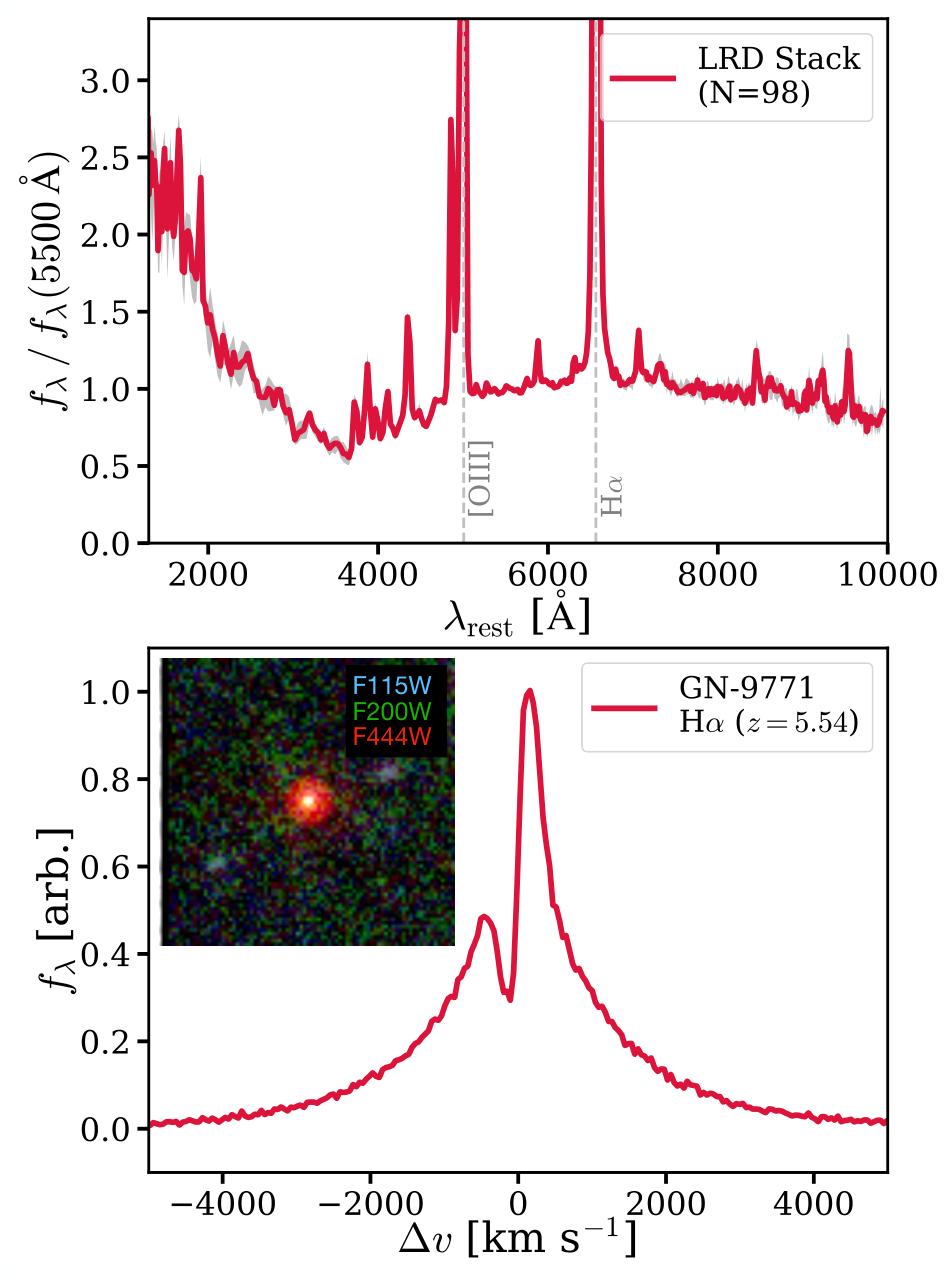
Figure 3 from Skyfire: A Spectroscopic Census of Little Red Dots and Broad-Line AGN in the CEERS Field

2026-09-02 · 2609.00112v1 · Research note

Skyfire: A Spectroscopic Census of Little Red Dots and Broad-Line AGN in the CEERS Field

Dale D. Kocevski, Anthony J. Taylor, Masafusa Onoue, et al.

Skyfire’s CEERS NIRSpec census finds broad Balmer emission across redder LRDs and somewhat bluer candidates, motivating an expanded continuum-slope selection. The color trend is suggestive of continuity with blue broad-line sources, but uneven targeting prevents a definitive population-unification claim.

2026-08-27 · 2608.25044v1 · Research note

To be lensed or not to be lensed: on the nature of the alleged high-z lensed quasars J0109-5424 and P170+20

Aurora Mata-Sanchez, Emanuele P. Farina, Anniek J. Gloudemans, et al.

Multi-wavelength follow-up overturns J0109−5424’s proposed high-redshift lens interpretation: Paschen lines place it at z=2.07 as a FeLoBAL quasar. For P170+20, compact imaging and a quasar+M-dwarf spectral fit disfavor, but do not exclude, lensing.

Figure 4 from Beyond orientation: Evidence for distinct physical regimes among Little Red Dots and Little Blue Dots

2026-08-25 · 2608.21522v1 · Research note

Beyond orientation: Evidence for distinct physical regimes among Little Red Dots and Little Blue Dots

L. Barrufet, J. S. Dunlop, M. L. Hamadouche, et al.

In 89 LRDs and 191 LBDs, LRDs have more luminous and broader Hα, larger Balmer decrements, and lower [O III]/Hβ. The authors argue these population-level differences strain luminosity-independent orientation alone, while not uniquely establishing a gas-cocoon mechanism.