654 indexed papers · 430 research notes

Research archive

Reset

2026-09-24 · 2609.26931v1 · Research note

Radio Quasars in the Cosmic Dawn: A Spectroscopic Sample from the DESI Survey

Anniek J. Gloudemans, Jinyi Yang, David M. Alexander, et al.

DESI spectroscopy plus 144-MHz LOFAR imaging identifies 83 radio-detected quasars at 4.7<z<6.7, including 26 radio-loud objects. Their UV spectra are broadly similar to non-detections; tentative weak-line excesses and BAL trends remain statistically inconclusive.

2026-09-18 · 2609.19459v1 · Research note

Extreme Enrichment at Cosmic Dawn: Three FeII-Strong Quasars at z > 6 from the JWST Aether survey

Anniek J. Gloudemans, Emanuele Paolo Farina, Roberto Decarli, et al.

JWST/NIRSpec IFU spectra identify three z>6 quasars with extreme optical Fe II relative to Hβ, supporting rapid early enrichment while leaving accretion rates and nearby line-emitting structures materially uncertain.

Figure 1 from An ALMA Band 7 survey of SDSS/Herschel quasars in Stripe 82: II. The nature of FIR-bright quasars

2026-09-16 · 2609.16951v1 · Research note

An ALMA Band 7 survey of SDSS/Herschel quasars in Stripe 82: II. The nature of FIR-bright quasars

Evanthia Hatziminaoglou, Hugo Messias, Duncan Farrah, et al.

For 142 optically unobscured, FIR-bright Stripe 82 quasars at z=1–4, ALMA deblending lowers inferred host SFRs yet leaves extreme starbursts. The authors find weak instantaneous starburst–accretion coupling and UV-line differences consistent with a transitional interpretation.

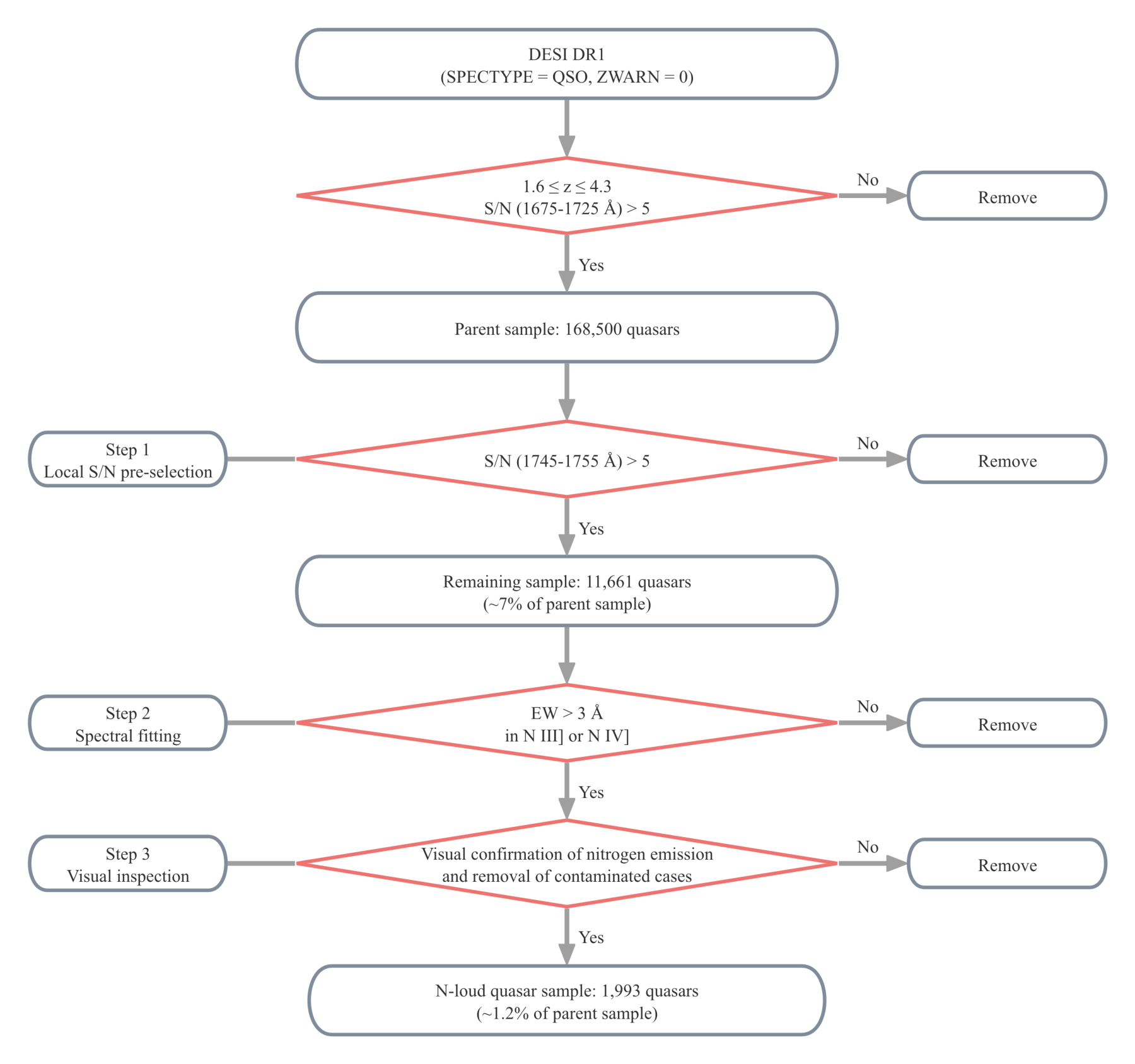
Figure 1 from Nitrogen-Loud Quasars from the Dark Energy Spectroscopic Instrument. I. Sample Selection and Basic Properties

2026-09-11 · 2609.11104v1 · Research note

Nitrogen-Loud Quasars from the Dark Energy Spectroscopic Instrument. I. Sample Selection and Basic Properties

Shuo Zhai, Wei-Jian Guo, Yong-Jie Chen, et al.

DESI DR1 yields 1,993 nitrogen-loud quasars at 1.6<z<4.3 (1.2% of the parent sample). Matched-control comparisons associate nitrogen-loud spectra with narrower broad lines, lower virial masses, and higher inferred Eddington ratios.

2026-08-20 · 2608.18691v1

The Total and Polarized Radio Emission from the Innermost Jets of a High-Redshift Quasar and a Candidate at Parsec-Scale Resolution

Bence Husvéth, Krisztina É. Gabányi, Tao An, et al.

Husvéth et al. present 22-GHz EVN total-intensity and polarimetric VLBI imaging of the secure z=4.31 quasar J1510+5702 and the redshift-uncertain compact source J1606+3124, sampling rest-frame frequencies above 118 GHz if both published high-redshift values apply. J1510+5702 contains a very compact, polarized core with Tb = (1.08 ± 0.15) × 10^12 K and about 3.5% fractional polarization, implying an equipartition Doppler factor of roughly 22 and directly probing its strongly beamed inner jet. J1606+3124 shows only low-level polarization and, conditional on z=4.56, a lower Tb of (7.4 ± 0.8) × 10^10 K that permits mild boosting but leaves a young compact-source interpretation viable; the key caveat is that its published spectroscopic redshift is uncertain, with a photometric estimate near z=0.9. Together, the measurements demonstrate that 22-GHz cm-VLBI can recover rest-frame millimeter polarization from bright z>4 jet systems.

2026-08-06 · 2608.04078v1

The most extreme high-z radio quasars in the eRASS:1 X-ray survey

L. Ighina, L. Palmieri, L. N. Martínez-Ramírez, et al.

Ighina et al. construct an eRASS:1-selected sample of extreme radio quasars by cross-matching eROSITA X-ray sources with RACS radio detections and DELVE optical/NIR dropout candidates, then spectroscopically following up 46 of 68 candidates. They confirm 39 quasars at z>3.5, including 14 new z>4 radio quasars, increasing the population above the same flux limits and area by about 65%. Their X-ray-to-optical and radio-loudness diagnostics identify a predominantly blazar-like subset, whose cumulative z>4 counts agree reasonably well with a fractional IC/CMB X-ray-enhancement model. The resulting uniformly selected sample provides a stronger basis for testing early jetted-SMBH growth and relativistic-jet evolution, although the redshift distribution remains affected by incomplete spectroscopy and blazar-classification choices.

2026-07-30 · 2607.26255v1 · Research note

Tracing the Cosmic web across Cosmic time through SKA observations of radio galaxies

Pratik Dabhade, Gianluca Castignani, Mousumi Mahato, et al.

This review argues that SKA radio morphology, spectra and polarimetry, tied to redshift-resolved environmental maps, can turn radio galaxies into statistical cosmic-web probes; its quantitative examples are forecasts and pathfinder benchmarks rather than new SKA measurements.

Figure 3 from AGN Feedback: The impact of galactic-scale radio jets on the interstellar medium in starbursting obscured AGN

2026-07-01 · 2606.31673v1 · Research note

AGN Feedback: The impact of galactic-scale radio jets on the interstellar medium in starbursting obscured AGN

M. Polletta, C. J. Lonsdale, P. Pallavi, et al.

This is a proposed ELT/VESPER integral-field program, not a feedback detection: it will map eleven z=1.5–2.5 obscured, starbursting radio AGN to test whether spatially resolved jet–ISM associations coincide with shocks, outflows, and altered star formation.

2026-07-01 · 2606.30757v1 · Research note

Unveil the nature of JWST-AGN and Little Red Dots with SKAO continuum surveys

Giovanni Mazzolari, Dharam V. Lal, Isabella Prandoni, et al.

This forecasting study argues that multi-frequency SKAO continuum observations could separate intrinsically weak, Compton-thick, and ionized-cocoon interpretations of radio-faint JWST AGN and LRDs, but it presents sensitivity-based predictions rather than new radio detections.

2026-05-04 · 2605.02663v1 · Research note

Jet-driven shocks and turbulence in radio-loud Active Galactic Nuclei observed with JWST MIRI/MRS

Rogemar A. Riffel, Gabriel L. Souza-Oliveira, Luis Colina, et al.

JWST/MIRI-MRS mapping of seven nearby radio-loud AGN links elevated warm-H2 excitation and broadened multiphase gas to radio-jet environments, including transverse regions. The authors interpret the correlations as predominantly jet-driven shocks, while recognizing source-dependent exceptions.

Figure 3 from PEARLS: Two Distinct Populations of AGN Hosts Moving Between Star Formation and Quiescence

2026-05-01 · 2605.00822v1 · Research note

PEARLS: Two Distinct Populations of AGN Hosts Moving Between Star Formation and Quiescence

Gibson B. Bowling, Rafael Ortiz, S. P. Willner, et al.

After image decomposition and host-only SED fitting, 36 NIRCam-selected NEP-TDF AGN candidates separate into a likely AGN “branch” and an ambiguous, largely early-type “bridge” near quenching; the reported SFR–AGN-fraction trend is weakly explanatory.

Figure 2 from A striking excess of red quasars with steep radio spectral slopes: a dusty blow-out phase revealed through AGN-driven shocks?

2026-03-25 · 2603.24739v1 · Research note

A striking excess of red quasars with steep radio spectral slopes: a dusty blow-out phase revealed through AGN-driven shocks?

Ciera L. Sargent, David M. Alexander, Claire L. Greenwell, et al.

Across SDSS quasars at 0.2<z<2.4, compact red quasars show an excess near α1.4–3 GHz≈−1 that strengthens with dust extinction. The authors interpret this as wind/jet–ISM shocks during a dusty blow-out phase, but radio spectra alone do not establish that mechanism.

2026-01-12 · 2601.07990v1 · Research note

Evidence of Feedback Effects in Low-luminosity Active Galactic Nuclei Revealed by JWST Spectroscopy

Lulu Zhang, Chris Packham, Erin K. S. Hicks, et al.

JWST 3–28 μm nuclear spectroscopy of four low-luminosity AGN associates weak high-ionization emission, shock-like line ratios, altered PAH populations, and non-thermal H₂ excitation with feedback, while leaving the proposed jet connection indirect.

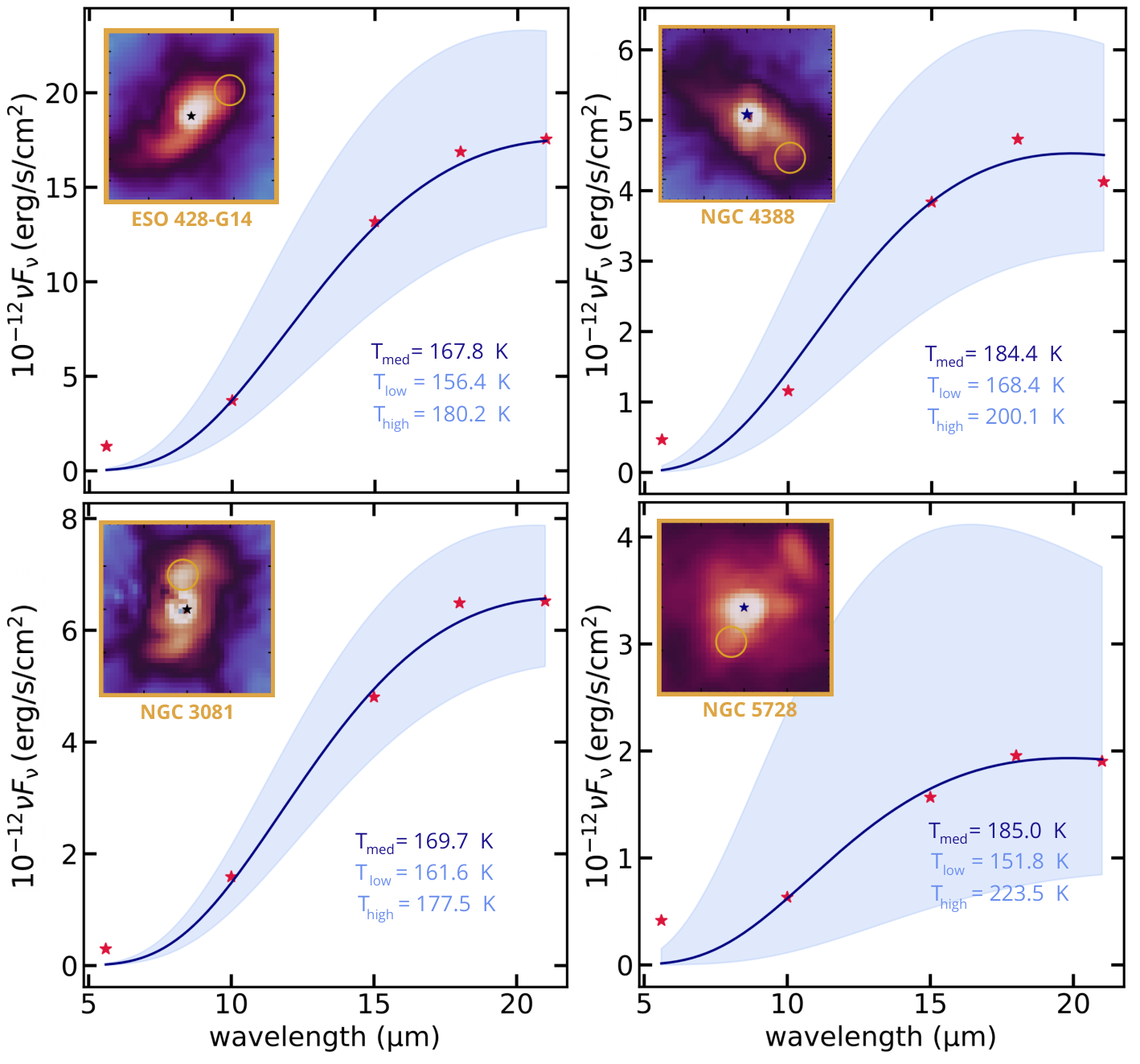
Figure 4 from GATOS XI : Excess dust heating in the Narrow Line Regions of nearby AGN revealed with JWST/MIRI

2026-01-06 · 2601.02865v1 · Research note

GATOS XI : Excess dust heating in the Narrow Line Regions of nearby AGN revealed with JWST/MIRI

Houda Haidar, David J. Rosario, Ismael García-Bernete, et al.

JWST/MIRI imaging of eight nearby Seyferts finds resolved 100–200 pc NLR dust in four. Its warm, steep mid-IR SEDs exceed simple AGN-heating predictions; the authors therefore favor local shock heating, while treating shocks as an interpretation rather than a direct calorimetric detection.

2025-12-01 · 2512.02096v1

Discovery of two little red dots transitioning into quasars

Shuqi Fu, Zijian Zhang, Danyang Jiang, et al.

Reports two COSMOS LRDs—Forge I (z=2.868) and Forge II (z=2.925)—whose V-shaped UV–optical SEDs, compact morphologies, and broad Paschen/He I lines meet LRD criteria. Unlike typical LRDs, they show strong X-ray, radio, and mid-IR emission, moderate X-ray obscuration, a 6.4 keV Fe K line in Forge II, and unusually large year-scale X-ray variability while UV broad lines remain weak/absent. The spectra reveal strong He I absorption in both and rare Pa absorption in Forge II, indicating dense, low-ionization gas with mixed inflow/outflow kinematics as the envelope thins. Authors argue these hybrids are LRDs in transition, with dispersing dense gas and an emerging dust torus, implying some LRDs evolve into normal AGN/quasars.
2025-11-24 · 2511.19602v1 · Research note

Tracing AGN-Galaxy Co-Evolution with UV Line-Selected Obscured AGN

Luigi Barchiesi, Lucia Marchetti, Mattia Vaccari, et al.

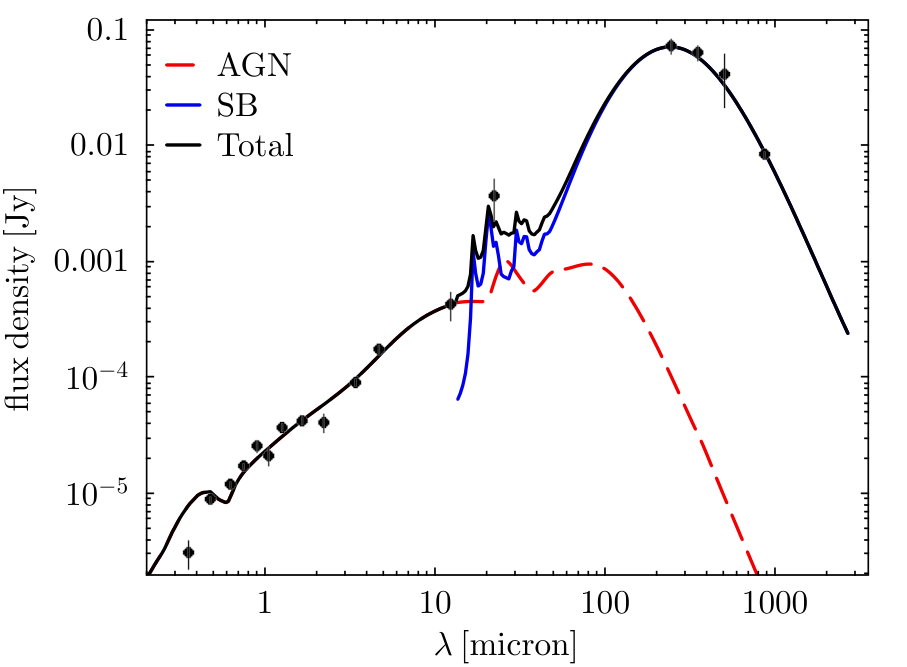
A 184-object COSMOS sample selected through [Ne V] or C IV combines X-ray–radio SED fitting with Simba analogues. The authors infer obscured, high-accretion transitional populations, with [Ne V] hosts pre-quenching and C IV hosts more often quenched.

2025-11-17 · 2511.13650v1 · Research note

JWST observes the assembly of a massive galaxy at z~4

Aayush Saxena, Roderik A. Overzier, Catarina Aydar, et al.

JWST resolves TGSSJ1530+1049 at z=4 into a compact, massive, actively star-forming association around a radio AGN. Its geometry and kinematics support both jet–gas interaction and galaxy interactions, with the authors predicting merger into a massive galaxy within a few Gyr.

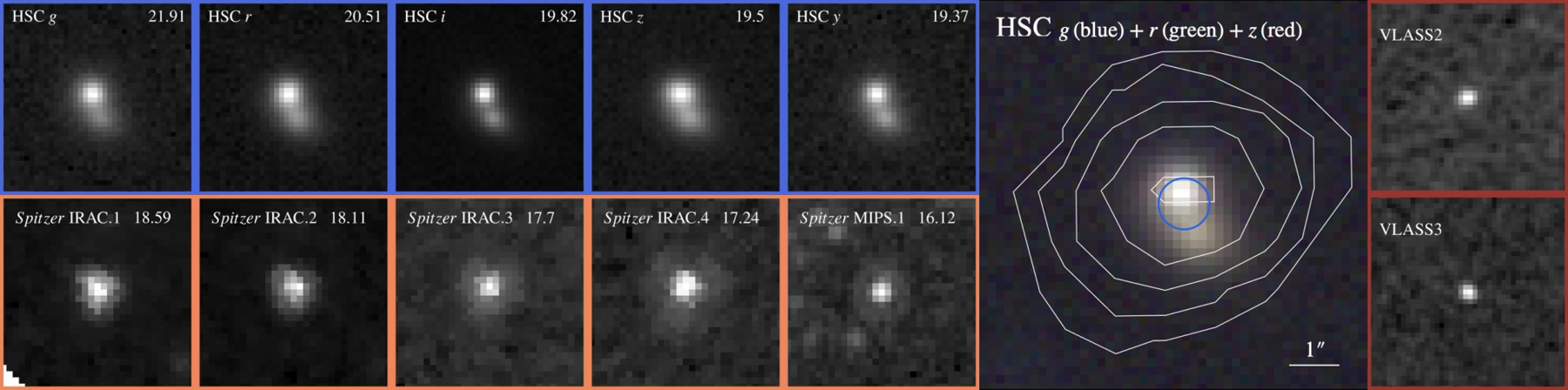
Figure 1 from Discovery of an X-ray Luminous Radio-Loud Quasar at $z=3.4$: A Possible Transitional Super-Eddington Phase

2025-11-07 · 2511.05029v1 · Research note

Discovery of an X-ray Luminous Radio-Loud Quasar at $z=3.4$: A Possible Transitional Super-Eddington Phase

Sakiko Obuchi, Kohei Ichikawa, Satoshi Yamada, et al.

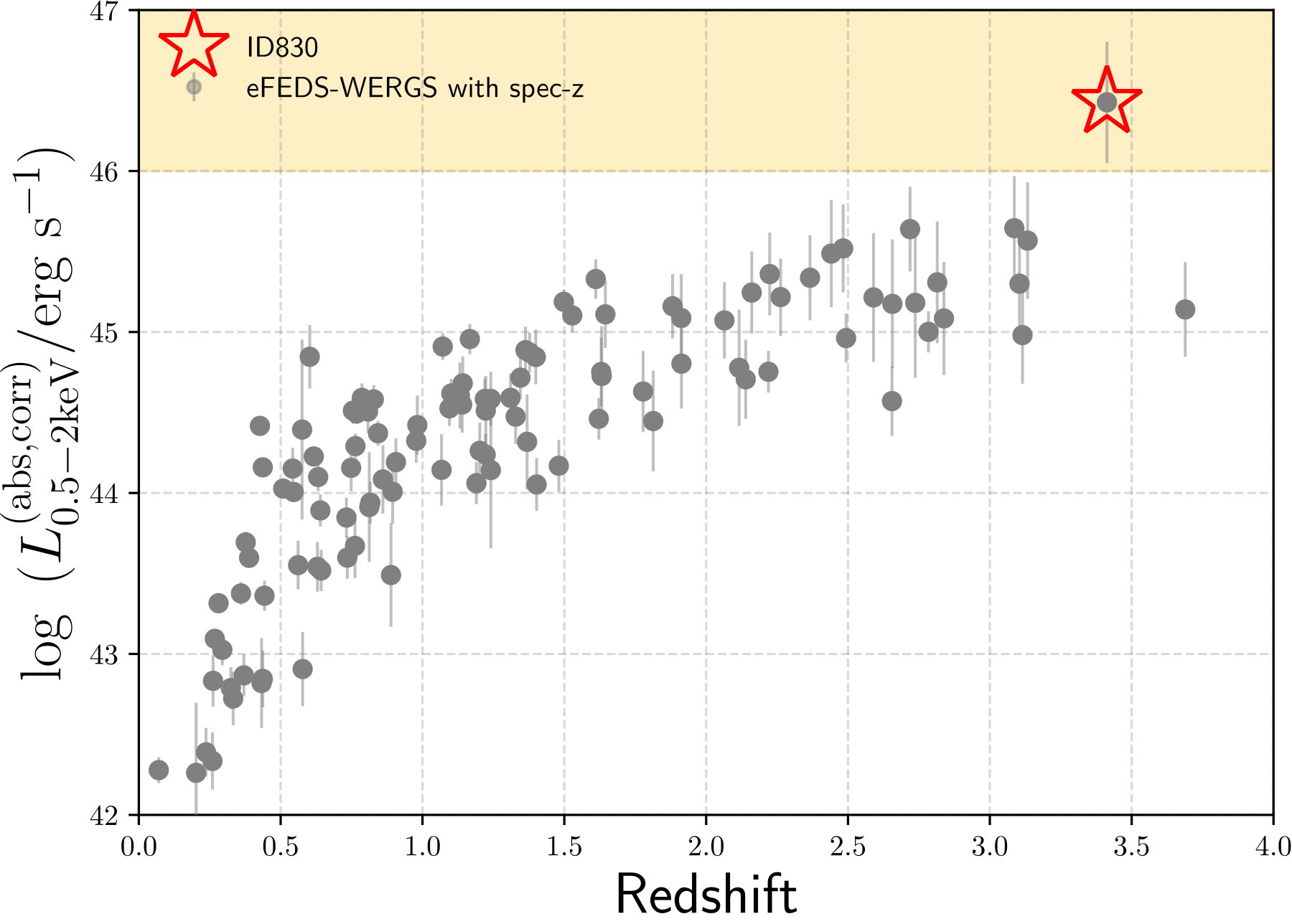
ID830 is a z=3.4351 radio-loud quasar with extreme, steep X-ray emission and a UV-based super-Eddington estimate. The authors interpret its X-ray excess as corona-plus-jet emission during a possible post-burst transition, not a demonstrated evolutionary state.

2025-10-02 · 2510.02517v1 · Research note

Impact of AGN and nuclear star formation on the ISM turbulence of galaxies: Insights from JWST/MIRI spectroscopy

Rogemar A. Riffel, Luis Colina, José Henrique Costa-Souza, et al.

JWST/MIRI mapping of 54 nearby galaxies finds broader ionized than warm-H2 lines in AGN, especially radio-strong systems; line-ratio/model comparisons associate the most turbulent gas with shocks, while the authors cautiously propose AGN or stellar-feedback origins.

2025-09-05 · 2509.05423v1

Another view into JWST-discovered X-ray weak AGNs via radiative dusty feedback

W. Ishibashi, A. C. Fabian, R. Maiolino, et al.

The authors revisit the X-ray weakness of JWST-selected AGN by mapping dusty gas dynamics onto the N_H–λ plane using the effective Eddington limit for dust. Varying metallicity, grain size, and composition shifts the critical boundary: low-Z, dust-poor gas resists radiation pressure, enabling long-lived nuclear absorption and heavy X-ray obscuration consistent with early JWST-AGN and LRDs. The blowout vs. stalling analysis shows that higher metallicity is needed to expel larger columns, whereas substantial columns stall at low Z, making metallicity a key regulator of obscuration. The framework also naturally links Balmer absorption features and weak radio emission to the same radiative dusty feedback physics.

2025-09-03 · 2509.03291v1

What Do Radio Emission Constraints Tell Us About Little Red Dots as Tidal Disruption Events?

Krisztina Perger, Judit Fogasy, Sándor Frey

The authors test whether little red dots can be explained as tidal disruption events by confronting 3 GHz stacking-based radio non-detections of LRDs with known TDE radio luminosities and volumetric rates. Converting the VLASS/GOODS-N/COSMOS stacking limits into rest-frame specific luminosities across the LRD redshift range, they find radio-quiet TDEs are fully consistent with the limits, while radio-loud TDEs fit only in restricted redshift–spectral-index regions. Forward-modeling fluxes for representative TDEs (RQ: XMMSL1 J0740−85, ASASSN-14li; RL: Sw J1112.82, Sw J2058+05) and comparing number densities shows that delayed, long-lived radio flares plus cosmological time dilation still keep a TDE origin plausible from the radio point of view. The single radio-detected LRD (PRIMER-COS 3866) also lies within the allowed parameter space.

2025-08-11 · 2508.08460v1

MAGAZ3NE: Far-IR and Radio Insights into the Nature and Properties of Ultramassive Galaxies at $z\gtrsim3$

Wenjun Chang, Gillian Wilson, Ben Forrest, et al.

Adds ten FIR-to-radio passbands to the MAGAZ3NE UV–NIR catalogs and performs UV–radio SED fits for two ultramassive galaxies, COS-DR3-195616 (z=3.255) and COS-DR1-209435 (z=2.481), revising earlier classifications. The full SEDs show 195616 is unobscured and quenching with a largely depleted molecular-gas reservoir, while 209435 is a heavily obscured, actively star-forming UMG with a long depletion timescale. The authors forecast that 209435 will grow by 0.34 dex to log(M⋆/M⊙)=11.72 over 0.72 Gyr and present multi-pronged evidence for AGN in both systems, with feedback likely linked to gas depletion in 195616 but not yet suppressing star formation in 209435. The work demonstrates how FIR–radio constraints prevent UV–NIR-only misclassification and sharpen the AGN–quenching picture for ultramassive galaxies at early times.

2025-07-28 · 2507.21230v1

Can high-redshift AGN observed by JWST explain the EDGES absorption signal?

Alexandra Nelander, Christopher Cain, Jordan C J DSilva, et al.

Tests whether a high‑z radio‑loud AGN population—calibrated to JWST UV luminosity functions and extrapolated to z≈20—can provide the excess radio background needed for the EDGES 78 MHz absorption. Matching the EDGES depth requires that essentially all UV‑bright sources down to M_UV ≳ −15 are radio‑loud AGN, with the UV number density declining by ≤1.5 dex from z=10→20, and an X‑ray escape fraction ≲1% to avoid pre‑heating that erases the trough. Only an extremely shallow UVLF evolution can achieve the amplitude, and reproducing the trough’s sharp edges and flat bottom demands fine‑tuned redshift dependence of the UVLF, AGN UV fraction, and X‑ray leakage. Verdict: physically possible but implausible given the extreme requirements.

2025-07-10 · 2507.07380v1

AT2019cmw: A highly luminous, cooling featureless TDE candidate from the disruption of a high mass star in an early-type galaxy

Jacob L. Wise, Daniel A. Perley, Nikhil Sarin, et al.

This paper presents dense optical/UV monitoring plus X-ray and radio follow-up of the ZTF nuclear transient AT2019cmw (z=0.519), which reached an extraordinary peak bolometric luminosity of ~10^45.6 erg s^-1. Spectra remained featureless while the continuum cooled steadily from ~30 kK to ~10 kK over the first ~300 days, supporting a classification as a luminous, “featureless” TDE in an early-type host. Deep non-detections in X-ray and radio constrain on-axis jets and any visible inner accretion disk. Light-curve modeling (cooling-envelope, with a reprocessing-outflow alternative) favors the disruption of a tens-of-solar-masses star by an SMBH, hinting at localized nuclear star formation despite the quiescent host.

2025-07-02 · 2507.01355v1

The birth of young radio jets in changing-look AGN: a population study

Sufia Birmingham, Charlotte Ward, Kristina Nyland, et al.

A population study of 474 spectroscopically confirmed changing-look AGN tracks their radio behavior with ASKAP VAST and VLASS to test whether optical state changes spawn newborn radio jets. Across 20 VAST-detected CLAGN, the authors see no Mrk 590– or 1ES 1927+654–like radio fading within ~10 years of the changing-look epoch, and for six low‑z, high‑mass objects they rule out a Mrk 590–like flare. Population-wide, CLAGN show higher VAST/VLASS detection and 1 GHz variability rates but lower radio‑loud fractions than a control AGN sample, and VLA SEDs plus Magellan spectra do not support a link to VLASS sources that transitioned from radio‑quiet to radio‑loud. The results imply enhanced accretion episodes often stir compact radio activity but rarely mirror the decadal jet turn‑on channel seen in RL-transition systems, constraining when and how young radio jets are born.

2025-06-26 · 2506.20896v1

Blowing star formation away in AGN Hosts (BAH) -- IV: Feeding and feedback in 3C 293 observed with JWST NIRSpec

Maitê S. Z. de Mellos, Rogemar A. Riffel, Gabriel L. Souza-Oliveira, et al.

JWST/NIRSpec IFU mapping of 3C 293’s inner ~2 kpc separates the gas into a rotating disk (σ ~100 km s−1), a blueshifted broad outflow (σ ~250 km s−1), and a very broad ionized outflow (σ ~640 km s−1). H2 2.12 μm, [Fe II] 1.64 μm, and Paα trace multiphase flows through heavy dust (A_V up to ~35), with H2 inflow along dust lanes at Ṁ_in ~4×10⁻⁴ M⊙ yr−1. Peak outflow rates reach 0.08±0.02 M⊙ yr−1 (hot H2) and 6.5±1.7 M⊙ yr−1 (ionized), and the jet-driven outflow carries ≈5% of the radio-jet power—sufficient to suppress star formation. The stellar field is a rotating disk whose kinematic center is offset by ~0.5 arcsec from the NIR continuum peak, consistent with a disturbed, post-merger nucleus.

2025-06-25 · 2506.20634v1

The VLA Frontier Fields Survey: A 6GHz High-resolution Radio Survey of Abell 2744

Esteban A. Orozco, Eric F. Jiménez-Andrade, Eric J. Murphy, et al.

Ultra-deep 6 GHz VLA imaging of Abell 2744 (z=0.307) reaches ≈1 µJy beam−1 at 0.82″, yielding 93 detections, 46 with optical/NIR counterparts spanning z=0.15–3.55 (median z=0.93; median M⋆≈2.3×10^10 M⊙). Radio-inferred SFRs exceed UV–NIR estimates by roughly an order of magnitude, pointing to heavily obscured star formation missed by rest-UV/optical tracers. No individual radio counterparts are found for the z≈6 Little Red Dots; stacking sets a stringent 3σ limit of L6 GHz < 4.1×10^39 erg s−1. The survey also assembles 22 μ≳2 lensed systems, enabling sub-arcsecond probes of main-sequence galaxies at z∼1–2.

2025-06-22 · 2506.18112v1

Peering into the heart of darkness with VLBA : Radio Quiet AGN in the JWST North Ecliptic Pole Time-Domain Field

Payaswini Saikia, Ramon Wrzosek, Joseph Gelfand, et al.

A 4.8 GHz VLBA snapshot survey of the JWST NEP Time-Domain Field targeted 106 VLA-selected radio sources and detected 12 compact emitters at 3.3 μJy rms and 4 mas resolution. The detections show pc-scale (<40 pc) structure with high VLBA/VLA flux ratios and Tb >10^5 K, and flatter spectra (α > −0.5) correlate with higher compactness—consistent with synchrotron from AGN coronae or low-power jets. Star formation contributes <50% of the VLBA flux in most cases, with several cores essentially AGN-driven; eight have JWST/NIRCam counterparts in predominantly early-type, bulge-dominated hosts, and WISE colors separate compact AGN/intermediate disks from extended SF galaxies. Comparing SCUBA-2 850 μm SFRs to new JWST-based estimates reveals discrepancies, underscoring JWST’s leverage to disentangle black-hole–driven radio cores from host-galaxy star formation.

2025-06-16 · 2506.13945v1

Euclid: The potential of slitless infrared spectroscopy: A z=5.4 quasar and new ultracool dwarfs

E. Bañados, V. Le Brun, S. Belladitta, et al.

Euclid NISP slitless spectra demonstrate blind, space-based identification of both high‑z quasars and their chief photometric contaminants, ultracool dwarfs. The team reports a bright z=5.404 quasar, EUCL J181530.01+652054.0, flagged by strong broad CIII] and MgII in RGE (1206–1892 nm) with CIV/CIII] also in BGE (926–1366 nm) and confirmed by LBT optical data. It is a high‑excitation BAL quasar detected by LOFAR at 144 MHz (L144≈4×10^25 W/Hz), with Lbol≈3×10^12 Lsun and MBH≈3.4×10^9 Msun—an unexpectedly luminous find within only ~20 deg2. Cross-correlation of NISP spectra likewise yields new ultracool dwarfs (e.g., T3 EUCL J002516.31+491618.5; M6 EUCL J174429.80+672728.1), underscoring RGE’s ability to uncover bright quasars at z~5.5 and z>7 where photometric selection struggles.

2025-05-21 · 2505.15923v1

Discovery and characterization of 25 new quasars at 4.6 < z < 6.9 from wide-field multi-band surveys

Silvia Belladitta, Eduardo Bañados, Zhang-Liang Xie, et al.

Targeted optical/IR/radio selections across wide-area surveys yield 25 new luminous quasars at 4.6<z<6.9 (six at z≥6.5; M1450 −25.4 to −27.0), plus new spectra for six independently discovered z>6.5 sources. Three are strong radio emitters, including a z=4.71 object with blazar-like traits (flat spectrum, radio-loudness ~1000, multi-frequency variability) and an SRG/eROSITA X-ray detection (f0.2–2.3 keV ≈1.3×10^−13 erg s^−1 cm^−2). NIR spectroscopy for seven 6.3<z<6.9 quasars gives MgII-based black hole masses of 10^8.58–10^9.14 Msun and Eddington ratios 0.74–2.2, with one source showing an extreme CIV–MgII velocity offset of ~9000 km s^−1. The sample also includes three HiBALs, one with a potential 48,000 km s^−1 outflow, expanding the rare jetted/outflowing quasar census that constrains early SMBH growth and feedback.

2025-04-18 · 2504.13658v1

SRGAJ230631.0+155633: an extremely X-ray luminous, heavily obscured, radio-loud quasar at z=0.44 discovered by SRG/ART-XC

Grigory Uskov, Sergey Sazonov, Igor Lapshov, et al.

SRGA J230631.0+155633 is a z=0.4389, type 2, radio‑loud quasar uncovered by SRG/ART‑XC (4–12 keV) and followed up near‑simultaneously with ART‑XC and Swift/XRT in June 2023, revealing heavy absorption with N_H ≈ 2×10^23 cm^-2. Its intrinsic 2–10 keV luminosity declined from (6^{+6}_{−3})×10^45 erg s^-1 during the 2020–2021 all‑sky scans to (1.0^{+0.8}_{−0.3})×10^45 erg s^-1 in 2023, indicating strong rest‑frame ~1 yr variability while remaining quasar‑luminous. Radio imaging shows a core plus two extended lobes consistent with a giant FR II radio galaxy. Multi‑wavelength constraints imply L_bol ~6×10^46 erg s^-1 and M_BH ~1.4×10^9 M_⊙ (λ_Edd ~0.3), making this one of the most luminous obscured quasars out to z ≈ 0.5 and a nearby laboratory for buried SMBH growth.

2025-04-14 · 2504.10573v1

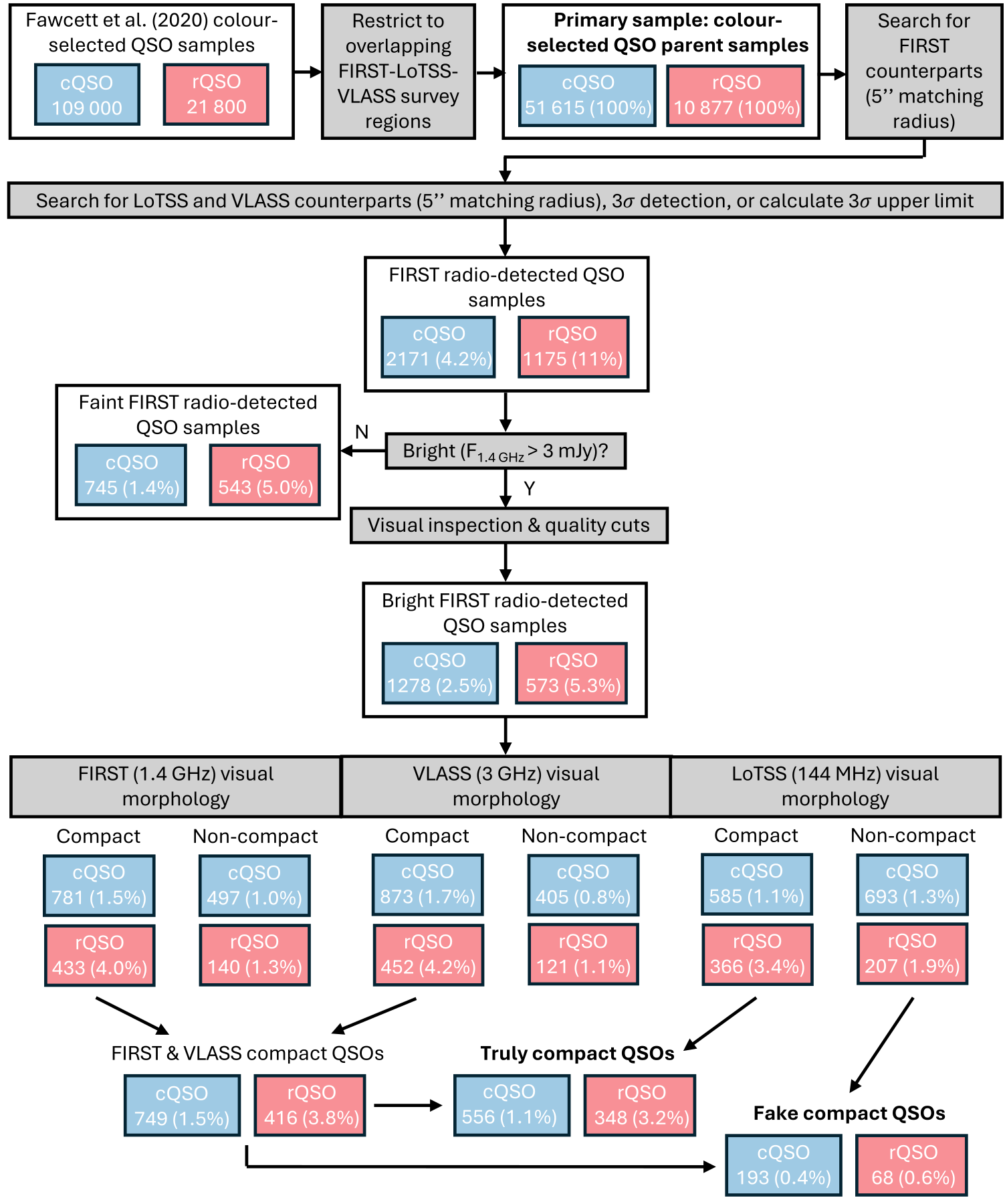
High-$z$ radio Quasars in RACS I: Selection, identification, and multi-wavelength properties

L. Ighina, A. Caccianiga, A. Moretti, et al.

Cross-matching RACS-low (888 MHz) with DES and Pan-STARRS, the authors selected 45 bright radio/optical-dropout candidates (S_888MHz>1 mJy, z_mag<21.3) over 16,000 deg^2 and spectroscopically confirmed 24 new quasars, 13 at 4.5<z<5 and 11 at z>5. Including comparable literature objects, the z>5 RACS set reaches 33 powerful radio quasars with νL_1.4GHz≈10^41.5–10^44.4 erg s^-1 and is ~90% complete at the stated flux and magnitude limits. Multi-band radio plus new X-ray coverage (Chandra, uGMRT, MeerKAT, ATCA) reveal predominantly flat spectra (22 with −0.5<α_r<0.5) and X-ray luminosities exceeding coronal expectations. The combined evidence points to many blazar-like, jet-aligned systems, delivering a bright, homogeneous anchor sample for population studies of early SMBH growth.

2025-04-10 · 2504.08067v1

Disk-jet coupling across the spectral transition in supermassive black holes

Jia-Lai Kang, Chris Done, Scott Hagen, et al.

Stacks of VLASS images for eROSITA-selected, unobscured AGN in a single mass bin (log M/M☉=8–8.5) track radio behavior across the spectral transition identified from optical/UV–X-ray SEDs. After subtracting matched host-galaxy star-formation radio, the residual core radio stays roughly constant through the transition while the mean accretion rate rises by ~6× and the UV disk brightens by ~100×; the X-rays change by only ~2×, yielding an approximately constant radio/X-ray ratio consistent with the Fundamental Plane. The result favors a persistent, compact jet coupled to the X-ray hot flow (not the thin disk), explaining why radio-loudness flips mainly reflect optical/UV changes rather than jet quenching. Compared to binaries, AGN retain strong coronal X-rays in the disk-dominated state, accounting for the continued radio–X coupling.

2025-04-01 · 2504.01079v1

HI 21-cm Absorption Associated with Foreground Galaxies on Top of Quasars

Labanya Kumar Guha, Raghunathan Srianand, Rajeshwari Dutta

Pilot uGMRT 21-cm searches toward three SDSS-identified Galaxies On Top Of Quasars (J0758+1136, J1159+5820, J1451+0857) yield a 100% detection rate of HI absorption at extremely small impact parameters. Combining with literature, the authors argue GOTOQs form a distinct absorber population with much higher detection rates than DLA- or metal-selected samples. They find a Milky Way–like reddening relation, ∫τ dv (km s⁻¹) = 13.58(+2.75/−2.35) E(B−V) + 0.68(+1.06/−1.27), and show both detection rate and optical depth drop rapidly with impact parameter. This demonstrates that fiber-selected GOTOQs efficiently trace cold HI close to star-forming galaxies and set the stage for a large, intervening 21-cm absorber sample with upcoming wide-field spectroscopy.

2025-02-06 · 2502.03742v1

Radio emission from little red dots may reveal their true nature

Muhammad A. Latif, Ammara Aftab, Daniel J. Whalen, et al.

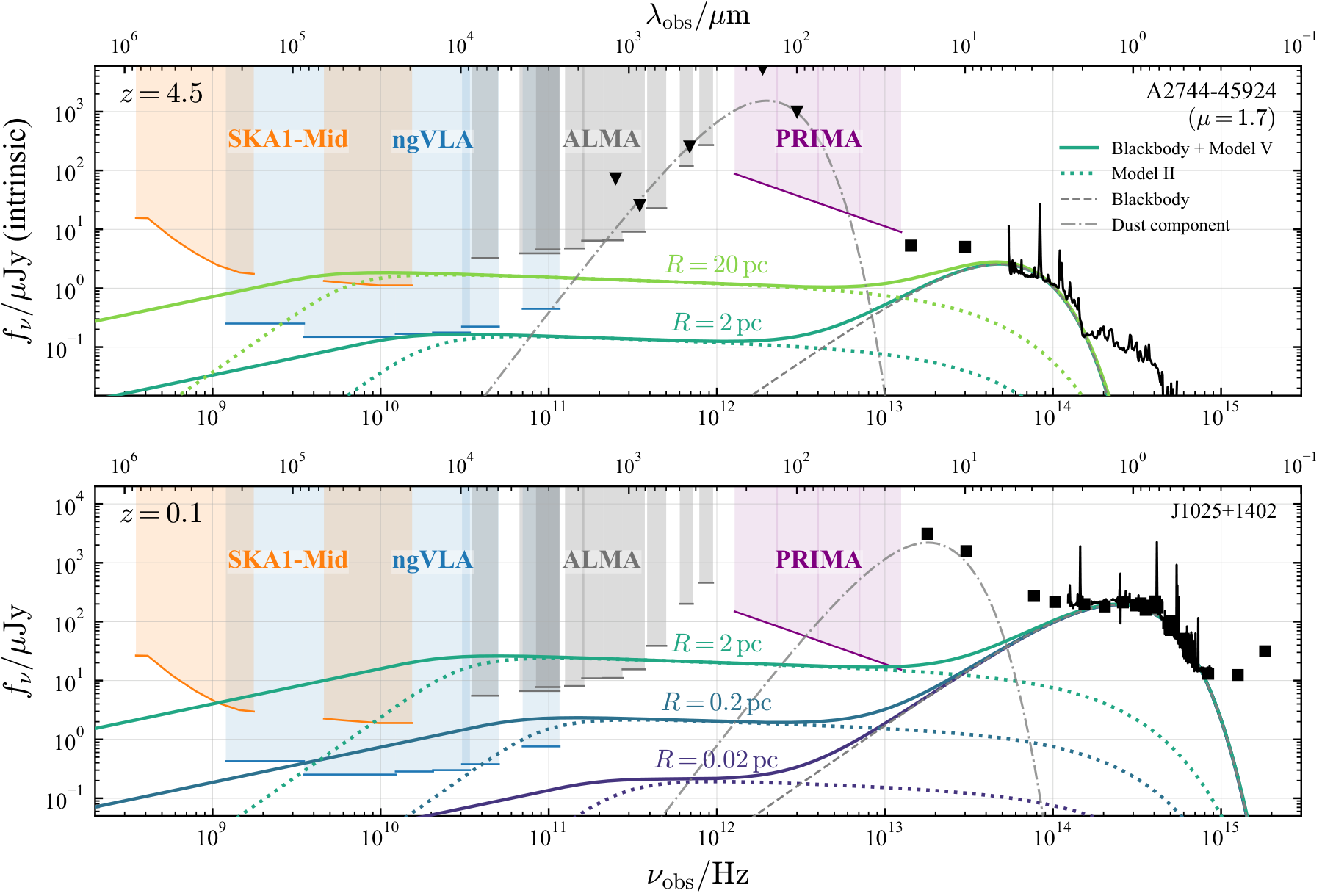
Using the black-hole fundamental plane alongside star-formation radio scaling, the authors predict continuum fluxes for little red dots (LRDs) across BH mass, X-ray luminosity, SFR, and redshift (≈3–7). They find AGN radio fluxes are typically 10–100× the host stellar contribution at 3–8 GHz, and that a ≥500 nJy detection above 2 GHz at z ≥ 5 or ≥2000 nJy at z = 3–4 would be a clear AGN signature if SFR < 30 M⊙/yr. The analysis implies most LRDs are radio-quiet AGN, consistent with current survey non-detections. Forecasts show ngVLA and SKA could confirm typical LRD AGN in ~10–100 hr integrations, providing a dust-robust discriminator between starbursts and accretion.

2025-01-09 · 2501.04912v1

Another piece to the puzzle: radio detection of a JWST detected AGN candidate

Anniek J. Gloudemans, Kenneth J. Duncan, Anna-Christina Eilers, et al.

Deep 0.144–3 GHz maps across COSMOS, GOODS-N, and GOODS-S are mined for radio counterparts to ~700 JWST-selected AGN candidates (including LRDs). Only PRIMER-COS 3866 at z=4.66 is individually detected; its spectrum (α=−0.76+0.11−0.09), modest radio-loudness (R≈0.5), and Tb≳10^3 K remain consistent with either AGN or star-formation power. Stacks of spectroscopic and photometric subsamples yield non-detections with 3σ limits L1.4GHz<8.6×10^39 erg s−1 and L1.3GHz<1.3×10^39 erg s−1, still compatible with local L_X–L_Hα and L_X–L_R relations. The authors argue present radio depths are insufficient to label the population radio-weak and forecast SKA/ngVLA detections within hours to enable brightness-temperature tests that separate AGN from starbursts.