654 indexed papers · 430 research notes

Research archive

Reset
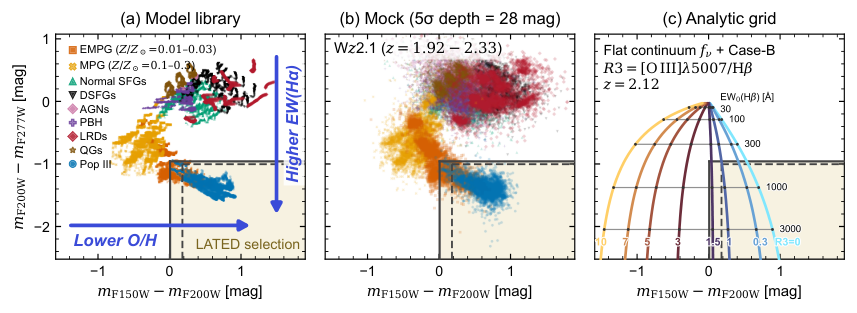
Figure 5 from LATED: Ly$α$-anchored photometric selection of candidate metal-free and extremely metal-poor star formation from the end of reionisation to cosmic noon

2026-09-22 · 2609.24588v1 · Research note

LATED: Ly$α$-anchored photometric selection of candidate metal-free and extremely metal-poor star formation from the end of reionisation to cosmic noon

Mingyu Li, Zheng Cai, Roberto Maiolino, et al.

LATED uses Lyα-selected sources and three-band Hα/[O III]+Hβ/continuum colours to prioritize extremely metal-poor or Pop III-like candidates at z=1.92–6.60. Tests recover AMORE6 and identify three Abell 2744 candidates, but photometry cannot prove metal-free stars.
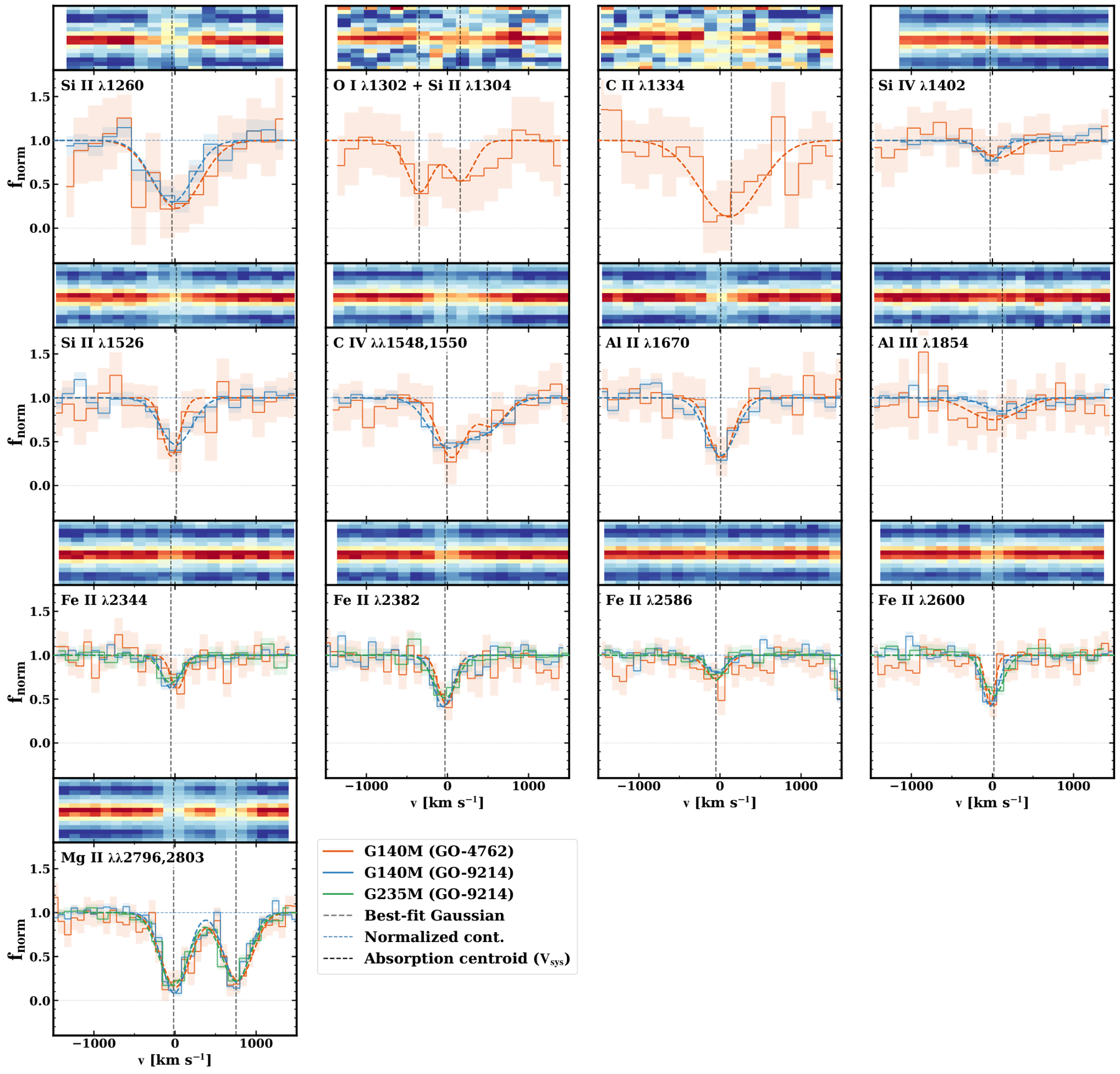
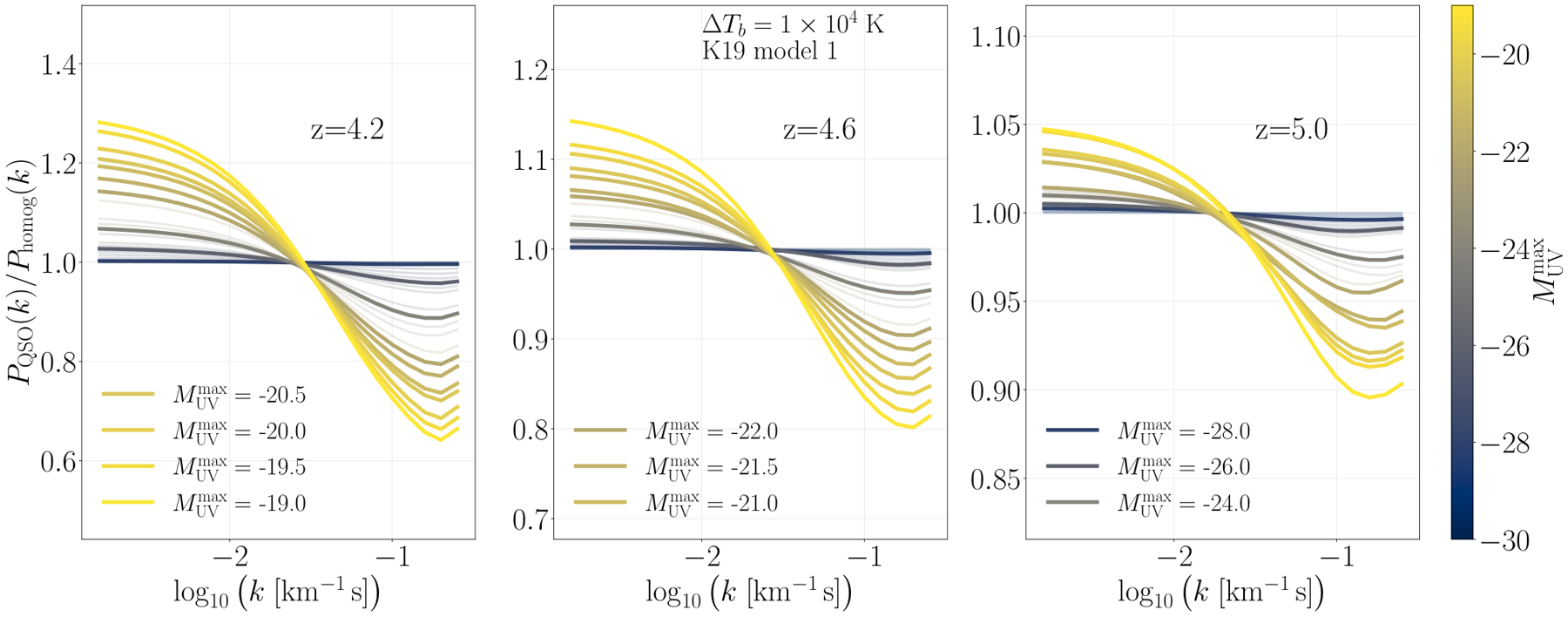
Figure 2 from A dense, metal-rich absorber driven by a heavily dust-obscured galaxy: The direct evidence of CGM enrichment at $z\sim7$

2026-09-17 · 2609.17680v1 · Research note

A dense, metal-rich absorber driven by a heavily dust-obscured galaxy: The direct evidence of CGM enrichment at $z\sim7$

Qinyue Fei, Seiji Fujimoto, Gabriel Brammer, et al.

A single z=7.03 galaxy–absorber pair links a dusty, intensely star-forming galaxy to unusually strong multiphase metal absorption at 16 kpc. Blueshifted gas is consistent with an outflow, while abundance evidence for Population III enrichment remains suggestive rather than decisive.

2026-09-09 · 2609.08145v1 · Research note

The Roman eXtreme Deep Field (RXDF)

Haojing Yan, Anton M. Koekemoer, Yue Shen, et al.

RXDF is an approved Roman seven-band, multi-epoch imaging program designed to combine AB≈30 depth with a 678.75 arcmin² full-depth footprint. For LRD science it is prospective: it extends the luminosity–redshift discovery space, but supplies neither an LRD selection nor predicted counts.

2026-09-01 · 2608.28745v1 · Research note

Super-Eddington Little Blue Dots May Reionize Helium Too Early

Christopher Cain, Brent Smith, Gibson B. Bowling, et al.

A reionization-budget calculation argues that, if faint z=3–7 Little Blue Dots are common and leak ionizing radiation efficiently, most cannot be highly super-Eddington: their hard EUV spectra would complete He II reionization earlier than allowed.

2026-08-20 · 2608.18212v1 · Research note

Quasar Impostors: Two Extremely UV-Bright ($M_{\rm UV}\approx-23.5$) Reionisation-Epoch Galaxies Powered by Very Massive Stars

Daming Yang, Joseph F. Hennawi, Sarah E. I. Bosman, et al.

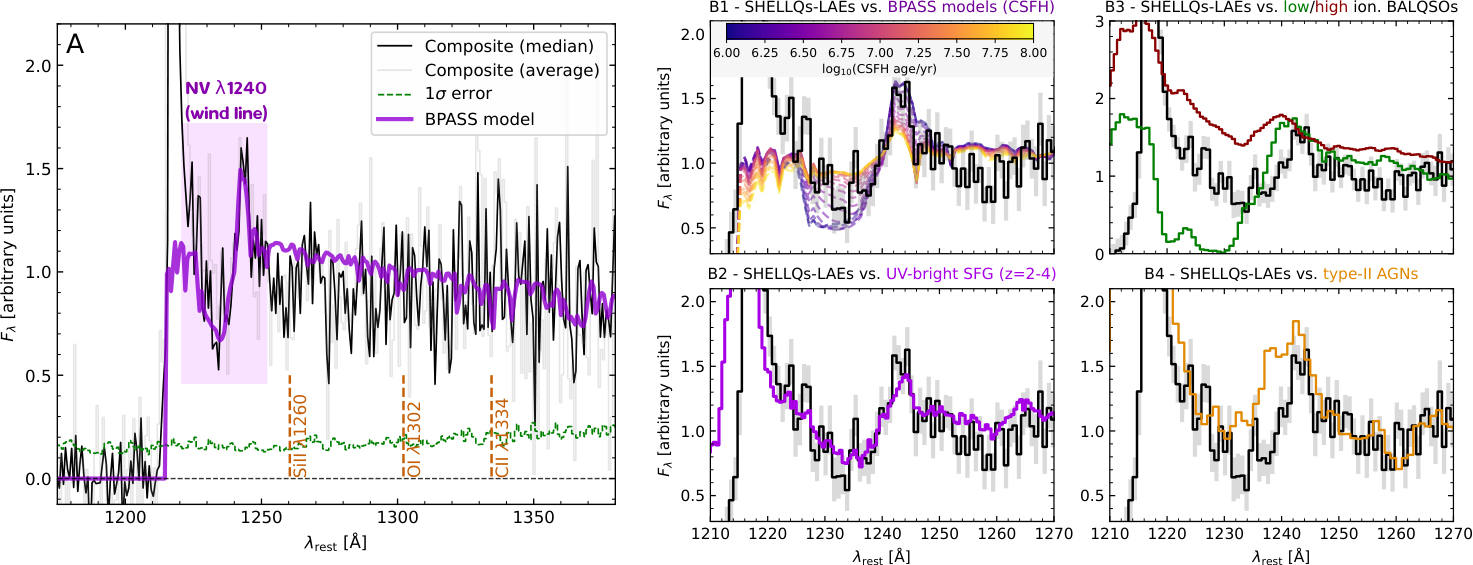
JWST and ALMA reclassify two z=6.63–6.80, MUV≈−23.5 SHELLQs “quasars” as extreme star-forming galaxies. Their UV wind and broad He II features are better matched by VMS-inclusive population models, although inferred IMF cutoffs remain strongly model dependent.

Figure 5 from Probing Direct Contributions of Galaxies and AGN to Cosmic Reionization in a Quasar Field J0226+0302 with JWST NIRCam and NIRSpec

2026-06-16 · 2606.14959v1 · Research note

Probing Direct Contributions of Galaxies and AGN to Cosmic Reionization in a Quasar Field J0226+0302 with JWST NIRCam and NIRSpec

Xiangyu Jin, Jinyi Yang, Feige Wang, et al.

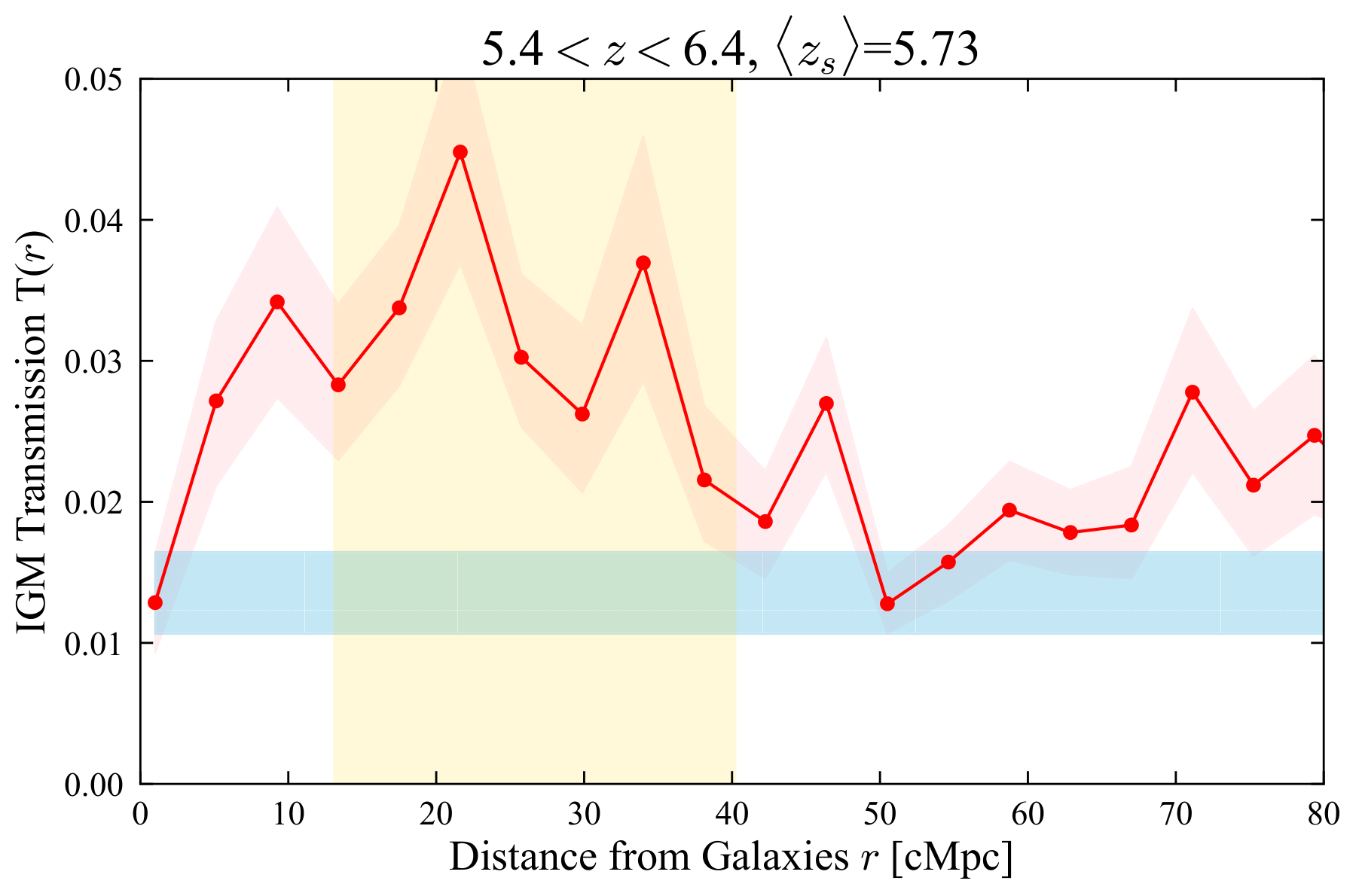
In the J0226+0302 quasar sightline, 73 line-emitting galaxies trace a tentative, 10–40 cMpc enhancement in IGM transmission, while four broad-line AGN show a possible smaller-scale enhancement. The results favor local ionizing-background variations but remain statistically and model limited.

2026-05-26 · 2605.24112v1 · Research note

The Lumina Project: The Demographics of Active Galactic Nuclei from Quasars to Little Red Dots at $z\geq 3$

Xuejian Shen, Oliver Zier, Aaron Smith, et al.

Lumina couples a large radiation-hydrodynamic volume to an empirical SMBH-to-observable prescription, and its authors report simultaneous consistency with high-redshift quasar and LRD luminosity functions and LRD clustering. The agreement depends on assumed LRD demographics and spectral properties.

2026-05-01 · 2605.00763v1 · Research note

Life After the Quasar: Overmassive Black Holes and Remnant Ionised Bubbles in and Around Two z~6.6 Galaxies

Romain A. Meyer, Pascal A. Oesch, Callum Witten, et al.

JWST/NIRSpec spectra of two z~6.6 ultra-luminous Lyα emitters reveal broad Balmer-line black-hole masses near 2×10^8 M⊙ and double-peaked Lyα, which the authors interpret as brief post-quasar phases inside relic ionised bubbles.

2026-04-04 · 2604.03563v1 · Research note

SPURS: Evidence for Clumpy Neutral Envelopes and Ionized IGM Surrounding Little Red Dots in Abell 2744 from Ultra-Deep Rest-UV Spectroscopy

Mengtao Tang, Daniel P. Stark, Charlotte A. Mason, et al.

Ultra-deep JWST/NIRSpec spectra of two Abell 2744 little red dots resolve a broad Lyα component in z=7.0364 Abell2744-QSO1. The authors argue its comparatively modest shift favors a clumpy, rather than uniform, neutral envelope and an ionized local environment.

2026-03-16 · 2603.15761v1 · Research note

Out of oxygen: Extremely metal-poor galaxy candidates identified at $2.5 < z < 6.5$ with deep JADES medium-band imaging

James A. A. Trussler, Daniel J. Eisenstein, Andrew J. Bunker, et al.

Deep JADES medium-band photometry identifies 22 candidate near-pristine starbursts at 2.5<z<6.5 from strong Hα but weak [O III]+Hβ. Their inferred metallicities are photometric, however, and dust, dense gas, or obscured AGN can mimic the selection.

Figure 1 from JADES: A Prominent Galaxy Overdensity Candidate within the First 500 Myr

2026-01-22 · 2601.15960v1 · Research note

JADES: A Prominent Galaxy Overdensity Candidate within the First 500 Myr

Zihao Wu, Daniel J. Eisenstein, Benjamin D. Johnson, et al.

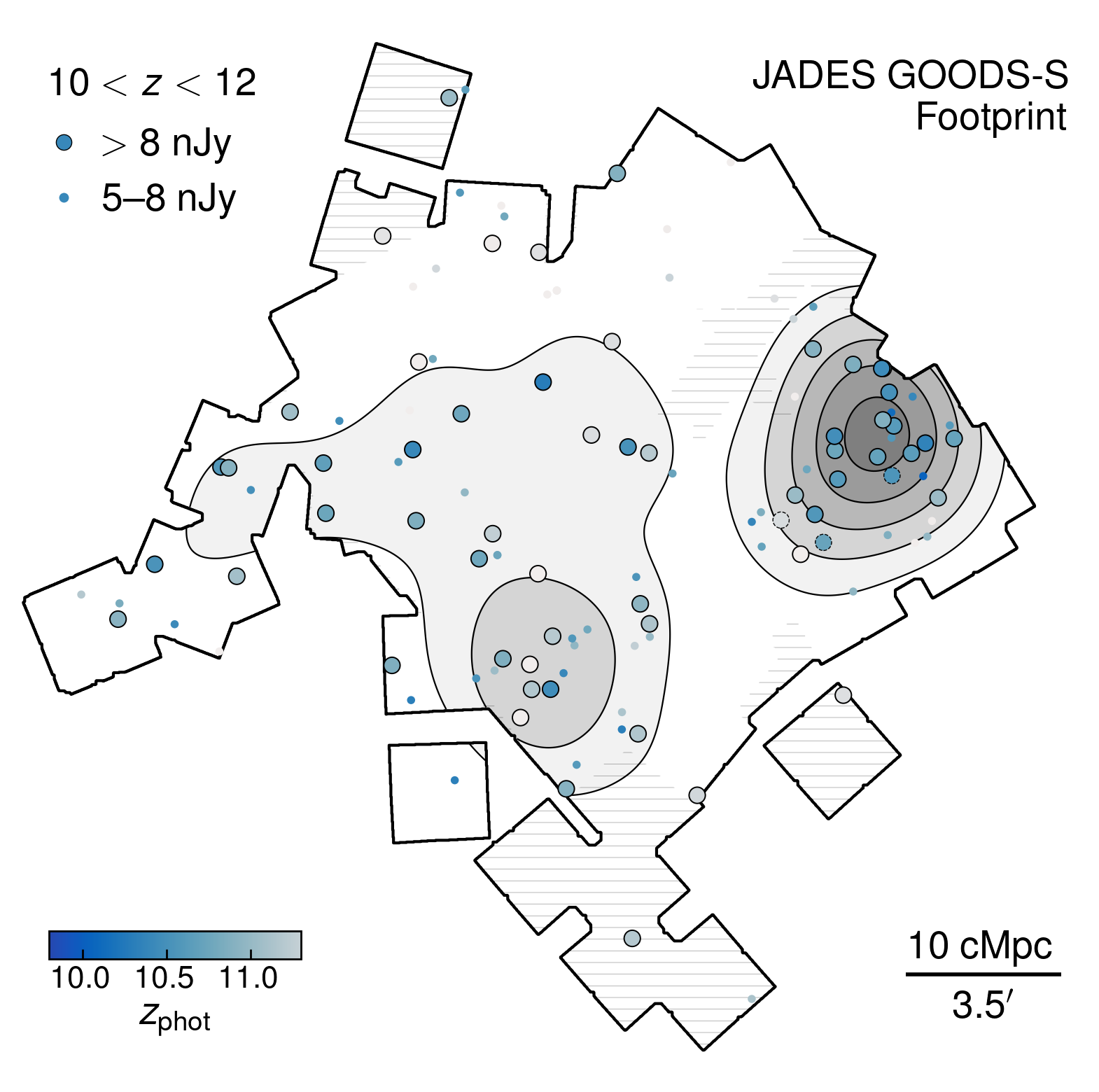
JADES identifies a photometric z≈10.5 concentration of 18 galaxies, four times the field surface density. Its compact, otherwise typical members show tentative environmental signatures—close associations, two optical-excess sources, and spatially varying inferred Lyα transmission.

2026-01-16 · 2601.11125v1 · Research note

Discovery of a gas-enshrouded broad-line AGN at z $\sim$ 7

Qianqiao Zhou, Xin Wang, Hang Zhou, et al.

JWST/HST observations of the lensed z≈6.87 galaxy A2744-z7DLA reveal damped Lyα absorption plus a statistically preferred broad Hα component, supporting a gas-enshrouded broad-line AGN interpretation while its UV–optical continuum remains predominantly stellar.

Figure 4 from The accretion of quasars at the epoch of reionisation: $JWST$ catches the primeval monsters slowly feasting

2025-12-18 · 2512.16981v1 · Research note

The accretion of quasars at the epoch of reionisation: $JWST$ catches the primeval monsters slowly feasting

B. Trefoloni, E. Nardini, S. Carniani, et al.

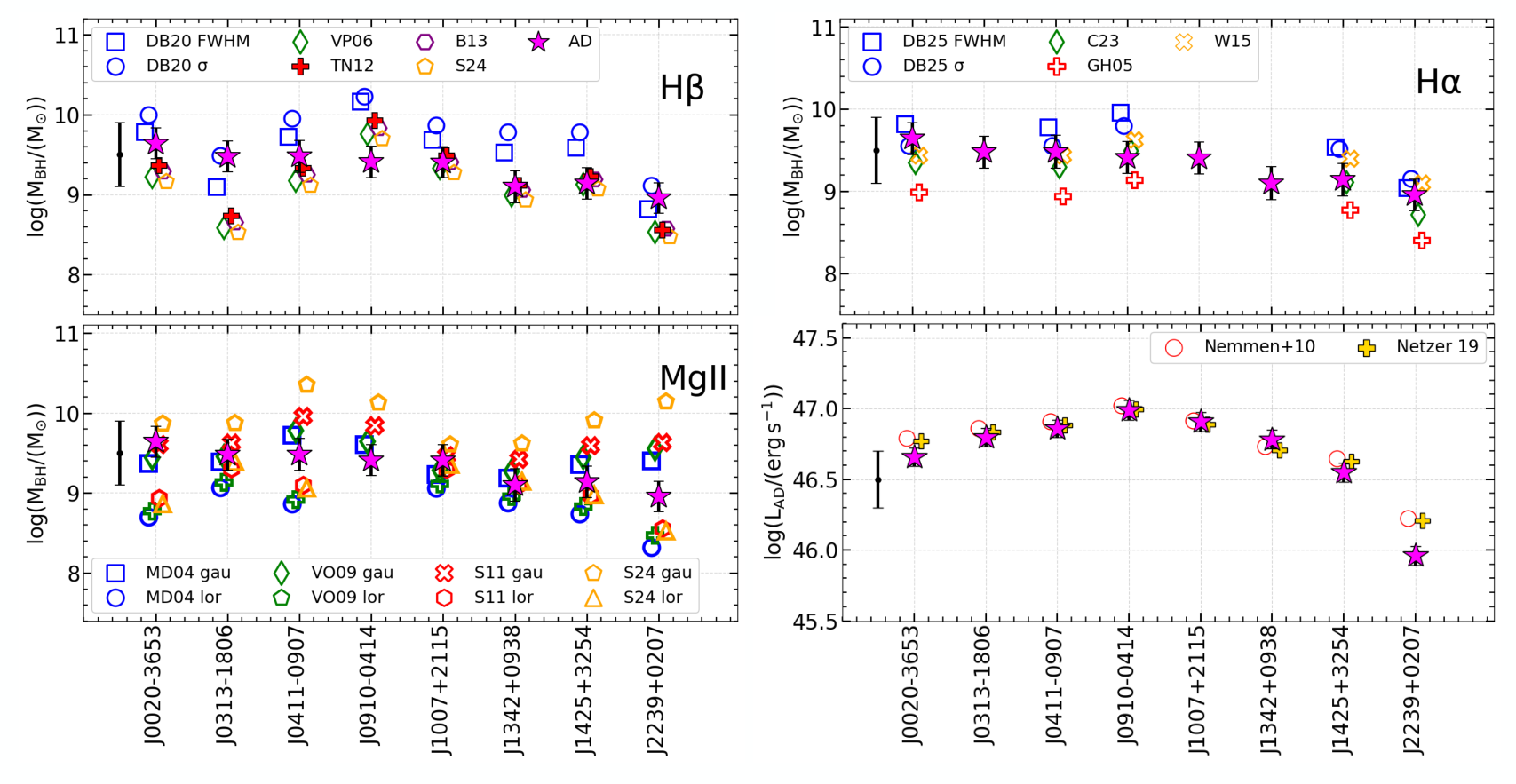
JWST/NIRSpec disc fits for eight luminous z≥5.9 quasars yield a sub-Eddington distribution, ⟨log λEdd⟩=−0.86. The authors argue that self-consistent disc luminosities and masses reduce apparent super-Eddington incidence relative to conventional single-epoch estimates.

Figure 5 from Highly-ionized gas in lensed z = 6.027 Little Red Dot seen through [OIII] 88$μ$m with ALMA

2025-12-04 · 2512.05097v1 · Research note

Highly-ionized gas in lensed z = 6.027 Little Red Dot seen through [OIII] 88$μ$m with ALMA

Kirsten K. Knudsen, Johan Richard, Mathilde Jauzac, et al.

Deep ALMA spectroscopy detects [O III] 88 μm from the lensed z=6.027 Little Red Dot A383-5.1. Its high [O III]/[C II] ratio and dust-continuum limits favor a dust-poor, strongly ionized ISM, but do not directly measure ionizing-photon escape.

2025-10-30 · 2510.26990v1 · Research note

Faint active galactic nuclei supplied 31-75% of hydrogen-ionizing photons at z>5

Mainak Singha, Sangeeta Malhotra, James Ely Rhoads

A joint luminosity-function and escape-fraction model attributes 31–75% of z>5 ionizing photons to AGN, but the result depends on assumed galaxy escape fractions and an outflow-based AGN LyC-escape prescription available here only in the abstract.

Figure 2 from Extremely UV-bright starbursts at the end of cosmic reionization

2025-10-14 · 2510.12411v1 · Research note

Extremely UV-bright starbursts at the end of cosmic reionization

R. Marques-Chaves, D. Schaerer, M. Dessauges-Zavadsky, et al.

A 27-object z~6 SHELLQs sample is interpreted as very young, ionizing starbursts; JWST/ALMA observations of J0217-0208 link its exceptional UV brightness to compact star formation and a dusty ionized outflow, though the proposed causal link remains model-dependent.

2025-09-24 · 2509.20452v1

A GLIMPSE of Intermediate Mass Black holes in the epoch of reionization: Witnessing the Descendants of Direct Collapse?

Qinyue Fei, Seiji Fujimoto, Rohan P. Naidu, et al.

Ultra-deep JWST/NIRSpec G395M spectroscopy behind Abell S1063 enables a systematic search for faint broad-line nuclei, fitting narrow components with an [O III] λ5007 template and validating the method with mocks. The authors identify ten broad-line AGN at 4.5<z<7.0 (eight secure, two tentative) with broad Hα–based virial masses down to ~10^5.5 Msun; composite galaxy+AGN SEDs yield host masses implying M_BH/M_* ≲ 0.1% and placements consistent with the local M_BH–M_* relation. From these they build a BH mass function that agrees with prior results above ~10^6.5 Msun but shows an excess at ~10^5.5 Msun relative to a Schechter extrapolation. They interpret the low-mass excess as evidence for descendants of direct-collapse seeds in the reionization era.

2025-09-08 · 2509.07064v1

GA-NIFS: an extended [OIII] halo around the sub-Eddington quasar J1342+0928 at z=7.54

Bartolomeo Trefoloni, Stefano Carniani, Elena Bertola, et al.

JWST/NIRSpec IFS (GA-NIFS) observations of ULAS J1342+0928 (z=7.54) combine prism (R~100) and high-resolution grating (R~2700) to map rest-UV–optical emission and kinematics. The prism cube reveals [O III] λ5007 extended over ~7 kpc—well beyond typical galaxy sizes—consistent with a relic from a past outflow, while the grating data resolve a compact (≤0.6 kpc) nuclear ionized outflow with a mass-loss rate of 50–300 Msun/yr, comparable to the host SFR of 85–545 Msun/yr. Accretion-disk modeling yields log(MBH/Msun)=9.2±0.2 and log(Lbol/erg s−1)=46.8±0.1, implying λEdd≈0.4 and pointing to sub-Eddington growth at the epoch of reionization. The most distant BLR ratios (Fe II UV/Mg II and Fe II opt/Hβ) indicate early metal enrichment; the outflow-rate range is chiefly set by uncertain ne.

2025-09-05 · 2509.05417v1

The Light Echo of a High-Redshift Quasar mapped with Lyman-$α$ Tomography

Anna-Christina Eilers, Minghao Yue, Jorryt Matthee, et al.

Deep JWST/NIRSpec MSA spectroscopy of twelve background galaxies behind the z_QSO ≈ 6.3 quasar J0100+2802 yields the first spectroscopic Lyα-tomography map of a quasar “light echo” in the transverse direction. Clear excess Lyα transmission at the quasar’s systemic redshift appears along multiple sightlines, enabling a 3D reconstruction of the ionized bubble and its ionization-cone orientation/inclination, and setting f_obsc < 91%. Modeling the light-travel geometry implies a UV-on timescale t_QSO = 10^{5.6+0.1}_{-0.3} yr (≈2–5×10^5 yr), far shorter than required for continuous thin-disk growth to the observed SMBH mass. This disfavors purely geometric obscuration as the sole cause of short lifetimes and points to radiatively inefficient or initially enshrouded accretion phases in early SMBH growth.

2025-08-29 · 2509.00153v1

Quasar Radiative Feedback May Suppress Galaxy Growth on Intergalactic Scales at $z = 6.3$

Yongda Zhu, Eiichi Egami, Xiaohui Fan, et al.

Using JWST/NIRCam grism WFSS from the SAPPHIRES and EIGER programs, the authors map [O III] emitters around the z=6.3 quasar J0100+2802 and analyze 130 sources to test radiative feedback. They find a clear decline in [O III] λ5008-to-UV luminosity (L5008/L1500) toward the quasar over ~8–10 cMpc: L1500 stays flat with distance while L5008 rises away from the quasar, and the trend tracks the projected photoionization-rate profile Γ_qso, with a weaker but consistent signal along the line of sight. The inferred transverse suppression radius implies a recent radiative episode of ~4.5 Myr, favoring rapid H2 photodissociation over slower thermal photoheating as the mechanism. Environmental effects alone cannot reproduce the signal, offering geometry-based constraints on intergalactic quasar feedback and recent quasar lifetimes.

2025-08-29 · 2508.21818v1

First constraints on the local ionization topology in front of two quasars at z ~ 7.5

Timo Kist, Joseph F. Hennawi, Frederick B. Davies, et al.

Uses JWST/NIRSpec damping-wing fits and a three-parameter local model to extract the Lorentzian-weighted HI column N_HI^DW, the distance to the first neutral patch r_patch, and the quasar lifetime t_Q in front of two z ≈ 7.5 quasars. J1007+2115 favors a moderately ionized IGM with ⟨x_HI⟩ = 0.32^{+0.22}_{-0.20}, an exceptionally short lifetime log10 t_Q/yr = 4.14^{+0.74}_{-0.18}, r_patch ≈ 28.9 cMpc, and log10 N_HI^DW ≈ 19.70, while J1342+0928 implies a higher neutral fraction ⟨x_HI⟩ = 0.58^{+0.23}_{-0.23}, an intermediate lifetime log10 t_Q/yr = 5.64^{+0.25}_{-0.43}, r_patch ≈ 10.9 cMpc, and log10 N_HI^DW ≈ 20.24. Mapping these local constraints through topology-informed priors links the sightline-level topology to global reionization timing. The N_HI^DW metric also naturally captures potential contributions from foreground absorbers toward J1342+0928.

2025-08-29 · 2508.21748v1

A direct black hole mass measurement in a Little Red Dot at the Epoch of Reionization

Ignas Juodžbalis, Cosimo Marconcini, Francesco D'Eugenio, et al.

Strong lensing plus JWST/NIRSpec IFS resolves narrow Hα kinematics and spectroastrometric shifts in the lensed Little Red Dot Abell2744‑QSO1 at z=7.04, enabling a direct rotation curve from ~10–200 pc. The curve is Keplerian and rules out compact extended mass profiles (e.g., MW‑like nuclear star cluster, Plummer, or a DM cusp), implying a central point mass of order 5×10^7 M⊙ consistent with Balmer‑line virial estimates. The inferred stellar content is minimal, with MBH/M* > 2, pointing to a near‑“naked” black hole in a pristine environment. This result validates virial BH masses for LRDs at the EoR and captures a massive BH seed in its earliest growth phase.

2025-08-19 · 2508.13541v1

Little Red reionization factories

Fan Zhang

Proposes Little Red Dots as “reionization factories,” where a Weyl-curvature–driven Cosmic Tide funnels intergalactic HI into colliding streams that shock, compress, and trigger rapid starbursts whose LyC reionizes hydrogen. In this picture, hot HII escapes along interstitial directions, so reionization proceeds via outflowing plasma rather than requiring extreme photon escape fractions. The model predicts a gas-dominated rest‑optical continuum—HII bremsstrahlung with a minimum‑timescale red cutoff and an IR rollover from opacity—while the UV is stellar, naturally producing strong Balmer breaks. It also anticipates narrow+broad Balmer components and slightly shifted Balmer absorption from bulk‑moving n=2 HI, with a proof‑of‑concept SED fit to J1025+1402; the scenario is explicitly speculative.

2025-08-02 · 2508.01372v1

A Nitrogen-rich AGN Powering a Large Ionizing Bubble at z=8.63

Takahiro Morishita, Massimo Stiavelli, Charlotte A. Mason, et al.

New NIRSpec/MSA G140H/F070LP data reveal broad Lyα in CANUCS-LRD-z8.6 (z=8.63) centered near systemic (FWHM 1540±260 km/s), implying transmission through a large reionized region. Simple Strömgren modeling of the line shape yields an ionized-bubble radius Rb=1.5^{+0.3}_{-0.2} pMpc and a Lyα escape fraction fesc=11±3%. The intrinsic width is even broader (≈2200±280 km/s), consistent with a BLR in a low-luminosity AGN, while high N IV]/C IV and N IV]/O III] ratios from PRISM indicate nitrogen enrichment. A mild local overdensity (δ≈1.8) suggests neighboring galaxies may help sustain the bubble, linking this LRD to the emerging class of nitrogen-rich systems like GN-z11 and GHZ2/GLASSz12.

2025-07-28 · 2507.21230v1

Can high-redshift AGN observed by JWST explain the EDGES absorption signal?

Alexandra Nelander, Christopher Cain, Jordan C J DSilva, et al.

Tests whether a high‑z radio‑loud AGN population—calibrated to JWST UV luminosity functions and extrapolated to z≈20—can provide the excess radio background needed for the EDGES 78 MHz absorption. Matching the EDGES depth requires that essentially all UV‑bright sources down to M_UV ≳ −15 are radio‑loud AGN, with the UV number density declining by ≤1.5 dex from z=10→20, and an X‑ray escape fraction ≲1% to avoid pre‑heating that erases the trough. Only an extremely shallow UVLF evolution can achieve the amplitude, and reproducing the trough’s sharp edges and flat bottom demands fine‑tuned redshift dependence of the UVLF, AGN UV fraction, and X‑ray leakage. Verdict: physically possible but implausible given the extreme requirements.

2025-07-17 · 2507.13489v1

The $z=7.08$ quasar ULAS J1120+0641 May Never Reach a "Normal" Black Hole to Stellar Mass Ratio

Meredith A. Stone, George H. Rieke, Jianwei Lyu, et al.

JWST/NIRCam narrow–medium–wide imaging selects [O III] 5007 emitters at z≈7.08 around ULAS J1120+0641 across two 4.4 arcmin² fields, revisiting a site previously deemed underdense. The team finds 22 candidates near the quasar redshift, demonstrating a strong overdensity relative to field expectations, and sums the stellar+gas masses of the host plus neighbors with incompleteness corrections to estimate the merger-fed growth budget. Even if the black hole ceases accretion, the system is projected to retain an elevated MBH/M* ≳2.5% by z=0, far above the local relation. This implies some descendants could hide as quiescent black holes in faint galaxies at low redshift.

2025-07-07 · 2507.05381v1

Escape fractions from unattenuated Ly$α$ emitters around luminous $z>6$ quasars

Minghao Yue, Anna-Christina Eilers, Jorryt Matthee, et al.

JWST/NIRSpec-MSA spectroscopy in the J0100+2802 and J1148+5251 fields measures Lyα for 50 galaxies at 6<z<7 (median M_UV=−19.97), including 15 within Δv<2500 km s−1 of the quasars. Galaxies in the quasar proximity zones show clear blue-side Lyα flux and higher equivalent widths than similar-redshift field galaxies, implying little to no evolution in the LAE fraction from z≈6.4 to z≈5. Using the low IGM opacity near the quasars, the authors infer an average Lyα escape fraction of 0.14±0.04 at ⟨z⟩≈6.4. This supports reionization scenarios with low LyC escape in luminous galaxies (f_esc^LyC≲0.1), suggesting bright galaxies contribute modestly to the ionizing budget.

2025-07-02 · 2507.02058v1

On the rapid growth of SMBHs in high-z galaxies: the aftermath of Population III.1 stars

Mahsa Sanati, Julien Devriendt, SergioMartin-Alvarez, et al.

High-resolution zoom-in simulations with Pop III.1 progenitor preheating follow 10^5 Msun seeds through a suite of AGN feedback modes (Eddington-limited thermal; non-Eddington thermal, kinetic, and radiative). Across all models the seeds grow efficiently to ~10^7 Msun by z≈8, with growth largely unimpeded by feedback; the radiative case shows brief super-Eddington bursts that launch fast, mass-loaded outflows (>2500 km s^-1) to ~50 kpc and slightly suppress stellar mass. The simulated systems resemble JWST moderate-luminosity quasars, yielding overmassive BHs, dynamical masses ~10^9.5 Msun, and short-lived high Eddington fractions. This argues that early AGN feedback coexists with rapid SMBH build-up while exporting energy and metals deep into the CGM/IGM.

2025-06-03 · 2506.03121v1

EIGER VII. The evolving relationship between galaxies and the intergalactic medium in the final stages of reionization

Daichi Kashino, Simon J. Lilly, Jorryt Matthee, et al.

Using the full EIGER program, the authors assemble 948 [O III]λ5008 emitters (−21.4≲MUV≲−17.2) at 5.33<z<6.97 from deep NIRCam 3.5 μm slitless spectroscopy along six quasar sightlines and cross-correlate them with Lyα/Lyβ transmission in high-resolution quasar spectra. They find a strong redshift evolution: overdense regions at z<5.50 show suppressed transmission and excess absorption within ~8 cMpc, while at 5.70<z<6.15 the transmission is enhanced on intermediate (~5–20 cMpc) scales, with a transitional regime between. Mock catalogs without galaxy–IGM coupling show these signals are unlikely by chance. The results support inside-out reionization, where local radiation around clustered galaxies dominates early and is later overtaken by a rising UV background that sets the IGM ionization state.

2025-05-13 · 2505.08885v1

XMM-Newton Conclusively Identifies an Active Galactic Nucleus in a Green Pea Galaxy

Peter G. Boorman, Jiří Svoboda, Daniel Stern, et al.

Deep XMM-Newton monitoring of the Green Pea SDSS J082247.66+224144.0 (z=0.216) tests for an elusive low-luminosity AGN long hinted by its Γ≈2, L2–10 keV≈10^42 erg s^-1 spectrum. Across 6.2 years (rest-frame), the hard 2–10 keV luminosity remains stable while the soft 0.5–2 keV flux drops by ~60%, yielding a markedly harder second epoch. Swapped-epoch spectral posterior checks and SDSS line decomposition (requiring a broad Hα despite BPT star-forming narrow lines) point to transient, low-column obscuration as the only viable explanation. This work delivers the first conclusive X-ray AGN identification in a Green Pea, strengthening the case that faint AGN could have contributed to reionisation and clarifying local analogs of JWST Little Red Dots.

2025-05-13 · 2505.08870v1

Galaxies in the Epoch of Reionization Are All Bark and No Bite -- Plenty of Ionizing Photons, Low Escape Fractions

Casey Papovich, Justin W. Cole, Weida Hu, et al.

Using JWST imaging plus NIRSpec/prism spectra for hundreds of galaxies at 4.5<z<9 from JADES and CEERS, the authors fit joint stellar+nebular SEDs with f_esc as a free parameter to infer both ξ_ion and the ionizing escape fraction. They find ξ_ion rises toward higher redshift and fainter UV luminosity with ~0.3 dex scatter, while the population-averaged escape fractions remain low: ⟨f_esc⟩ ≈ 2.6±1.4% at 6<z<9 and 6.5±2.2% at 4.5<z<6, with little evolution. Propagating these distributions through reionization models yields x_e≈0.5 at z≈5.3–5.8 for M_UV<−16 (possibly late vs. QSO constraints), but consistent timing (x_e≈0.5 at z≈6.0–8.1) once galaxies down to M_UV<−14 are included. Bottom line: EoR galaxies make plenty of ionizing photons, yet low f_esc—likely tied to dense gas and bursty SFHs—keeps most of them trapped.

2025-05-02 · 2505.01499v1

An extremely metal-poor Lyman $α$ emitter candidate at $z=6$ revealed through absorption spectroscopy

Dominika Ďurovčíková, Anna-Christina Eilers, Robert A. Simcoe, et al.

Archival VLT/MUSE data reveal a Lyα emitter at z=6.0323 just 29 pkpc in front of the quasar PSO J158-14 (z=6.0685), previously missed because it leaves no metal absorption in the quasar spectrum. The Lyα line sits at the edge of the quasar proximity zone, and a proximate sub-DLA with log N_HI≈19.7 reproduces the observed damping wing. Deep (>10 hr) FIRE+X-shooter spectroscopy yields [Z/H] < −3 after ionization-correction modeling, marking this source as an extremely metal-poor galaxy candidate. This system offers a rare window on near-pristine gas and potential Population III signatures during reionization.

2025-04-14 · 2504.10581v1

Massive Black Hole Seed Formation in Strong X-ray Environments at High Redshift

Kazutaka Kimura, Kohei Inayoshi, Kazuyuki Omukai

Semi-analytic merger-tree modeling with observationally calibrated X-ray irradiation (guided by HERA’s 21 cm non-detections) shows that strong X-ray backgrounds boost H2 formation, steering most overdense halos off the classic direct-collapse path. Including baryonic streaming motion preserves an atomic-cooling route in a subset of cases, still yielding massive seeds. The model predicts seeds with M_BH ≳ 10^4 Msun by z ≃ 15 and an abundance ≈10^-4 Mpc^-3, sufficient to account for SMBHs verified by JWST spectroscopy at 3<z<6. X-ray ionization prevents formation of extremely overmassive BHs comparable to their hosts, while establishing BH-to-stellar mass ratios ≃0.01–0.1 at seeding.

2025-04-04 · 2504.03848v1

Large-scale surveys of the quasar proximity effect

Rupert A. C. Croft, Patrick Shaw, Ann-Marsha Alexis, et al.

Develops a CDM halo-model framework for the quasar proximity effect that explicitly includes overdense quasar environments and fits individual Lyα spectra for the radiation-equality radius r_eq and large-scale quasar bias b_q, validated on the ASTRID hydrodynamic simulation. Demonstrates that r_eq can be recovered without bias from a single spectrum with 25–50% statistical uncertainty. Scaling to DESI-sized samples enables precise measurements of the UV background intensity and its redshift evolution. Using the Uchuu simulation, shows that proximity-effect measurements could map spatial UV radiation fluctuations and measure their power spectrum on 100–1000 h−1 Mpc scales, making the radiation field a cosmological observable alongside density.

2025-04-03 · 2504.02683v1

Probing patchy reionisation with JWST: IGM opacity constraints from the Lyman-$α$ forest of galaxies in legacy extragalactic fields

Romain A. Meyer, Guido Roberts-Borsani, Pascal Oesch, et al.

Using public JWST/NIRSpec PRISM spectra of z≈4–7 galaxies, the authors detect the Gunn–Peterson trough in stacked galaxy spectra and derive the first galaxy-based IGM Lyα opacity measurements, plus intrinsic Lyβ opacity at 5<z<6. The galaxy-based opacities agree with state-of-the-art quasar Lyman-α forest constraints and will sharpen as JWST samples grow. In GOODS-South, a z=5.8–5.9 overdensity of galaxies and Lyα emitters coincides with an anomalously low Lyα IGM opacity, directly linking local large-scale structure to an over-ionised IGM patch. The required photo-ionisation rate can be produced by galaxies down to M_UV≲−10 if log10⟨ξion fesc⟩≈25 (e.g., log10 ξion=25.4 with fesc=0.4).

2025-04-02 · 2504.01852v1

Deciphering the Nature of Virgil: An Obscured AGN Lurking Within an Apparently Normal Lyman-α Emitter During Cosmic Reionization

Pierluigi Rinaldi, Pablo G. Pérez-González, George H. Rieke, et al.

JWST/MIRI imaging plus deep NIRSpec/PRISM place the LAE “Virgil” at z=6.6379 and reveal Little Red Dot–like photometry with an extreme color F444W−F1500W=2.84±0.04, and a strongly rising mid-IR SED. SED fits across multiple codes favor an obscured AGN whose IR slope and UV excess resemble blue-excess HotDOGs. The host shows subsolar metallicity, low–moderate dust, and high ionization/electron temperature; UV and Hα SFRs suggest Virgil is entering or fading a burst. High‑z line‑ratio diagnostics (e.g., O32–R23, Ne3O2) nominally flag AGN, though this is ambiguous after accounting for redshift evolution; a tentative broad Hα improves residuals only marginally, while the new 15 μm data strengthen the AGN case and highlight MIRI’s leverage on early black‑hole growth.

2025-03-10 · 2503.07074v1

JWST ASPIRE: How Did Galaxies Complete Reionization? Evidence for Excess IGM Transmission around ${\rm [O\,{\scriptstyle III}]}$ Emitters during Reionization

Koki Kakiichi, Xiangyu Jin, Feige Wang, et al.

ASPIRE cross-correlates [O III] emitters from NIRCam/F356W grism with Lyα-forest pixels in five z>6.5 QSO fields (5.4<z<6.5). It finds 2σ excess Lyα transmission at ~20–40 cMpc around [O III] emitters (z=5.86) with small-scale absorption, implying highly ionized bubbles around galaxies embedded in overdense environments. Comparing to THESAN, the signal points to >50 cMpc ionized regions and a stronger UV background supplied by unseen faint galaxies; the observed [O III] sources near individual transmission spikes cannot by themselves maintain the ionization even if all hosted AGN with 100% LyC escape. Simulations underpredict the excess transmission, hinting at larger bubbles or stronger UV/temperature fluctuations, with current uncertainties dominated by cosmic variance.

2025-03-05 · 2503.03431v1

Self-Consistent JWST Census of Star Formation and AGN activity at z=5.5-13.5

Jordan C. J. D'Silva, Simon P. Driver, Claudia D. P. Lagos, et al.

Combining ≈400 arcmin^2 of JWST imaging from PEARLS, CEERS, NGDEEP, JADES, and PRIMER, this work jointly fits galaxy and AGN components with EAZY+ProSpect for ≈3.9k galaxies at z=5.5–13.5 to build SMF, SFRF, and AGNLF in four bins. Integrating these functions shows a ~1 dex rise in the CSFH from z≈13.5→5.5, while the CAGNH also increases and tentatively does so more rapidly, implying early SMBH accretion can outpace stellar mass growth. The results are stitched to z<5 measurements to provide a continuous, self-consistent census spanning >13 Gyr. This anchors the early coevolution picture and constrains the AGN contribution around reionization.

2025-02-06 · 2502.03683v1

AGN ruled out as the dominant source of cosmic reionization

Danyang Jiang, Linhua Jiang, Shengxiu Sun, et al.

JWST GOODS-S/N imaging is used to build a highly complete z=7.15–7.75 sample and decompose each source into a point-source (AGN) and extended component in F115W and F150W, yielding 93 faint AGNs down to M_UV ≈ −15. From the PSF-only UV magnitudes they measure the faint-end AGN UV luminosity function and integrate a 1–4 Ryd SED with f_esc=1 to set an absolute upper bound on AGN ionizing emissivity. The cumulative result is that AGNs provide at most one third of the LyC photon budget at z≈7.5, with the contribution dominated by the lowest-luminosity bins. This effectively rules out AGNs as the dominant drivers of reionization, implying galaxies supply most ionizing photons during the EoR.