654 indexed papers · 430 research notes

Research archive

Reset
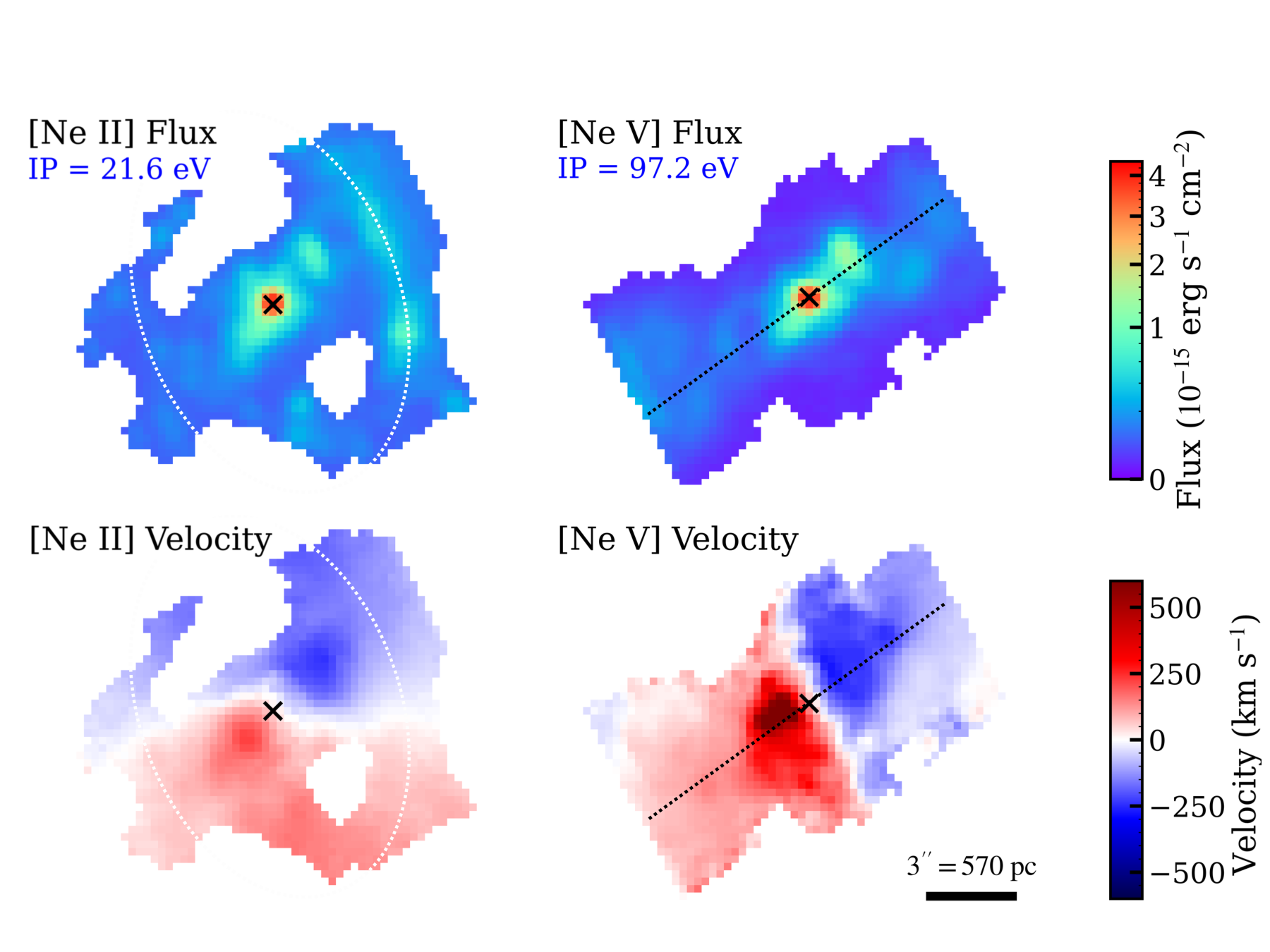
Figure 1 from Breaking the Blend: A multi-tracer kinematic decomposition method for IFS data applied to disentangling the AGN outflow and circumnuclear ring in NGC 5728 with JWST

2026-09-25 · 2609.30232v1 · Research note

Breaking the Blend: A multi-tracer kinematic decomposition method for IFS data applied to disentangling the AGN outflow and circumnuclear ring in NGC 5728 with JWST

Oscar Veenema, Niranjan Thatte, Dimitra Rigopoulou, et al.

Using JWST mid-infrared IFS of NGC 5728, the authors decompose blended circumnuclear line emission into a star-forming ring and AGN bicone. Stacking twelve tracers yields spatial flux fractions that are stable across tested weighting choices.

2026-08-27 · 2608.25044v1 · Research note

To be lensed or not to be lensed: on the nature of the alleged high-z lensed quasars J0109-5424 and P170+20

Aurora Mata-Sanchez, Emanuele P. Farina, Anniek J. Gloudemans, et al.

Multi-wavelength follow-up overturns J0109−5424’s proposed high-redshift lens interpretation: Paschen lines place it at z=2.07 as a FeLoBAL quasar. For P170+20, compact imaging and a quasar+M-dwarf spectral fit disfavor, but do not exclude, lensing.

2026-08-24 · 2608.21280v1 · Research note

The [Ne V] AGN Diagnostic in SDSS-IV/eBOSS: An Anticorrelation Between Ionization State and AGN Luminosity in Low-Redshift Coronal-Line Galaxies

Owen S. Matthews Acuña, Christy A. Tremonti, Nikko J. Cleri, et al.

In SDSS-IV/eBOSS, [Ne V] produces a large, high-purity but incomplete AGN sample: detection favors less-obscured, higher-Eddington-ratio nuclei. Stacking indicates many individual non-detections are sensitivity-limited, while [Ne V]/[O III] declines with AGN luminosity.

2026-08-24 · 2608.20781v1 · Research note

Pandora cluster Lensing, AGN, and Transient Exploration (PLATE) from JWST Multi-Epoch Imaging. I. Discovery of a type II supernova candidate in a spiral galaxy at $z=0.7$

Yuxuan Pang, Xin Wang, Ping Chen, et al.

JWST multi-epoch imaging identifies PLATE-23a at z=0.688 as a strongly favored Type IIP supernova candidate, with cooling early-time SEDs and late evolution resembling local Type IIP events, while sparse late photometry limits physical inferences.

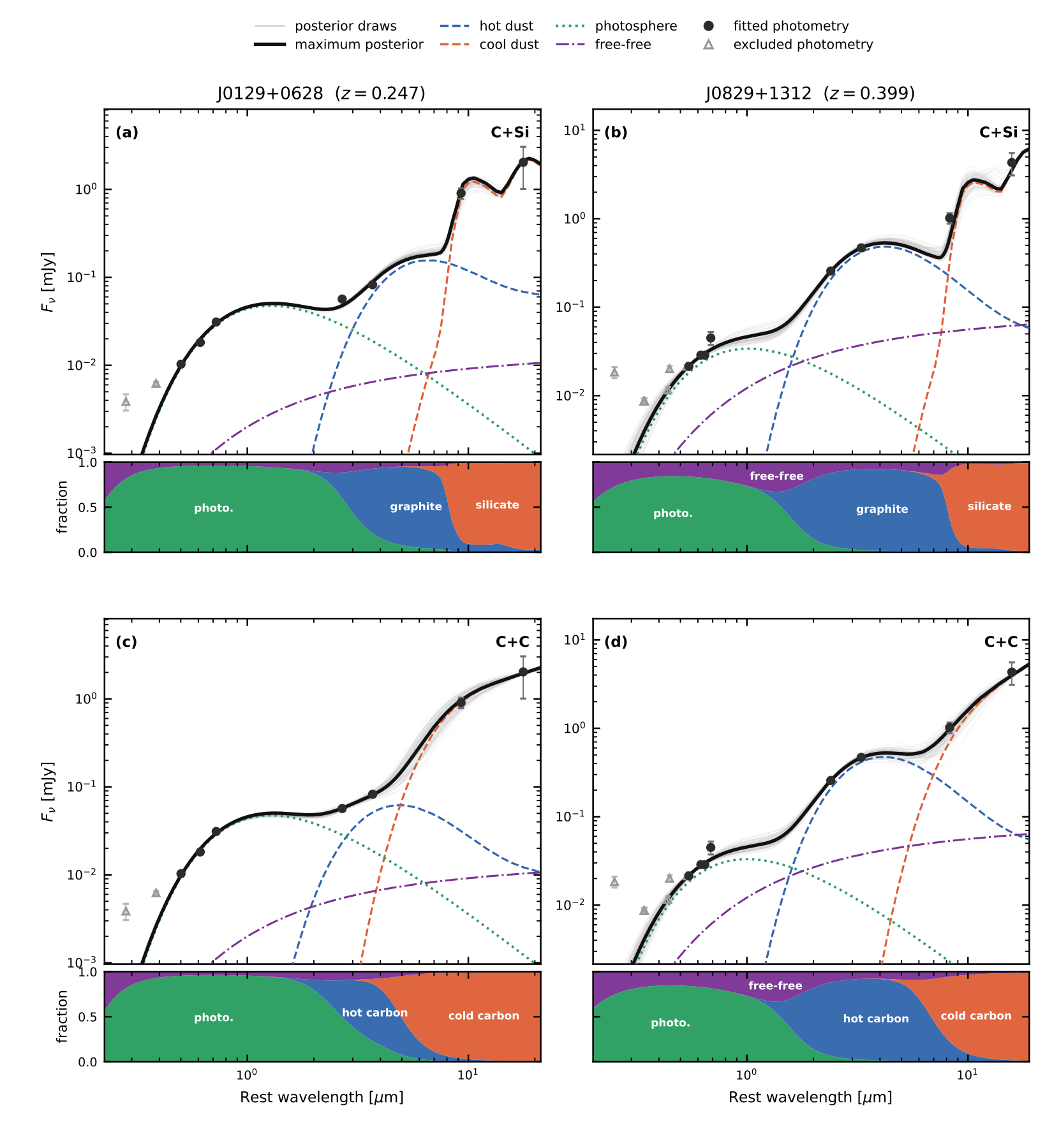
Figure 3 from ATLAS. III. Dust Around Little Red Dots: Hydrogen Line Ratios beyond Dust-free Non-Case B Models

2026-08-12 · 2608.10832v1 · Research note

ATLAS. III. Dust Around Little Red Dots: Hydrogen Line Ratios beyond Dust-free Non-Case B Models

Tomokazu Kiyota, Masami Ouchi, Hiroto Yanagisawa, et al.

In 20 LRDs, extreme broad Balmer decrements require both dense, optically thick non-Case-B line formation and—when Hα/Hβ exceeds the model ceiling—additional broad-line-region-associated dust, rather than galaxy-wide extinction alone.

2026-08-07 · 2608.05267v1 · Research note

Where did all the Little Red Dots go? The abundance of LRD analogues among objects with broad lines at $z < 0.35$

Lasse Seyberlich, Sarah E. I. Bosman

In an SDSS broad-line sample at z<0.35, the authors identify nine SED-selected local LRD analogues and infer an abundance of 0.08%, supporting rarity at late times but with important spectral-coverage and contamination caveats.

Figure 2 from Misaligned or chaotic? A strong break of axial symmetry in the local LRD J1025 revealed with VLT/FORS2 spectropolarimetry

2026-08-03 · 2607.28715v1 · Research note

Misaligned or chaotic? A strong break of axial symmetry in the local LRD J1025 revealed with VLT/FORS2 spectropolarimetry

Francesco D'Eugenio, Gabriele Pezzulli, Roberto Maiolino, et al.

VLT/FORS2 spectropolarimetry of the z≈0.1 LRD J1025 finds an intrinsically polarised, nearly grey continuum and a weaker, differently angled broad Hα component. The 48±4° angle offset robustly requires broken axial symmetry, but does not identify its physical cause.

Figure 1 from Vigorous turbulence driven by quasar-mode feedback in a cluster core

2026-07-29 · 2607.24911v1 · Research note

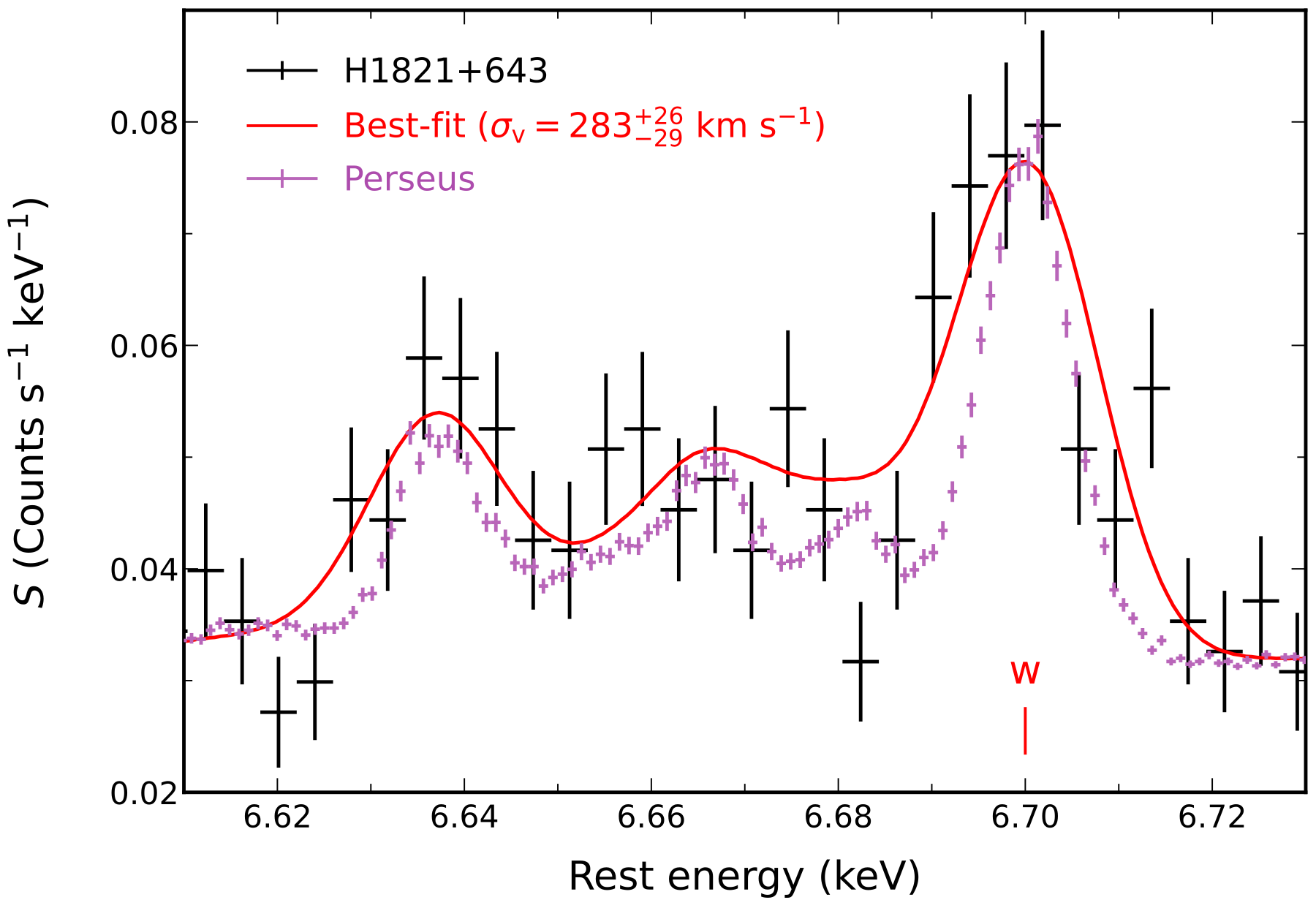
Vigorous turbulence driven by quasar-mode feedback in a cluster core

Satoshi Yamada, Shutaro Ueda, Hirofumi Noda, et al.

XRISM/Resolve spectroscopy of the z=0.297 quasar cluster H1821+643 measures unusually broad ICM Fe XXV lines, implying substantial non-thermal motions on 20–100 kpc scales. The authors interpret these motions as quasar-feedback coupling, but resonance scattering and sloshing remain relevant alternatives.

Figure 1 from Two Peas in a Pod: The First Confirmed Dual Active Galactic Nucleus within a Green Pea Galaxy System

2026-07-21 · 2607.17729v1 · Research note

Two Peas in a Pod: The First Confirmed Dual Active Galactic Nucleus within a Green Pea Galaxy System

Konstantinos Kouroumpatzakis, Peter G. Boorman, Jiří Svoboda, et al.

Chandra and Keck/DEIMOS observations identify two obscured, broad-line AGN in the interacting Green Pea system J1622+3521, separated by 8.4 kpc. The authors therefore report a confirmed dual AGN in a compact low-mass Green Pea environment.

Figure 2 from First detection of ultra-fast outflows in a quiescent galaxy

2026-07-09 · 2607.06844v1 · Research note

First detection of ultra-fast outflows in a quiescent galaxy

Yerong Xu, Malgorzata Siudek, Victor Rodríguez Morales, et al.

Using X-ray spectra of the single nearby, long-quenched galaxy KUG 1208+386, the authors report a ≈0.07c nuclear ultra-fast outflow. Its ≥3σ trial-corrected line evidence makes feedback in a quiescent host plausible, but not yet a demonstrated maintenance mechanism.

2026-07-07 · 2607.04942v1 · Research note

MICONIC: The spatial relationship between star formation and the AGN in Centaurus A revealed by JWST/MIRI

O. C. Jones, M. L. Jones, D. Dicken, et al.

JWST/MIRI resolves dusty point sources across Centaurus A’s warped disc: 928 red infrared-excess objects are consistent with embedded young stellar objects and follow the disc rather than the radio jet, favoring merger-accreted gas as the immediate star-formation reservoir.

Figure 2 from Kinematic detection of dusty outflows from active galactic nuclei: Polycyclic aromatic hydrocarbon kinematics of type 2 quasars with JWST/MIRI spectroscopy

2026-06-29 · 2606.28311v1 · Research note

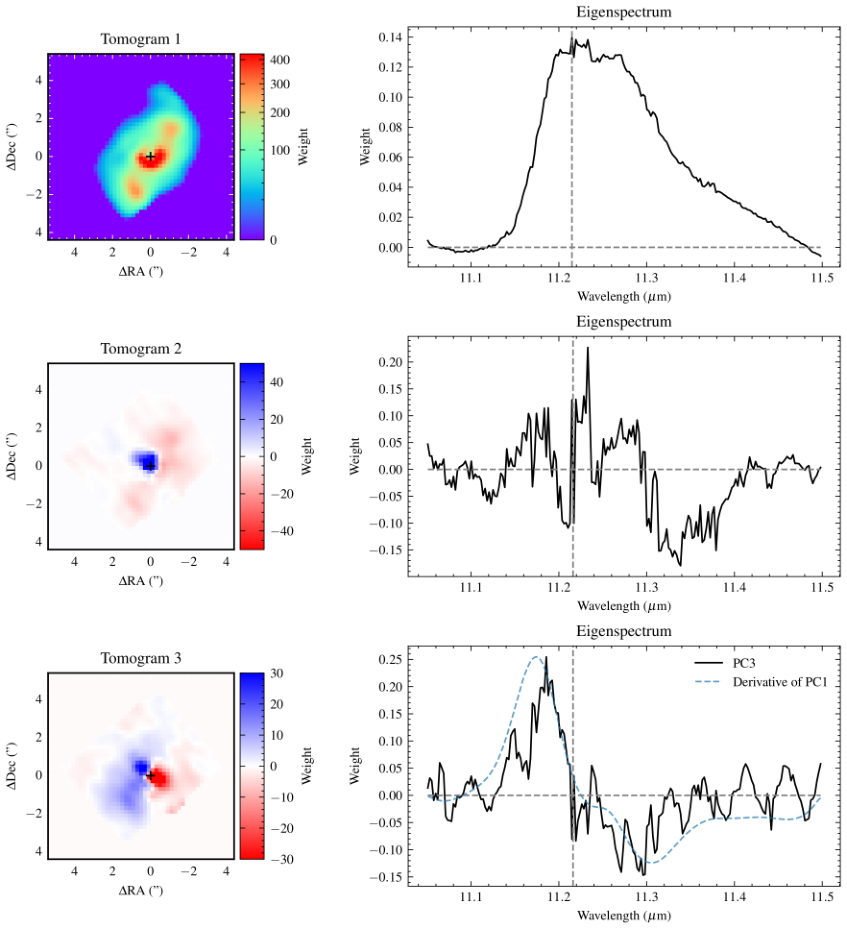
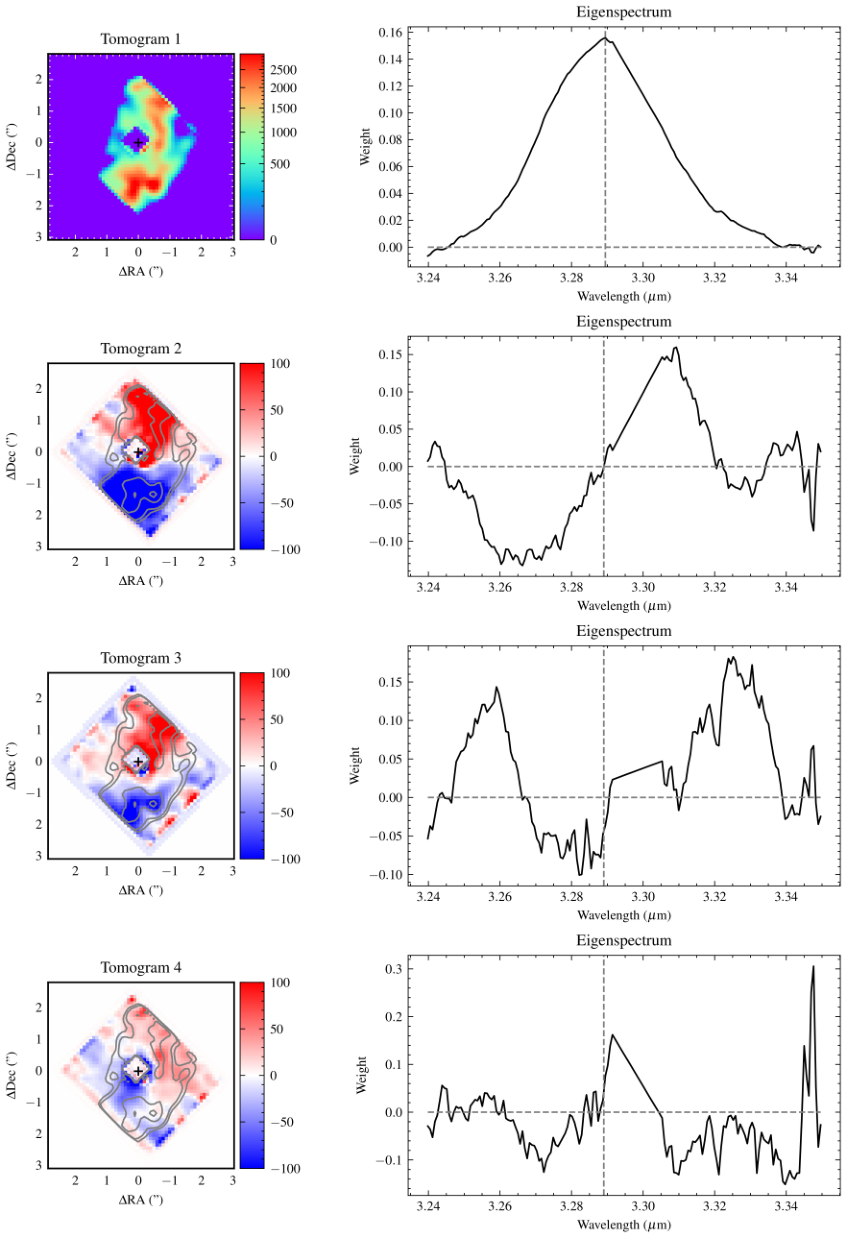
Kinematic detection of dusty outflows from active galactic nuclei: Polycyclic aromatic hydrocarbon kinematics of type 2 quasars with JWST/MIRI spectroscopy

Fergus R. Donnan, Cristina Ramos Almeida, Omaira González Martín, et al.

JWST/MIRI PCA tomography recovers 11.3-μm PAH velocity maps in three of five z~0.1 type-2 quasars; all three show dust-traced outflow kinematics, with molecular-gas residuals consistent with outflow after disk subtraction.

Figure 9 from OzSSy1: The Australian Southern Seyfert-1 Spectroscopic Atlas and Catalogue at z < 0.1

2026-06-29 · 2606.27675v1 · Research note

OzSSy1: The Australian Southern Seyfert-1 Spectroscopic Atlas and Catalogue at z < 0.1

Neelesh Amrutha, Christian Wolf, Christopher A. Onken, et al.

OzSSy1 releases uniform WiFeS spectroscopy, decompositions, and line measurements for 887 southern broad-line AGNs at z<0.1, providing a local reference sample while retaining incompleteness from host dilution at the lowest redshifts.

Figure 1 from A Population of Little Red Dot-like Quasars in SDSS

2026-06-25 · 2606.26098v1 · Research note

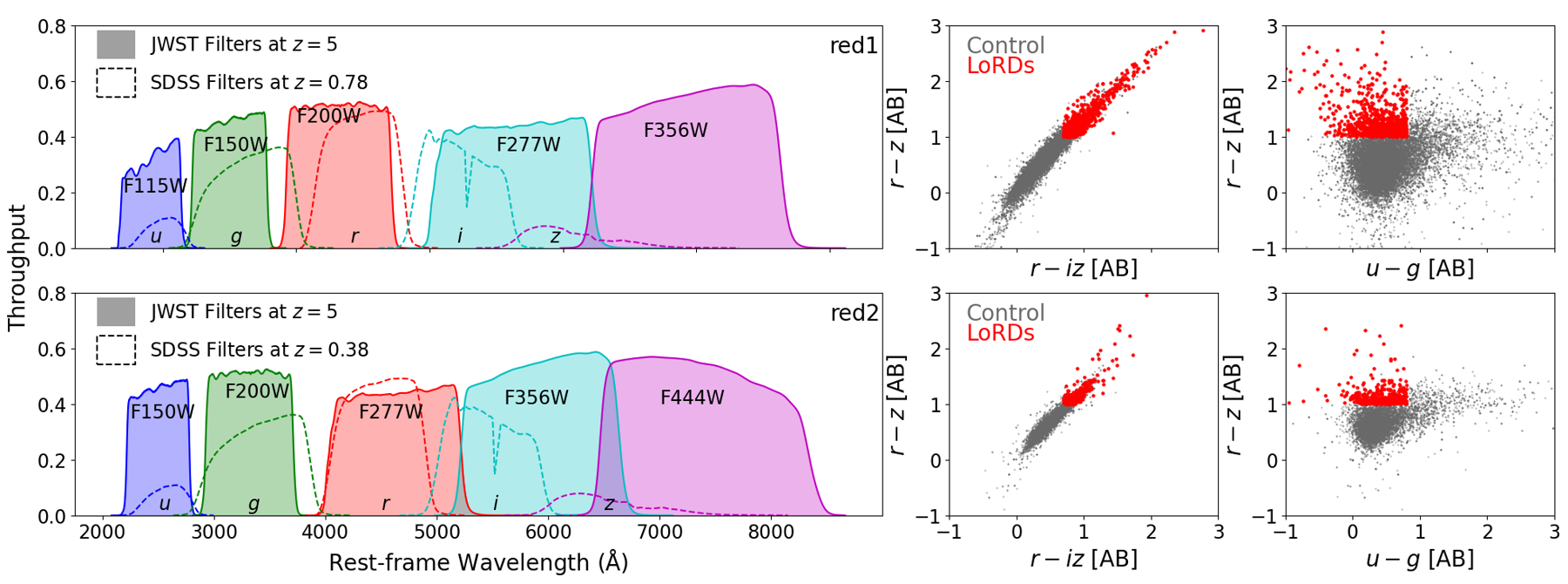
A Population of Little Red Dot-like Quasars in SDSS

Quinn O. Casey, Ryan C. Hickox, Nikko J. Cleri, et al.

SDSS color selection identifies ~1,300 low-redshift “LoRD” quasars whose V-shaped subset resembles LRD spectral energy distributions, but host contamination, unresolved morphology, and weak high-z X-ray limits prevent establishing them as a uniformly faithful analog population.

2026-06-17 · 2606.18155v1 · Research note

X-ray eclipse tomography: Resolving the extent of X-ray-emitting region(s) in the Seyfert galaxy ESO362-G18

Laura Rueda-Nieto, Beatriz Agís-González, Giovanni Miniutti

Swift eclipse monitoring of ESO 362-G18 uses time-resolved absorption changes to constrain an X-ray source within ~35 Rg. The authors infer a structured cloud and a soft-excess region ~50% larger than, yet overlapping, the hot corona.

2026-06-17 · 2606.17144v1 · Research note

Decoupled Kinematics and Excitation in the Compton-thick AGN NGC 6552: Spatially Resolved KOOLS-IFU Observations

Kyuseok Oh, Yoshihiro Ueda, Kanta Fujiwara, et al.

KOOLS-IFU maps of NGC 6552 find broad [O III] emission declining with radius but no significant full-sample association between local kinematics and [O III]/Hβ excitation, favoring spatial dynamical structure over a detected excitation–kinematics coupling.

2026-06-10 · 2606.10455v1 · Research note

The Extreme Quasar Main Sequence of Super-Eddington DESI-DR1 NLSy1 Galaxies

Alberto Domínguez</name> <arxiv:affiliation>UCM</arxiv:affiliation> </author> <author> <name>Suvendu Rakshit, Vaidehi S. Paliya, D. J. Saikia, et al.

In 18,749 DESI-DR1 NLSy1s, stronger Fe II and lower single-epoch virial masses than SDSS-DR17 correspond to a larger inferred super-Eddington fraction. Two mass calibrations preserve the population difference, but virial-mass systematics remain consequential.

Figure 5 from The Multi-phase Biconical Outflow in the local IR-Luminous Merger IRASF01364-1042

2026-06-05 · 2606.06005v1 · Research note

The Multi-phase Biconical Outflow in the local IR-Luminous Merger IRASF01364-1042

Y. Song</name> <arxiv:affiliation>European Southern Observatory, Chile</arxiv:affiliation> <arxiv:affiliation>Joint ALMA Observatory, Chile</arxiv:affiliation> <arxiv:affiliation>Max-Planck-Institut für Radioastronomie, Germany</arxiv:affiliation> </author> <author> <name>V. U</name> <arxiv:affiliation>IPAC, California Institute of Technology, USA</arxiv:affiliation> <arxiv:affiliation>University of California, Irvine, USA</arxiv:affiliation> </author> <author> <name>J. Kader</name> <arxiv:affiliation>University of California, Irvine, USA</arxiv:affiliation> </author> <author> <name>M. Bianchin</name> <arxiv:affiliation>University of California, Irvine, USA</arxiv:affiliation> <arxiv:affiliation>Instituto de Astrof\' isica de Canarias, Spain</arxiv:affiliation> <arxiv:affiliation>Universidad de La Laguna, Spain</arxiv:affiliation> </author> <author> <name>J. Agostino</name> <arxiv:affiliation>Ritter Astrophysical Research Center and Department of Physics and Astronomy, University of Toledo, USA</arxiv:affiliation> </author> <author> <name>L. Barcos-Muñoz</name> <arxiv:affiliation>National Radio Astronomy Observatory, Charlottesville, USA</arxiv:affiliation> <arxiv:affiliation>Department of Astronomy, University of Virginia, Charlottesville, USA</arxiv:affiliation> </author> <author> <name>N. Torres-Albà</name> <arxiv:affiliation>Department of Astronomy, University of Virginia, Charlottesville, USA</arxiv:affiliation> </author> <author> <name>A. Medling</name> <arxiv:affiliation>Ritter Astrophysical Research Center and Department of Physics and Astronomy, University of Toledo, USA</arxiv:affiliation> </author> <author> <name>C. Ricci</name> <arxiv:affiliation>Department of Astronomy, University of Geneva, Switzerland</arxiv:affiliation> <arxiv:affiliation>Instituto de Estudios Astrofísicos, Facultad de Ingeniería y Ciencias, Universidad Diego Portales, Chile</arxiv:affiliation> </author> <author> <name>L. Armus</name> <arxiv:affiliation>IPAC, California Institute of Technology, USA</arxiv:affiliation> </author> <author> <name>T. Lai</name> <arxiv:affiliation>IPAC, California Institute of Technology, USA</arxiv:affiliation> </author> <author> <name>L. Ghodsi</name> <arxiv:affiliation>Hiroshima Astrophysical Science Center, Hiroshima University, Japan</arxiv:affiliation> </author> <author> <name>A. Evans</name> <arxiv:affiliation>National Radio Astronomy Observatory, Charlottesville, USA</arxiv:affiliation> <arxiv:affiliation>Department of Astronomy, University of Virginia, Charlottesville, USA</arxiv:affiliation> </author> <author> <name>H. Inami</name> <arxiv:affiliation>Occidental College, Physics Department, USA</arxiv:affiliation> </author> <author> <name>S. Stierwalt</name> <arxiv:affiliation>Leiden Observatory, Leiden University, The Netherlands</arxiv:affiliation> </author> <author> <name>T. Bohn</name> <arxiv:affiliation>Occidental College, Physics Department, USA</arxiv:affiliation> </author> <author> <name>K. L. Emig</name> <arxiv:affiliation>National Radio Astronomy Observatory, Charlottesville, USA</arxiv:affiliation> </author> <author> <name>V. Buiten</name> <arxiv:affiliation>Instituto de Alta Investigación, Universidad de Tarapacá, Chile</arxiv:affiliation> </author> <author> <name>G. Donnelly</name> <arxiv:affiliation>Ritter Astrophysical Research Center and Department of Physics and Astronomy, University of Toledo, USA</arxiv:affiliation> </author> <author> <name>E. Treister</name> <arxiv:affiliation>European Space Agency, c/o STScI, USA</arxiv:affiliation> </author> <author> <name>A. Jimenez-Gallardo</name> <arxiv:affiliation>European Southern Observatory, Chile</arxiv:affiliation> </author> <author> <name>T. Böker</name> <arxiv:affiliation>Centre for Astrophysics Research, University of Hertfordshire, UK</arxiv:affiliation> </author> <author> <name>D. Kakkad</name> <arxiv:affiliation>Steward Observatory, University of Arizona, USA</arxiv:affiliation> </author> <author> <name>S. Linden</name> <arxiv:affiliation>School of Sciences, European University Cyprus, Cyprus</arxiv:affiliation> </author> <author> <name>P. van der Werf</name> <arxiv:affiliation>Instituto de Alta Investigación, Universidad de Tarapacá, Chile</arxiv:affiliation> </author> <author> <name>V. Charmandaris</name> <arxiv:affiliation>Institute of Astrophysics, Foundation for Research and Technology-Hellas</arxiv:affiliation> <arxiv:affiliation>Department of Physics, University of Crete, Greece</arxiv:affiliation> <arxiv:affiliation>Department of Astronomy, University of Florida, USA</arxiv:affiliation> </author> <author> <name>R. Remigio</name> <arxiv:affiliation>University of California, Irvine, USA</arxiv:affiliation> </author> <author> <name>L. Lenkic</name> <arxiv:affiliation>IPAC, California Institute of Technology, USA</arxiv:affiliation> </author> <author> <name>C. Finlez</name> <arxiv:affiliation>European Southern Observatory, Chile</arxiv:affiliation> <arxiv:affiliation>Joint ALMA Observatory, Chile</arxiv:affiliation> </author> <author> <name>M. Sanchez-García</name> <arxiv:affiliation>Department of Physics, University of Crete, Greece</arxiv:affiliation> <arxiv:affiliation>Department of Astronomy, University of Florida, USA</arxiv:affiliation> </author> <author> <name>C. Lofaro</name> <arxiv:affiliation>Department of Physics, University of Crete, Greece</arxiv:affiliation> <arxiv:affiliation>Department of Astronomy, University of Florida, USA</arxiv:affiliation> </author> <author> <name>A. Saravia</name> <arxiv:affiliation>National Radio Astronomy Observatory, Charlottesville, USA</arxiv:affiliation> <arxiv:affiliation>Department of Astronomy, University of Virginia, Charlottesville, USA</arxiv:affiliation> </author> <author> <name>I. Yoon</name> <arxiv:affiliation>National Radio Astronomy Observatory, Charlottesville, USA</arxiv:affiliation> </author> <author> <name>G. C. Privon</name> <arxiv:affiliation>National Radio Astronomy Observatory, Charlottesville, USA</arxiv:affiliation> <arxiv:affiliation>Department of Astronomy, University of Virginia, Charlottesville, USA</arxiv:affiliation> <arxiv:affiliation>Research School of Astronomy and Astrophysics, Australian National University, Australia</arxiv:affiliation> </author> <author> <name>T. Gao</name> <arxiv:affiliation>ARC Centre of Excellence for All Sky Astrophysics in 3 Dimensions</arxiv:affiliation> <arxiv:affiliation>W. M. Keck Observatory, USA</arxiv:affiliation> </author> <author> <name>H. Aziz</name> <arxiv:affiliation>University of California, Irvine, USA</arxiv:affiliation> </author> <author> <name>R. McGurk</name> <arxiv:affiliation>Institute for Astronomy, University of Hawaii, USA</arxiv:affiliation> </author> <author> <name>T. Díaz-Santos</name> <arxiv:affiliation>Department of Physics, University of Crete, Greece</arxiv:affiliation> <arxiv:affiliation>Department of Astronomy, University of Florida, USA</arxiv:affiliation> </author> <author> <name>D. Kunneriath</name> <arxiv:affiliation>National Radio Astronomy Observatory, Charlottesville, USA</arxiv:affiliation> </author> <author> <name>David B. Sanders

Spatially resolved JWST, ALMA and KCWI data support a multiphase, minor-axis biconical outflow in the dusty local merger IRAS F01364-1042. The authors infer faster ionized than molecular gas and argue a nuclear starburst can energetically drive it despite an obscured AGN.
2026-06-04 · 2606.04712v1 · Research note

The Extreme Rarity and Physical Properties of Low-redshift AGNs with Balmer Absorption

Jinyi Shangguan, Chang-Hao Chen, Luis C. Ho, et al.

Among 14,584 SDSS type-1 AGNs at z<0.35, seven robust Balmer absorbers imply a ∼0.05% incidence. Joint, resolution-aware Balmer fitting finds narrow, generally saturated absorbers; a rare high-Eddington, weak-Fe II subset may be preferentially affected.

2026-05-20 · 2605.21574v1 · Research note

(LRDs)$^2$: The Low-ReDshift Little Red Dots Survey. II. DESI DR1 Sample

Xiaojing Lin, Xiaohui Fan, Zheng Cai, et al.

A DESI DR1 selection identifies 27 candidate low-redshift LRDs at z=0.2–0.9; near-IR spectra of 18 show broad, highly decremented Balmer lines and unusual continua, supporting—but not independently proving—continuity with high-redshift LRD phenomenology.

Figure 1 from Population synthesis of active galactic nuclei based on the radiation-regulated unification model

2026-05-17 · 2605.17547v1 · Research note

Population synthesis of active galactic nuclei based on the radiation-regulated unification model

D. Gerolymatou, S. Paltani, C. Ricci, et al.

Using simulation-based inference on a synthetic local AGN population, the authors find an intrinsic Compton-thick fraction of 40±3%. Their radiation-regulated geometry broadly reproduces several X-ray observables, but depends materially on fixed, simplified broad-line-region and torus assumptions.

Figure 2 from A new sample of Little Red Dots at $z<0.45$ in DESI DR1: Broad Balmer lines, low ionization spectrum and no variability

2026-05-14 · 2605.14233v1 · Research note

A new sample of Little Red Dots at $z<0.45$ in DESI DR1: Broad Balmer lines, low ionization spectrum and no variability

Kevin Park, Alberto Torralba, Jorryt Matthee, et al.

A DESI DR1 line-selected search identifies eight compact z=0.20–0.44 LRD candidates with broad, steep-decrement Balmer emission, low-excitation spectra, and generally weak multi-year variability, extending detailed LRD tests to the nearby Universe.

Figure 6 from A Changing-Look Seyfert Discovered by eROSITA Reveals a Two-Component Broad-Line Region

2026-05-08 · 2605.07965v1 · Research note

A Changing-Look Seyfert Discovered by eROSITA Reveals a Two-Component Broad-Line Region

Alex Markowitz, Mirko Krumpe, David Homan, et al.

eROSITA-triggered monitoring of HE 1237-2252/J1240−2309 links a changing-look transition to intrinsic accretion-rate recovery and an evolving two-component Balmer-line profile. A diskline-like component strengthens with UV flux, while the proposed corona/illumination mechanism remains interpretive.

2026-05-06 · 2605.05301v1 · Research note

An X-ray and optical spectral study of the changing-look narrow-line Seyfert 1 2MASX J0413-0050

A. Vietri, A. Tortosa, D. Ilić, et al.

Across four optical and three X-ray epochs, J0413-0050 changed from broad Balmer emission in 2004 to an Hβ-free 2021 state and back to broad plus narrow Hβ in 2023. The authors favor changing accretion over obscuration, but X-ray column density is unconstrained.

Figure 4 from Resolving the Multiphase Outflow, Shock Signatures, and PAHs in the AGN-Starburst Composite ULIRG F10565+2448 with JWST MIRI/MRS

2026-05-04 · 2605.03016v1 · Research note

Resolving the Multiphase Outflow, Shock Signatures, and PAHs in the AGN-Starburst Composite ULIRG F10565+2448 with JWST MIRI/MRS

Kylie Yui Dan, Jerome Seebeck, Sylvain Veilleux, et al.

JWST/MIRI-MRS resolves a warm-H₂ outflow in the composite ULIRG F10565+2448: it is hotter than the disk but apparently sub-escape-speed, while a faster unresolved ionized component and localized shock candidates support multiphase feedback.

2026-05-04 · 2605.02663v1 · Research note

Jet-driven shocks and turbulence in radio-loud Active Galactic Nuclei observed with JWST MIRI/MRS

Rogemar A. Riffel, Gabriel L. Souza-Oliveira, Luis Colina, et al.

JWST/MIRI-MRS mapping of seven nearby radio-loud AGN links elevated warm-H2 excitation and broadened multiphase gas to radio-jet environments, including transverse regions. The authors interpret the correlations as predominantly jet-driven shocks, while recognizing source-dependent exceptions.

Figure 1 from A Rare Eddington-Limited, Heavily Obscured Low-Mass Active Galactic Nucleus Likely Triggered by a Galaxy Merger

2026-04-29 · 2604.26743v1 · Research note

A Rare Eddington-Limited, Heavily Obscured Low-Mass Active Galactic Nucleus Likely Triggered by a Galaxy Merger

Shouyi Wang, Fan Zou, Chang-Hao Chen, et al.

For the single $M_\star\sim10^{10}\,M_\odot$ host GAMA 376183, NuSTAR and multiwavelength data support a heavily obscured, rapidly accreting AGN in a disturbed system; the proposed merger-triggered starburst/accretion connection remains suggestive rather than demonstrated.

Figure 5 from Decoupling the AGN outflow and star-forming disk kinematics in the nuclear region of NGC 7582 with JWST NIRSpec and MIRI/MRS

2026-04-27 · 2604.24892v1 · Research note

Decoupling the AGN outflow and star-forming disk kinematics in the nuclear region of NGC 7582 with JWST NIRSpec and MIRI/MRS

Oscar Veenema, Niranjan Thatte, Dimitra Rigopoulou, et al.

JWST IFU spectroscopy of NGC 7582 separates rotating circumnuclear-disk gas from an AGN bicone by ionisation potential and line-profile decomposition, finding distinct kinematic axes and broader outflow lines; mixed-ionisation tracers require two components.

2026-04-16 · 2604.14551v1 · Research note

Discovery of low-redshift analogues to "Little Red Dots" in DESI: A later evolutionary stage of compact LRDs?

Weiyu Ding, Xu Kong, Wei-Jian Guo, et al.

Five DESI DR1 sources at z=0.2–0.4 reproduce LRD-like V-shaped SEDs and broad Balmer lines, but their AGN-like line ratios and substantially larger hosts make an evolutionary connection to z>4 LRDs plausible rather than established.

Figure 1 from A Black Hole Star at Cosmic Noon: Extreme Balmer break, photospheric continuum, and broad absorption by thick winds in a Little Red Dot at z=1.7

2026-03-30 · 2603.28335v1 · Research note

A Black Hole Star at Cosmic Noon: Extreme Balmer break, photospheric continuum, and broad absorption by thick winds in a Little Red Dot at z=1.7

Alberto Torralba, Jorryt Matthee, Andrea Weibel, et al.

PAN-BH*-1 is a single z=1.731 Little Red Dot at cosmic noon with an extreme Balmer break, compact red continuum, and broad Hα absorption. Its data are consistent with—but do not establish—a thick, rotating photospheric disk wind.

Figure 13 from XRISM spectroscopy of a crowded Galactic center region -- II. Narrow emission lines in the Black Hole candidate MAXI J1744-294/Swift J174540.2-290037

2026-03-28 · 2603.27235v1 · Research note

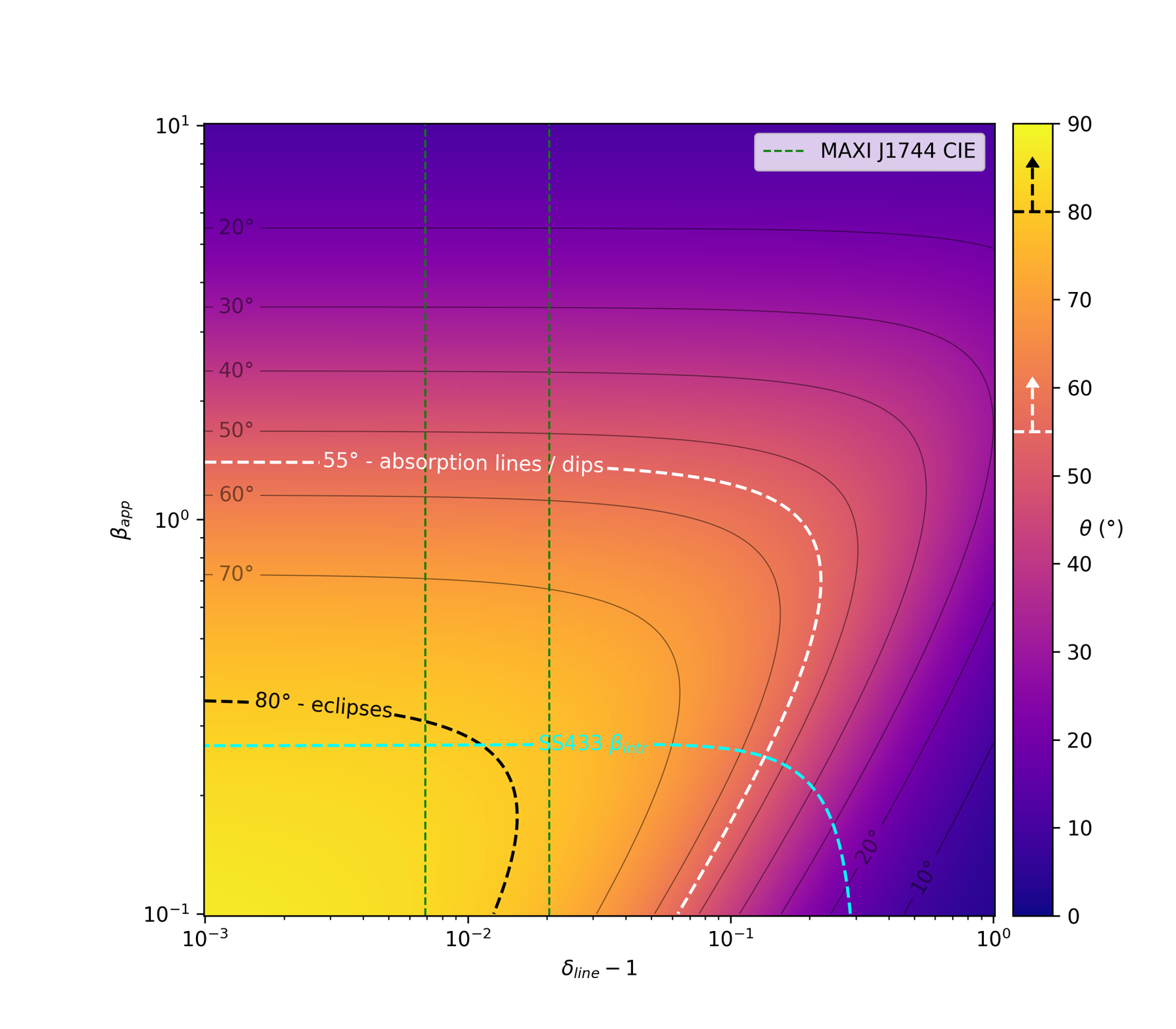
XRISM spectroscopy of a crowded Galactic center region -- II. Narrow emission lines in the Black Hole candidate MAXI J1744-294/Swift J174540.2-290037

Maxime Parra, Shifra Mandel, Kai Matsunaga, et al.

XRISM Resolve spectroscopy of the crowded Galactic-centre field isolates narrow iron-line emission attributed to the black-hole candidate MAXI J1744-294, including static highly ionized gas and atypical features consistent with blueshifted material, though plasma origin and background systematics remain unresolved.

2026-03-23 · 2603.22425v1 · Research note

A large population of over-massive black hole quasars at z=0.3-0.8 revealed by eROSITA

Johannes Buchner, Isabelle Gauger, Qiaoya Wu, et al.

In a 140 deg² eROSITA field, the authors identify eight z=0.3–0.8/1 quasars with inferred M•/M⋆>5%. Their abundance supports recurrent black-hole/host offsets among rapidly accreting AGN, but single-epoch masses and often upper-limited host masses temper the conclusion.

2026-03-18 · 2603.17967v1 · Research note

JWST Reveals Two Overmassive Black Hole Candidates in Dwarf Galaxies at z $\approx$ 0.7: Pushing Black Hole Searches into the Dwarf-Galaxy Regime

E. Iani, P. Rinaldi, A. Torralba, et al.

Two z≈0.7 compact dwarfs combine blue, burst-dominated UV–optical emission with a MIRI hot-dust excess. SED-inferred AGN luminosities imply candidate black holes disproportionately massive for ≈10^7 M⊙ hosts, but masses depend strongly on the assumed Eddington ratio.

Figure 1 from GATOS N: The first direct kinematic evidence of dusty outflows from AGN via PAH kinematics of local Seyfert galaxies with JWST

2026-03-12 · 2603.12200v1 · Research note

GATOS N: The first direct kinematic evidence of dusty outflows from AGN via PAH kinematics of local Seyfert galaxies with JWST

Fergus R. Donnan, Ismael García-Bernete, Dimitra Rigopoulou, et al.

JWST IFU observations of 10 local Seyferts use PCA tomography of broad PAH bands to map dust-phase kinematics. The authors report neutral, larger PAHs sharing molecular and ionised-outflow signatures in NGC 5728 and NGC 7582, while 3.3 μm PAHs trace disks.

2026-03-02 · 2603.01473v1 · Research note

Local Analogs of Little Red Dots: Optical Variability and Evidence for an AGN Origin

Ruqiu Lin, Zhen-Ya Zheng, Junxian Wang, et al.

Six-year ZTF monitoring of seven z~0.3 LRD analogs detects multiband excess variance in three and DRW-like variability in two, supporting—but not establishing—an AGN interpretation. Simulations suggest present JWST high-z variability upper limits can be biased low by short baselines.

2026-02-14 · 2602.13902v1 · Research note

J-PAS: Semi-Supervised Sim-to-Obs Transfer for Robust Star--Galaxy--Quasar Classification

Daniel López-Cano, L. Raul Abramo, L. Nakazono, et al.

Semi-supervised adaptation from DESI-derived mocks to J-PAS observations improves held-out four-class photometric classification over mocks-only and equally label-limited J-PAS-only baselines, chiefly for quasars. Results demonstrate mitigation of this specific simulation-to-observation shift, not a general guarantee of transferability.

Figure 9 from Obscured AGN at z < 1.5: X-ray to Far-Infrared SEDs and Host Galaxy Morphologies in the GOODS Fields

2026-01-29 · 2601.22227v1 · Research note

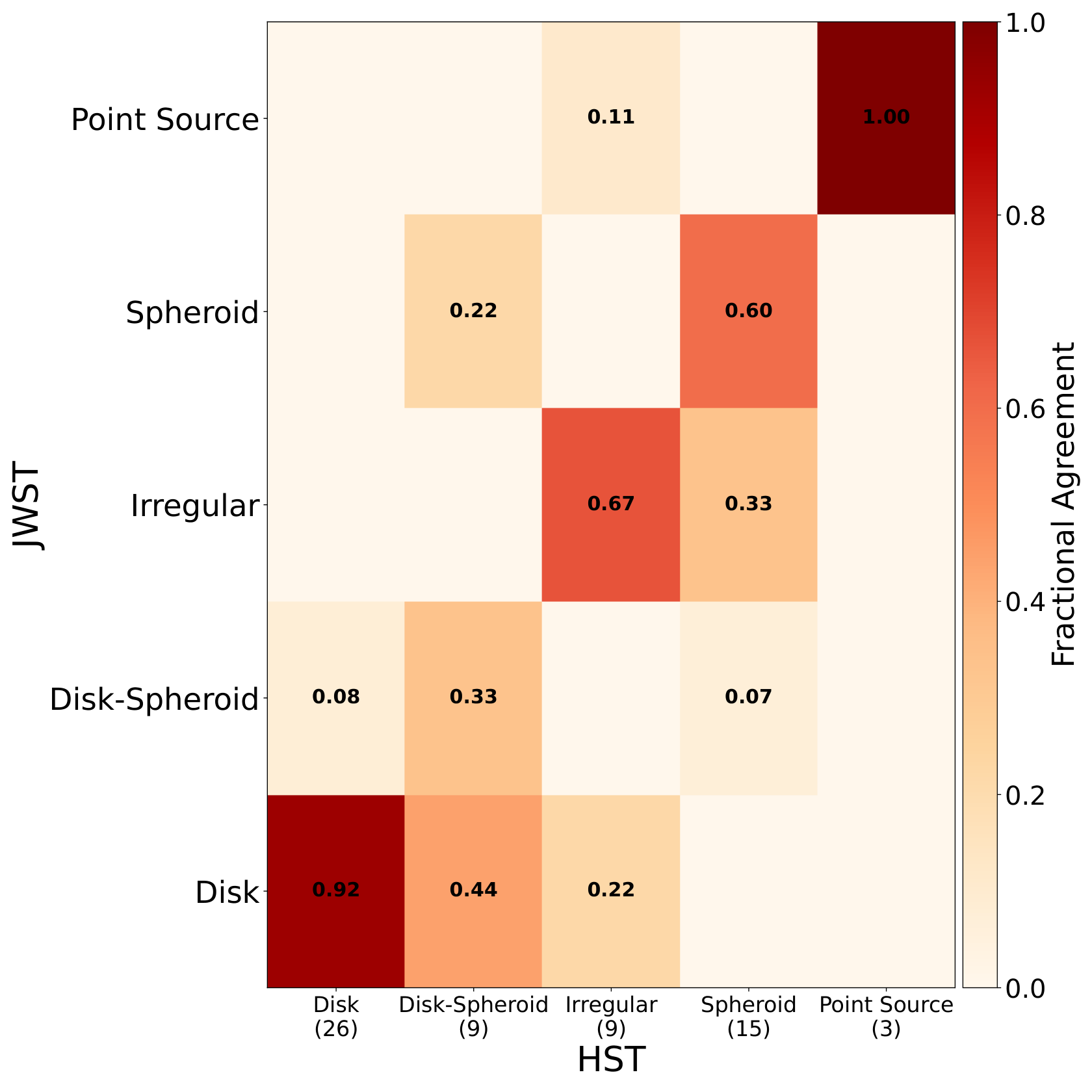
Obscured AGN at z < 1.5: X-ray to Far-Infrared SEDs and Host Galaxy Morphologies in the GOODS Fields

William W. H. Jarvis, Connor Auge, David Sanders, et al.

For 194 X-ray AGN at z<1.5 in GOODS, the authors find predominantly obscured SEDs and mainly disk-dominated hosts. A statistically distinct, faint obscured SED class is more spheroid-rich, while the observed interaction fraction does not establish triggering causality.

Figure 3 from The rest ultraviolet to infrared spectral energy distributions of heavily reddened quasars are "V-shaped" and hot-dust poor

2026-01-24 · 2601.17416v1 · Research note

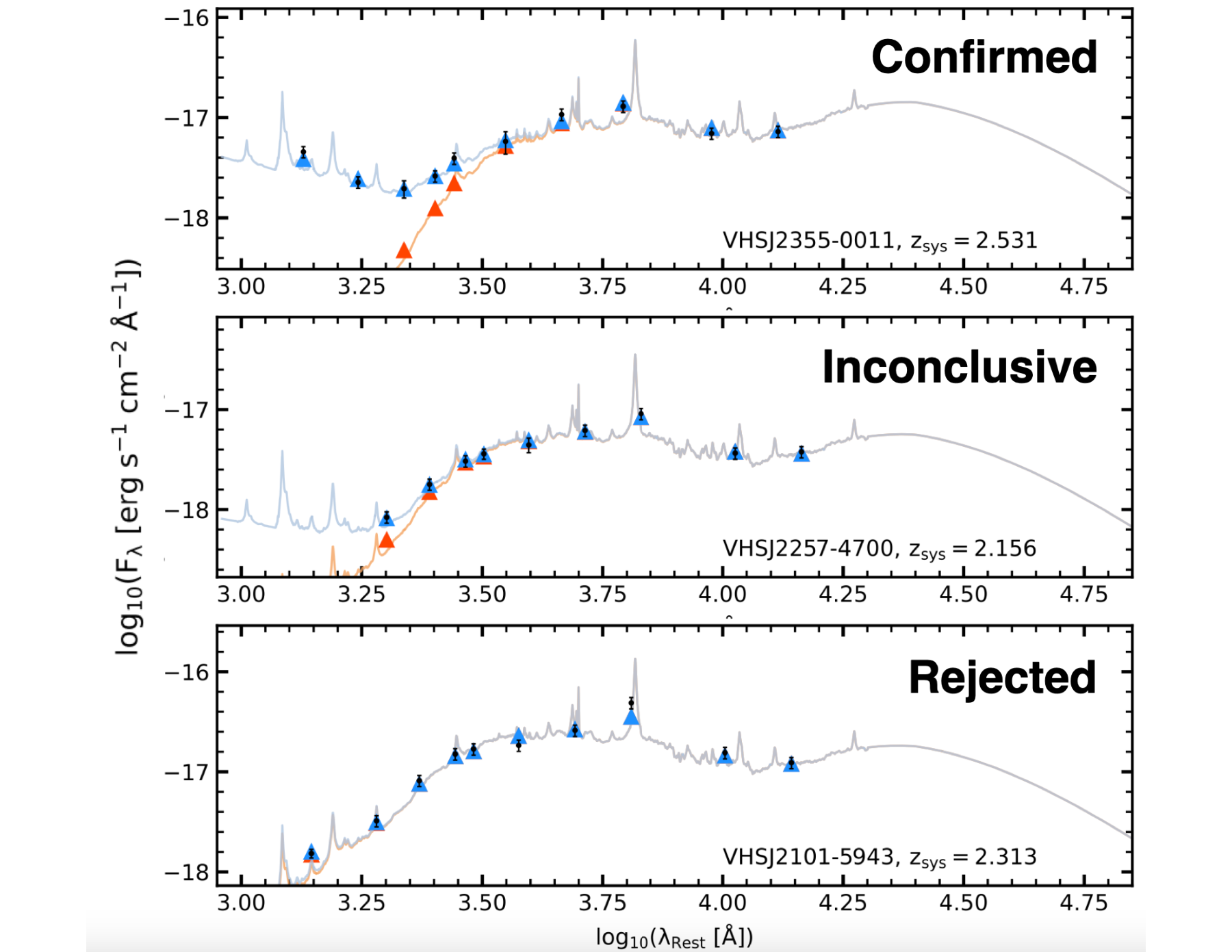
The rest ultraviolet to infrared spectral energy distributions of heavily reddened quasars are "V-shaped" and hot-dust poor

Matthew Stepney, Manda Banerji, Shenli Tang, et al.

For 63 heavily reddened quasars at z=0.7–2.7, two-component UV–IR fits frequently yield V-shaped SEDs and comparatively weak hot dust. The authors identify four cosmic-noon objects meeting Little Red Dot continuum-slope selections, but do not uniquely establish the UV-emission mechanism.

2026-01-23 · 2601.16977v1 · Research note

ReveaLLAGN 1: JWST Emission-Line Spectra Reveal Low-Luminosity AGN with UV-Deficient SEDs and Warm Molecular Gas

Kameron Goold, Anil Seth, Mallory Molina, et al.

JWST NIRSpec/MIRI nuclear spectra of eight LLAGN plus Cen A associate decreasing [Ne V]-to-X-ray output below log(Lbol/LEdd)≈−3.5 with a UV-deficient ionizing SED, while finding warmer rotational H2 and predominantly nuclear silicate emission.

Figure 1 from Probing Heavily Obscured AGN in Major Galaxy Mergers Using the mm-X-ray Correlation

2026-01-21 · 2601.15186v1 · Research note

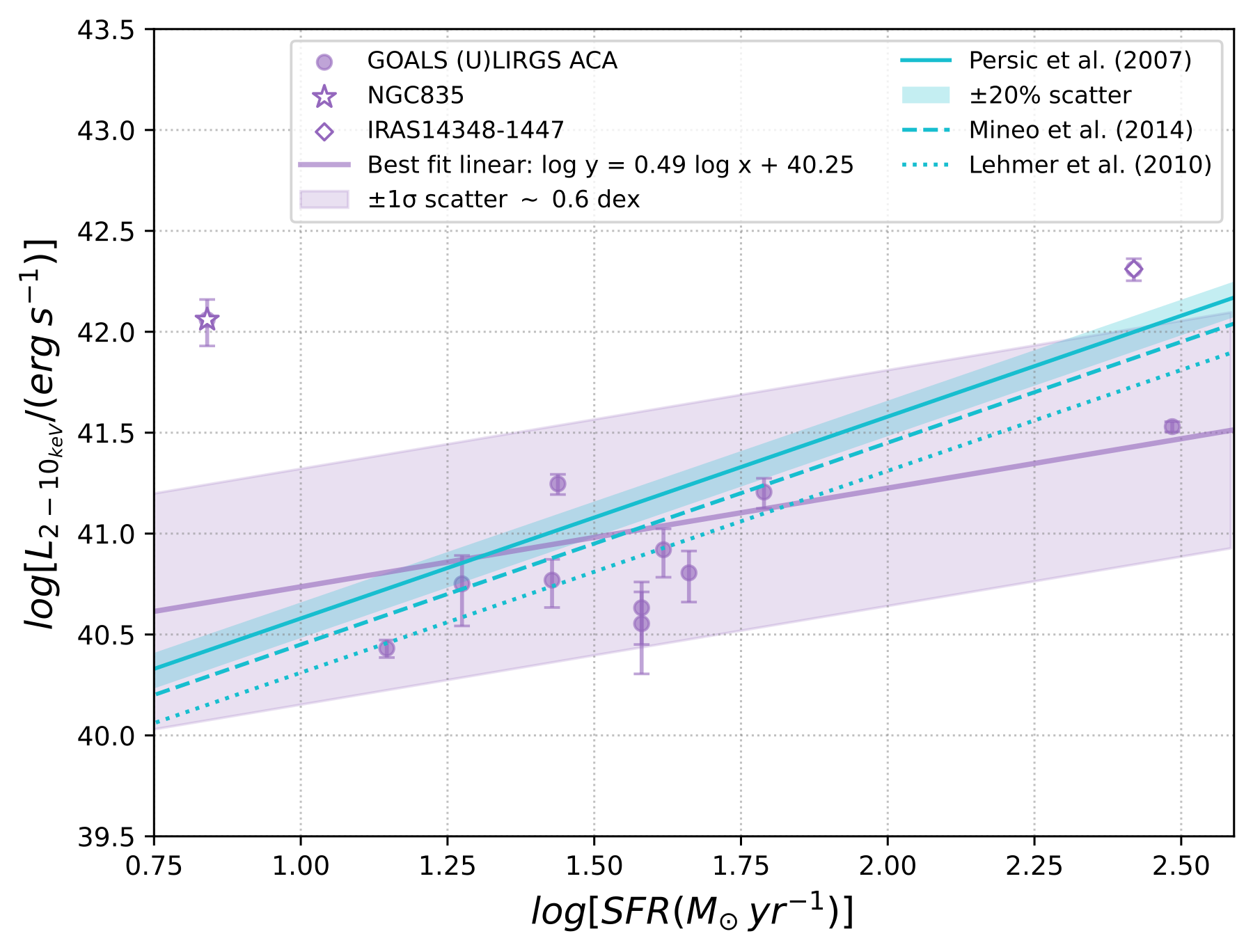
Probing Heavily Obscured AGN in Major Galaxy Mergers Using the mm-X-ray Correlation

M. Droguett-Callejas, E. Treister, L. Barcos-Muñoz, et al.

In local merging (U)LIRGs, 230-GHz continuum combined with X-ray luminosity and IR-based SFR can conservatively separate star-formation-compatible systems from candidate obscured AGN; the authors identify one confirmed AGN and two strong candidates, but calibration remains preliminary.

2026-01-13 · 2601.08212v1 · Research note

Diverse Origins of Broad H$α$ Lines in Heavily Obscured AGNs Revealed by Multi-epoch Spectroscopy

Shoichiro Mizukoshi, Takeo Minezaki, Subaru Ubukata, et al.

Five-epoch spectroscopy of three AGNs with A_V>50 mag finds broad-Hα behavior is not uniform: Mrk 268 varies at 4.3σ, consistent with direct BLR emission, whereas MCG -3-34-64 and UGC 5101 favor outflow and/or scattering contributions.

2026-01-12 · 2601.07990v1 · Research note

Evidence of Feedback Effects in Low-luminosity Active Galactic Nuclei Revealed by JWST Spectroscopy

Lulu Zhang, Chris Packham, Erin K. S. Hicks, et al.

JWST 3–28 μm nuclear spectroscopy of four low-luminosity AGN associates weak high-ionization emission, shock-like line ratios, altered PAH populations, and non-thermal H₂ excitation with feedback, while leaving the proposed jet connection indirect.

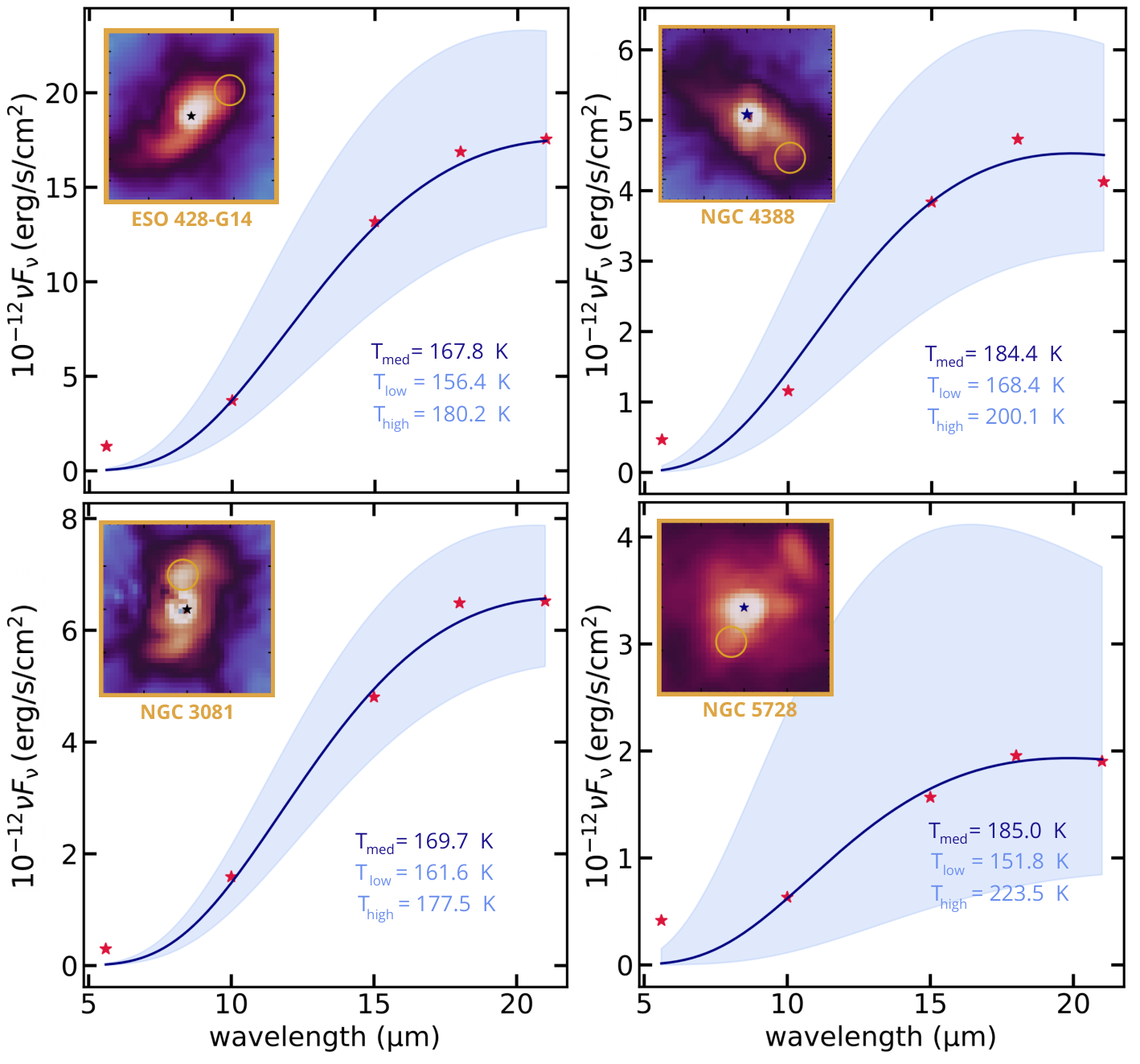
Figure 4 from GATOS XI : Excess dust heating in the Narrow Line Regions of nearby AGN revealed with JWST/MIRI

2026-01-06 · 2601.02865v1 · Research note

GATOS XI : Excess dust heating in the Narrow Line Regions of nearby AGN revealed with JWST/MIRI

Houda Haidar, David J. Rosario, Ismael García-Bernete, et al.

JWST/MIRI imaging of eight nearby Seyferts finds resolved 100–200 pc NLR dust in four. Its warm, steep mid-IR SEDs exceed simple AGN-heating predictions; the authors therefore favor local shock heating, while treating shocks as an interpretation rather than a direct calorimetric detection.

Figure 1 from HELM's deep: Highly Extincted Low-Mass galaxies seen by JWST

2025-12-16 · 2512.14822v1 · Research note

HELM's deep: Highly Extincted Low-Mass galaxies seen by JWST

L. Bisigello, G. Gandolfi, A. Grazian, et al.

JWST/CEERS SED fitting identifies 1,361 candidate low-mass galaxies with unexpectedly high attenuation. Their similar sizes and axis ratios to non-dusty dwarfs disfavor a simple edge-on explanation, while modest clustering and lower inferred sSFR motivate—but do not establish—environmental evolution.

Figure 2 from Too Quiet for Comfort: Local Little Red Dots Lack Variability over Decades

2025-11-20 · 2511.16082v1 · Research note

Too Quiet for Comfort: Local Little Red Dots Lack Variability over Decades

Colin J. Burke, Zachary Stone, Yue Shen, et al.

Three nearby proposed Little Red Dot analogs show <3–4% optical-continuum variability over rest-frame five years; two also have broad-Hα changes below a few percent over roughly 15 years, challenging ordinary variable, photoionized broad-line interpretations.

2025-11-12 · 2511.09304v1 · Research note

Variability of optical spectral index to support a central sub-parsec binary black hole system in quasar SDSS J001224-102226.51

Zhang XueGuang

Using two SDSS epochs of the z=0.228 quasar SDSS J0012-1022, the authors argue that an anomalous luminosity–optical-slope change is consistent with phase-dependent obscuration of two accreting black holes. It supports, but does not establish, a sub-parsec binary interpretation.

Figure 1 from Probing the Physical Origin of the Balmer Decrement in the Broad-line Region of Nearby Active Galactic Nuclei via Spectral Variability

2025-11-11 · 2511.07714v1 · Research note

Probing the Physical Origin of the Balmer Decrement in the Broad-line Region of Nearby Active Galactic Nuclei via Spectral Variability

Suyeon Son, Minjin Kim, Luis C. Ho, et al.

Multi-epoch SDSS spectroscopy of 1,116 nearby type-1 AGNs finds broad-line Hα/Hβ decreases as individual AGNs brighten. The authors argue continuum-driven BLR radiative-transfer and excitation changes, rather than variable intrinsic dust reddening, predominantly drive this variability.

Figure 1 from A z ~ 0.4 Galaxy Reflecting the high-redshift Little Red Dots: An Extended Starburst with an Overmassive Black Hole

2025-10-03 · 2510.02801v1 · Research note

A z ~ 0.4 Galaxy Reflecting the high-redshift Little Red Dots: An Extended Starburst with an Overmassive Black Hole

Xiaoyang Chen, Kohei Ichikawa, Masayuki Akiyama, et al.

Gemini/GMOS IFU plus archival SED data identify J2048 at z=0.4330 as an LRD-like AGN with spatially extended young-starburst and ionized-outflow signatures; the authors infer a ~400 M⊙ yr⁻¹ SFR and an unusually high inferred black-hole-to-stellar-mass ratio.

2025-10-02 · 2510.02517v1 · Research note

Impact of AGN and nuclear star formation on the ISM turbulence of galaxies: Insights from JWST/MIRI spectroscopy

Rogemar A. Riffel, Luis Colina, José Henrique Costa-Souza, et al.

JWST/MIRI mapping of 54 nearby galaxies finds broader ionized than warm-H2 lines in AGN, especially radio-strong systems; line-ratio/model comparisons associate the most turbulent gas with shocks, while the authors cautiously propose AGN or stellar-feedback origins.

2025-09-29 · 2509.25483v1 · Research note

Shocked, Heated, and Now Resolved: H$_2$ excitation in the low-luminosity AGN at M58 core with JWST

I. E. López, E. Bertola, V. Reynaldi, et al.

JWST spectroscopy of M58’s central kiloparsec resolves warm H₂ in dust lanes and a turbulent inner region; the authors infer predominantly low-velocity C-type shocks, with lower-density non-thermal excitation affecting rovibrational lines near the LLAGN.