654 indexed papers · 430 research notes

Research archive

Reset
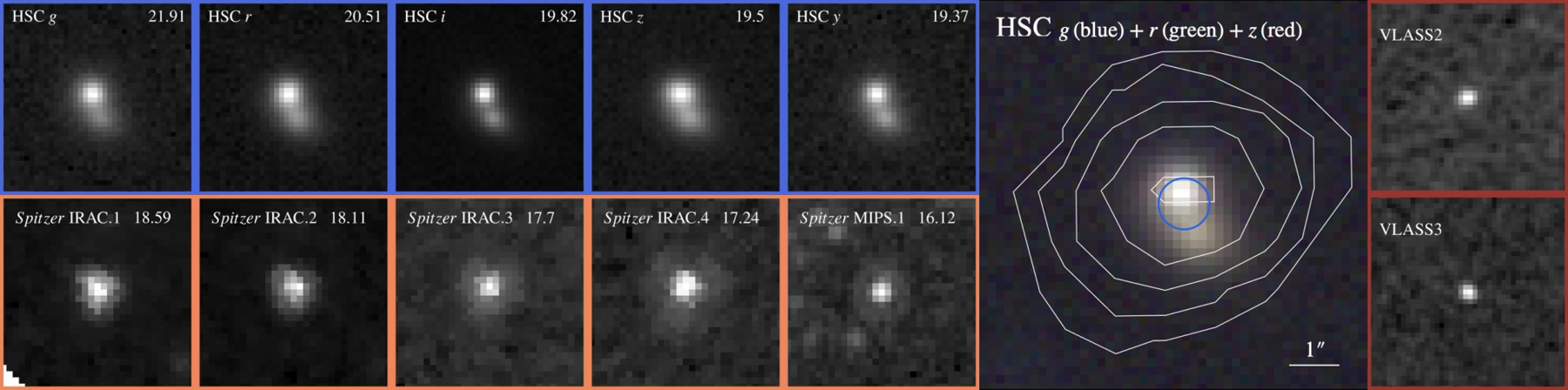
Figure 2 from A new sample of Little Red Dots at $z<0.45$ in DESI DR1: Broad Balmer lines, low ionization spectrum and no variability

2026-05-14 · 2605.14233v1 · Research note

A new sample of Little Red Dots at $z<0.45$ in DESI DR1: Broad Balmer lines, low ionization spectrum and no variability

Kevin Park, Alberto Torralba, Jorryt Matthee, et al.

A DESI DR1 line-selected search identifies eight compact z=0.20–0.44 LRD candidates with broad, steep-decrement Balmer emission, low-excitation spectra, and generally weak multi-year variability, extending detailed LRD tests to the nearby Universe.

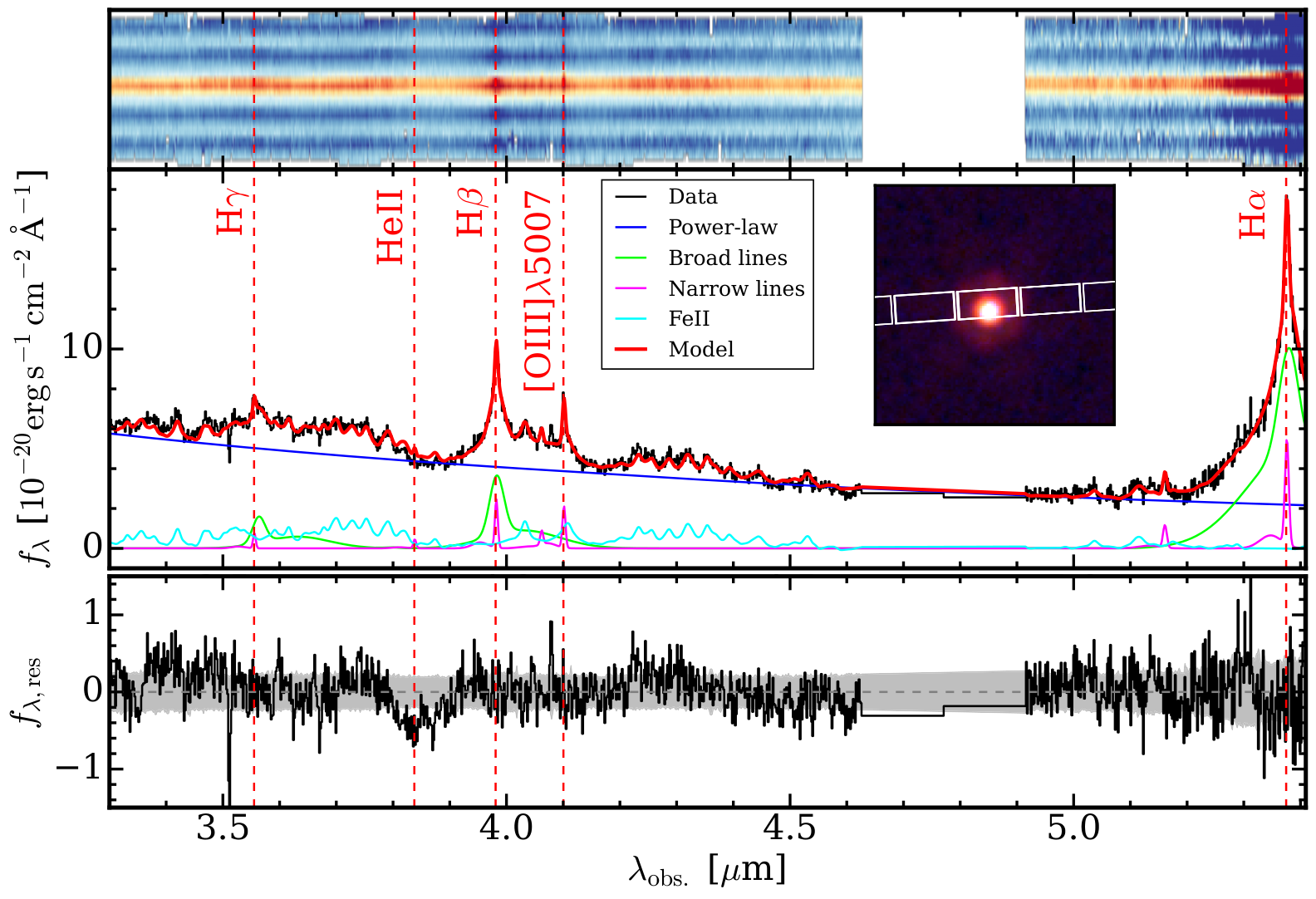
Figure 1 from JWST observations and a model for the extremely luminous obscured quasar W2246-0526 at z=4.6

2026-05-09 · 2605.09078v1 · Research note

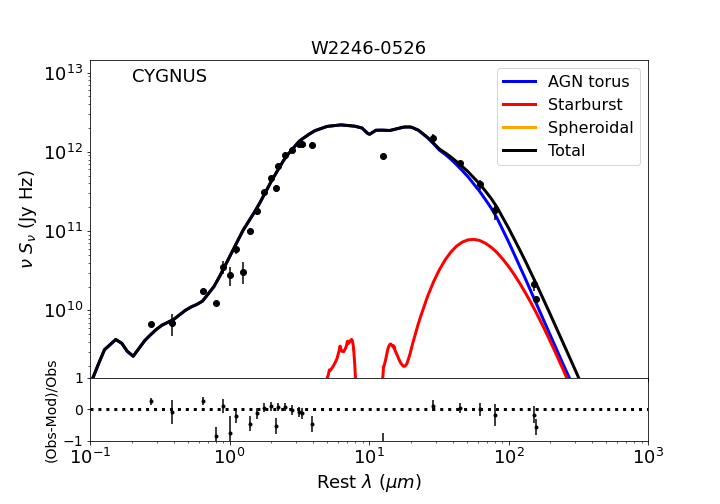
JWST observations and a model for the extremely luminous obscured quasar W2246-0526 at z=4.6

Charalambia Varnava, Andreas Efstathiou, Tanio Díaz-Santos, et al.

JWST/MIRI-MRS-informed SED fits to the single z=4.601 Hot DOG W2246-0526 favor an added hot-dust component interpreted as polar dust. This changes inferred AGN luminosity, but its geometry and physical association with an outflow remain model-dependent.

Figure 4 from Testing the BH$^*$ Model: a UV-to-Optical Spectral Fitting of The Cliff

2026-05-08 · 2605.07976v1 · Research note

Testing the BH$^*$ Model: a UV-to-Optical Spectral Fitting of The Cliff

Rosa M. Mérida, Marcin Sawicki, Gaia Gaspar, et al.

UV-to-optical fitting of one z=3.55 little red dot, The Cliff, admits a BH* envelope plus low-mass, dusty, metal-poor host. The result depends materially on Balmer-absorption and dust prescriptions, while AGN UV leakage remains unconstrained.

Figure 6 from A Changing-Look Seyfert Discovered by eROSITA Reveals a Two-Component Broad-Line Region

2026-05-08 · 2605.07965v1 · Research note

A Changing-Look Seyfert Discovered by eROSITA Reveals a Two-Component Broad-Line Region

Alex Markowitz, Mirko Krumpe, David Homan, et al.

eROSITA-triggered monitoring of HE 1237-2252/J1240−2309 links a changing-look transition to intrinsic accretion-rate recovery and an evolving two-component Balmer-line profile. A diskline-like component strengthens with UV flux, while the proposed corona/illumination mechanism remains interpretive.

Figure 4 from Resolving the Multiphase Outflow, Shock Signatures, and PAHs in the AGN-Starburst Composite ULIRG F10565+2448 with JWST MIRI/MRS

2026-05-04 · 2605.03016v1 · Research note

Resolving the Multiphase Outflow, Shock Signatures, and PAHs in the AGN-Starburst Composite ULIRG F10565+2448 with JWST MIRI/MRS

Kylie Yui Dan, Jerome Seebeck, Sylvain Veilleux, et al.

JWST/MIRI-MRS resolves a warm-H₂ outflow in the composite ULIRG F10565+2448: it is hotter than the disk but apparently sub-escape-speed, while a faster unresolved ionized component and localized shock candidates support multiphase feedback.

2026-05-04 · 2605.02663v1 · Research note

Jet-driven shocks and turbulence in radio-loud Active Galactic Nuclei observed with JWST MIRI/MRS

Rogemar A. Riffel, Gabriel L. Souza-Oliveira, Luis Colina, et al.

JWST/MIRI-MRS mapping of seven nearby radio-loud AGN links elevated warm-H2 excitation and broadened multiphase gas to radio-jet environments, including transverse regions. The authors interpret the correlations as predominantly jet-driven shocks, while recognizing source-dependent exceptions.

Figure 1 from A Rare Eddington-Limited, Heavily Obscured Low-Mass Active Galactic Nucleus Likely Triggered by a Galaxy Merger

2026-04-29 · 2604.26743v1 · Research note

A Rare Eddington-Limited, Heavily Obscured Low-Mass Active Galactic Nucleus Likely Triggered by a Galaxy Merger

Shouyi Wang, Fan Zou, Chang-Hao Chen, et al.

For the single $M_\star\sim10^{10}\,M_\odot$ host GAMA 376183, NuSTAR and multiwavelength data support a heavily obscured, rapidly accreting AGN in a disturbed system; the proposed merger-triggered starburst/accretion connection remains suggestive rather than demonstrated.

Figure 1 from The GlimmIr: Spectroscopic Variability in a z~7 LRD Indicates Rapid Changes in Both the Narrow and Broad Line Regions

2026-04-28 · 2604.25991v1 · Research note

The GlimmIr: Spectroscopic Variability in a z~7 LRD Indicates Rapid Changes in Both the Narrow and Broad Line Regions

Erini Lambrides, Taylor A. Hutchison, Rebecca L. Larson, et al.

Multi-epoch JWST/NIRSpec spectra of one z~7 little red dot show coordinated continuum, broad-Balmer, and [O III] changes over ~13 rest-frame days. If intrinsic, the variability ties at least some narrow-line gas to the central engine and disfavors complete dense-gas coverage.

Figure 5 from Decoupling the AGN outflow and star-forming disk kinematics in the nuclear region of NGC 7582 with JWST NIRSpec and MIRI/MRS

2026-04-27 · 2604.24892v1 · Research note

Decoupling the AGN outflow and star-forming disk kinematics in the nuclear region of NGC 7582 with JWST NIRSpec and MIRI/MRS

Oscar Veenema, Niranjan Thatte, Dimitra Rigopoulou, et al.

JWST IFU spectroscopy of NGC 7582 separates rotating circumnuclear-disk gas from an AGN bicone by ionisation potential and line-profile decomposition, finding distinct kinematic axes and broader outflow lines; mixed-ionisation tracers require two components.

2026-04-16 · 2604.14551v1 · Research note

Discovery of low-redshift analogues to "Little Red Dots" in DESI: A later evolutionary stage of compact LRDs?

Weiyu Ding, Xu Kong, Wei-Jian Guo, et al.

Five DESI DR1 sources at z=0.2–0.4 reproduce LRD-like V-shaped SEDs and broad Balmer lines, but their AGN-like line ratios and substantially larger hosts make an evolutionary connection to z>4 LRDs plausible rather than established.

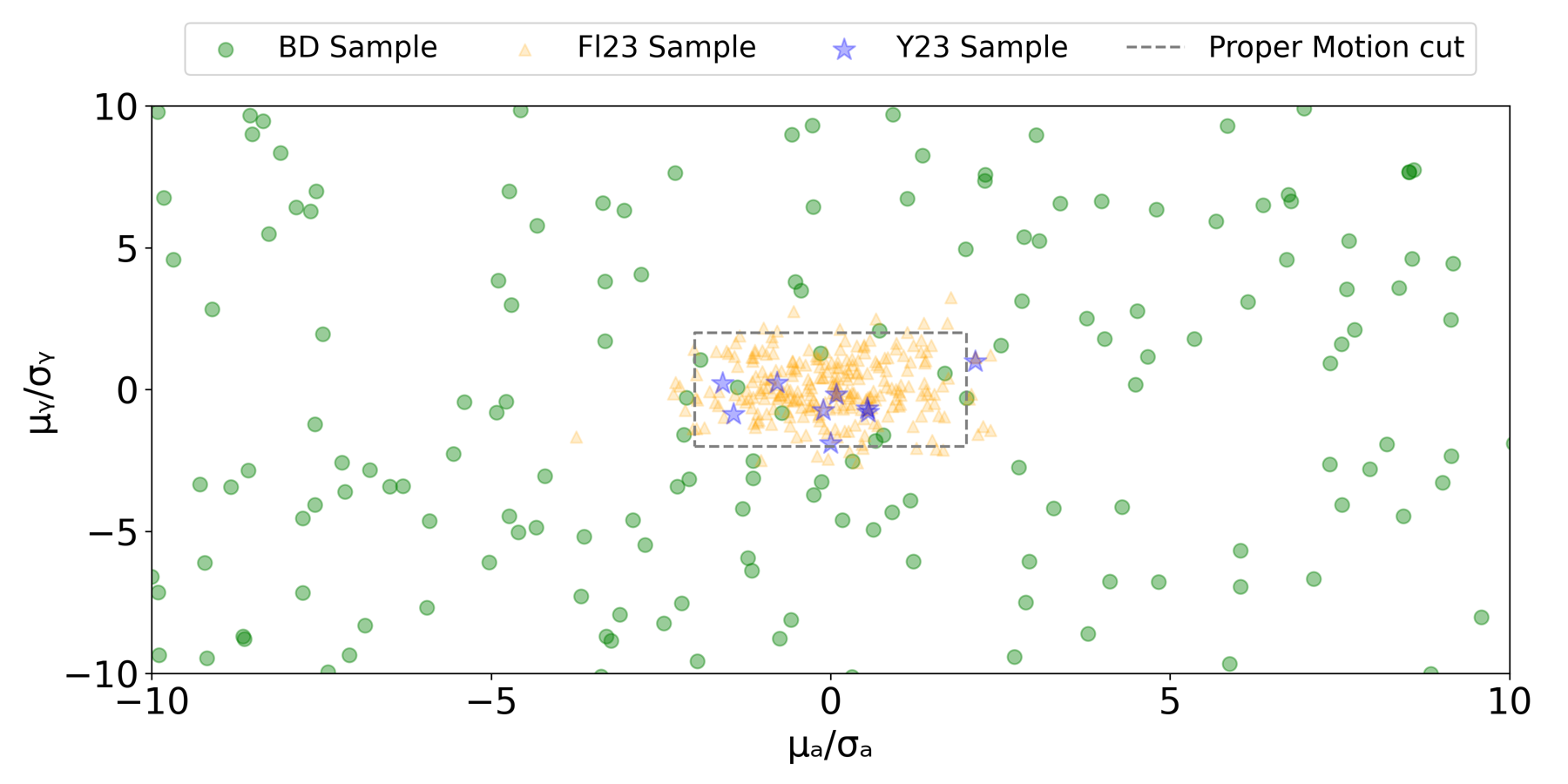
Figure 3 from 4MOST ChANGES: Catalog of high-redshift quasar candidates (4.5 < $z$ < 7) selected with SED fitting

2026-04-14 · 2604.13178v1 · Research note

4MOST ChANGES: Catalog of high-redshift quasar candidates (4.5 < $z$ < 7) selected with SED fitting

T. Mkrtchyan, C. Mazzucchelli, R. J. Assef, et al.

Using southern-sky multi-band photometry and quasar-versus-brown-dwarf SED fitting, the authors compile 6,104 z=4.5–7 quasar candidates. Three of six bright, visually screened follow-up targets are confirmed at z>5, but catalog-wide purity remains weakly constrained.

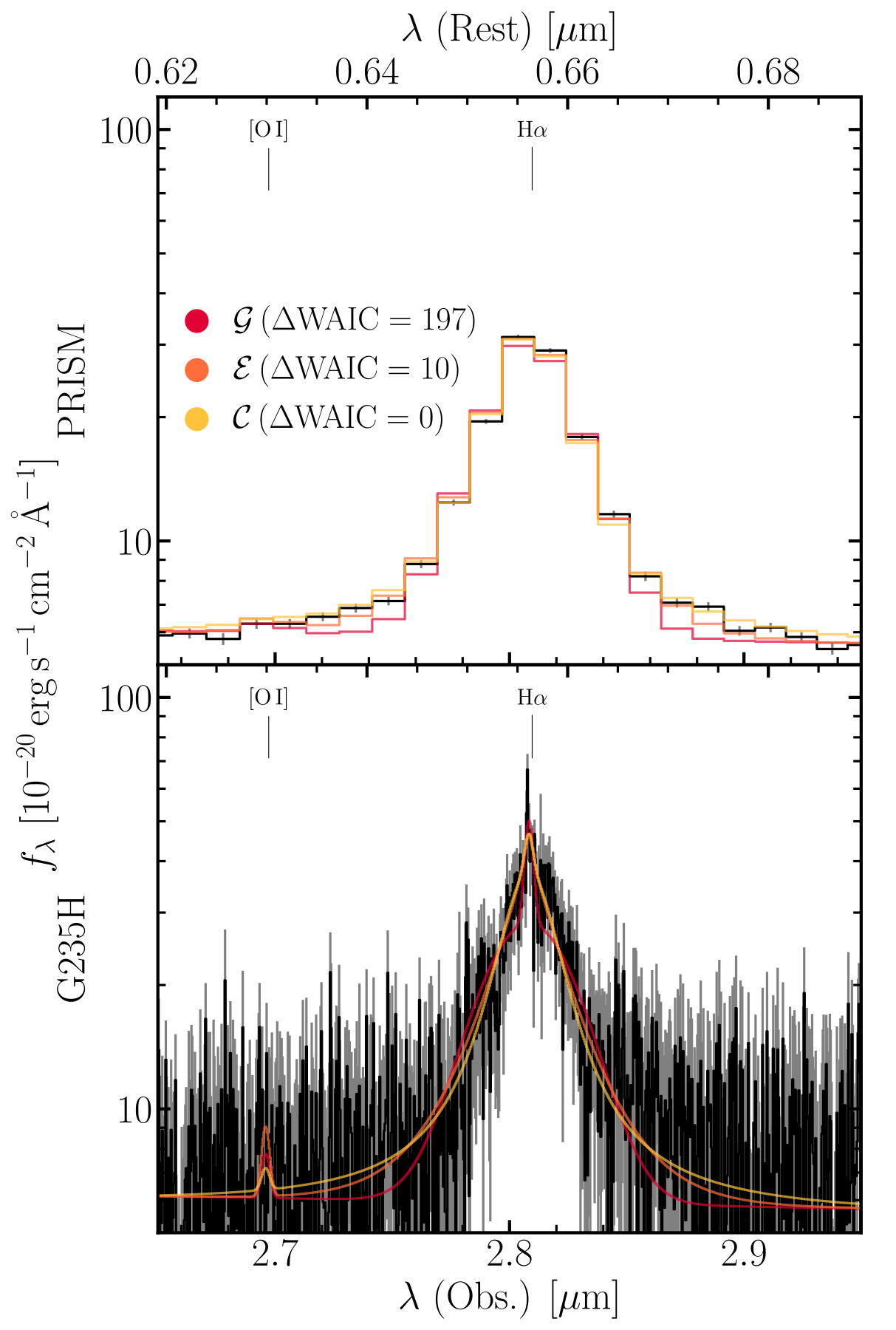
Figure 3 from How I Wonder What You Are -- JWST's Little Red Dots do not TWINKLE

2026-04-14 · 2604.13000v1 · Research note

How I Wonder What You Are -- JWST's Little Red Dots do not TWINKLE

Zhaoran Liu, Rohan P. Naidu, Amy Secunda, et al.

Across a complete Hα-flux-limited GOODS-N sample, 18 LRDs and nine other broad-Hα emitters show no detected continuum, line-flux, or line-shape variability over 139–220 rest-frame days, challenging their interpretation as ordinary broad-line AGN.

Figure 2 from Do little red dots really form a distinct class of astronomical objects?

2026-04-13 · 2604.11677v1 · Research note

Do little red dots really form a distinct class of astronomical objects?

Jean-Baptiste Billand, David Elbaz, Maximilien Franco, et al.

Across ∼48,000 photometric and ∼5,000 spectroscopic galaxies, the authors find LRD-like colour, compactness, and broad-Hα properties vary continuously, arguing that most LRDs are an extreme tail rather than a discrete class; only ∼3% show very strong Balmer breaks.

2026-04-10 · 2604.09177v1 · Research note

The Cliff: A Metal-Poor Little Red Dot Hosting an Overmassive Black Hole at $z = 3.55$

Lucy R. Ivey, Francesco D'Eugenio, Roberto Maiolino, et al.

JWST/NIRSpec-IFU spectroscopy of the single z=3.55 Little Red Dot The Cliff yields a very low narrow-line metallicity, Z=0.017±0.004 Z⊙, while broad Hβ-based virial estimates place its black hole above local host-scaling expectations.

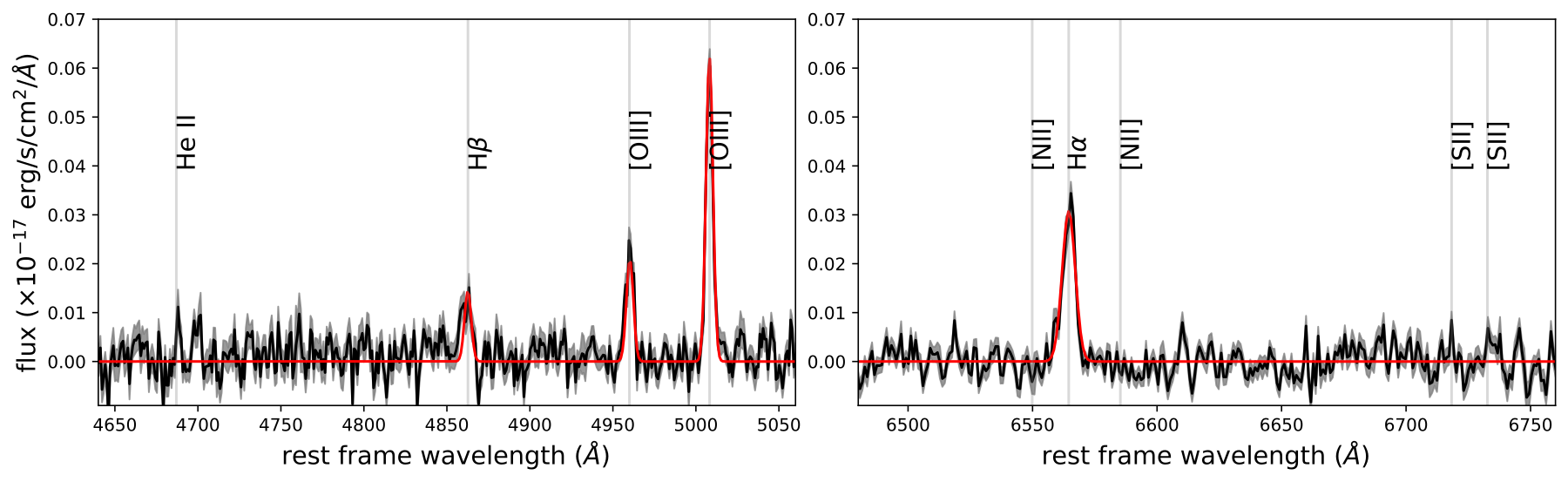
Figure 1 from GLIMPSED: Direct evidence for a fast AGN-driven outflow from a z=6.64 Little Red Dot host galaxy

2026-04-09 · 2604.08687v1 · Research note

GLIMPSED: Direct evidence for a fast AGN-driven outflow from a z=6.64 Little Red Dot host galaxy

Damien Korber, Rui Marques-Chaves, Daniel Schaerer, et al.

Medium-resolution JWST/NIRSpec data spatially separate an LRD-like AGN and its host at z=6.64, revealing exceptionally broad ionised gas consistent with AGN driving but a low inferred mass-loading factor and therefore limited immediate star-formation impact.

2026-04-04 · 2604.03563v1 · Research note

SPURS: Evidence for Clumpy Neutral Envelopes and Ionized IGM Surrounding Little Red Dots in Abell 2744 from Ultra-Deep Rest-UV Spectroscopy

Mengtao Tang, Daniel P. Stark, Charlotte A. Mason, et al.

Ultra-deep JWST/NIRSpec spectra of two Abell 2744 little red dots resolve a broad Lyα component in z=7.0364 Abell2744-QSO1. The authors argue its comparatively modest shift favors a clumpy, rather than uniform, neutral envelope and an ionized local environment.

2026-04-03 · 2604.03370v1 · Research note

Holes in the BH$^\star$? AGN signatures in the FUV spectrum of a black-hole dominated Little Red Dot at $z=7.04$

Xihan Ji, Gabriele Pezzulli, Francesco D'Eugenio, et al.

JWST/NIRSpec FUV spectroscopy of the single z=7.04 LRD Abell2744-QSO1 resolves extended narrow and unresolved broad Lyα components. The authors interpret broad Lyα/Balmer ratios as evidence for lower-column-density sightlines through otherwise dense, clumpy BLR-scale gas.

2026-04-03 · 2604.02726v1 · Research note

A Five-Stage Framework for Slitless Grism Spectra: Demonstrated on Euclid Q1 Strong-Lens Candidates and Ported to CEERS NIRCam

R. Tata

A five-stage extraction and deblending pipeline yields reliable slitless-spectroscopic measurements for 461 Euclid Q1 lens candidates, including 178 source–deflector redshift pairs. Dual grism orientations strengthen validation, but incomplete deflector spectroscopy and unmeasured real-data deblending performance constrain inference.

Figure 1 from A Black Hole Star at Cosmic Noon: Extreme Balmer break, photospheric continuum, and broad absorption by thick winds in a Little Red Dot at z=1.7

2026-03-30 · 2603.28335v1 · Research note

A Black Hole Star at Cosmic Noon: Extreme Balmer break, photospheric continuum, and broad absorption by thick winds in a Little Red Dot at z=1.7

Alberto Torralba, Jorryt Matthee, Andrea Weibel, et al.

PAN-BH*-1 is a single z=1.731 Little Red Dot at cosmic noon with an extreme Balmer break, compact red continuum, and broad Hα absorption. Its data are consistent with—but do not establish—a thick, rotating photospheric disk wind.

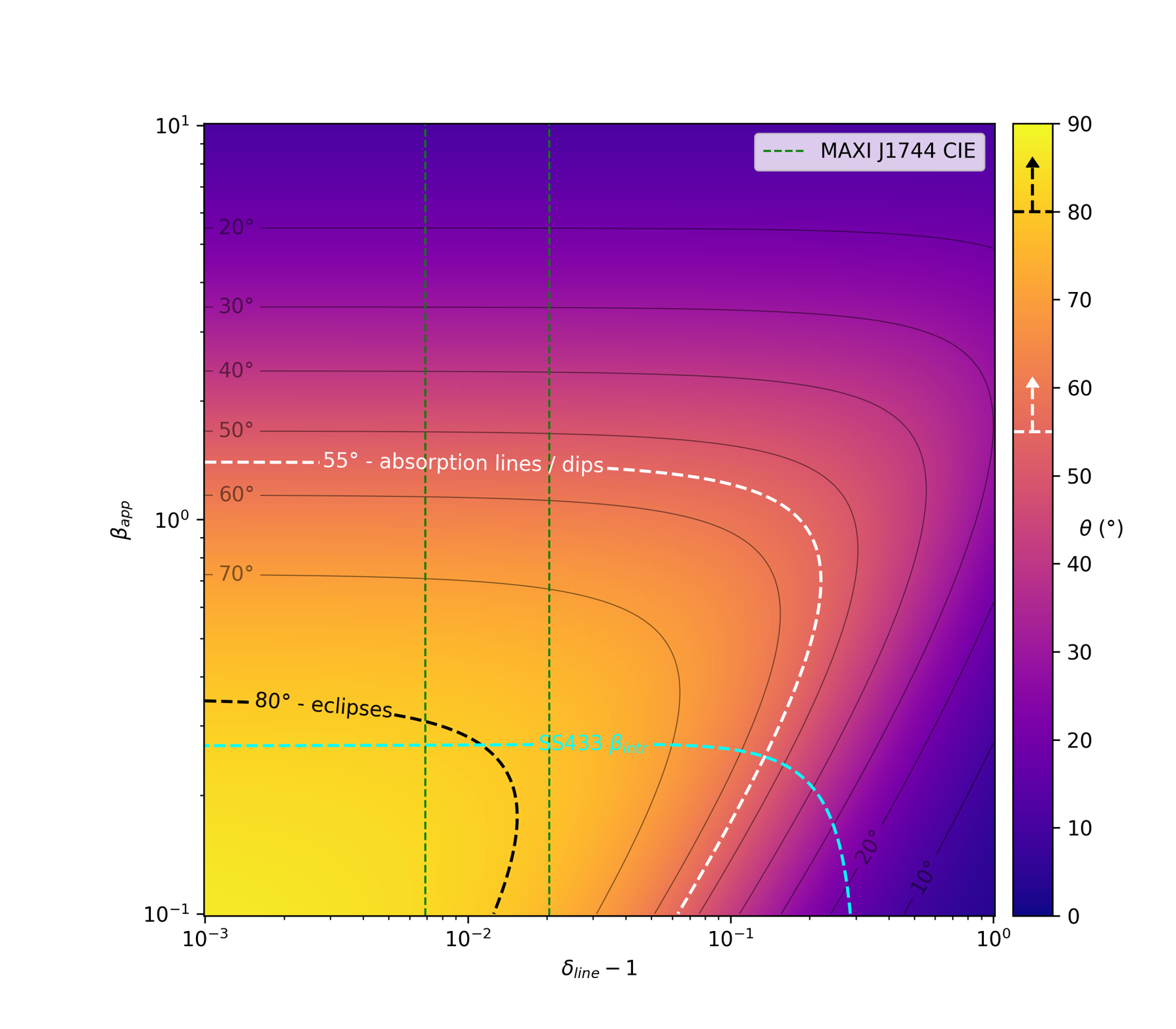
Figure 13 from XRISM spectroscopy of a crowded Galactic center region -- II. Narrow emission lines in the Black Hole candidate MAXI J1744-294/Swift J174540.2-290037

2026-03-28 · 2603.27235v1 · Research note

XRISM spectroscopy of a crowded Galactic center region -- II. Narrow emission lines in the Black Hole candidate MAXI J1744-294/Swift J174540.2-290037

Maxime Parra, Shifra Mandel, Kai Matsunaga, et al.

XRISM Resolve spectroscopy of the crowded Galactic-centre field isolates narrow iron-line emission attributed to the black-hole candidate MAXI J1744-294, including static highly ionized gas and atypical features consistent with blueshifted material, though plasma origin and background systematics remain unresolved.

2026-03-23 · 2603.22425v1 · Research note

A large population of over-massive black hole quasars at z=0.3-0.8 revealed by eROSITA

Johannes Buchner, Isabelle Gauger, Qiaoya Wu, et al.

In a 140 deg² eROSITA field, the authors identify eight z=0.3–0.8/1 quasars with inferred M•/M⋆>5%. Their abundance supports recurrent black-hole/host offsets among rapidly accreting AGN, but single-epoch masses and often upper-limited host masses temper the conclusion.

2026-03-18 · 2603.17667v1 · Research note

The Engine and its Flows: Little Red Dot spectra are shaped by the column densities of their gas envelopes

Jorryt Matthee, Alberto Torralba, Gabriele Pezzulli, et al.

In 18 z≈3–7 broad-Hα emitters, Balmer cores progress from narrow emission to P-Cygni-like and absorption-dominated profiles as UV–optical colour reddens. The authors interpret this as changing envelope column density and optical depth, not purely dynamical line broadening.

Figure 1 from GATOS N: The first direct kinematic evidence of dusty outflows from AGN via PAH kinematics of local Seyfert galaxies with JWST

2026-03-12 · 2603.12200v1 · Research note

GATOS N: The first direct kinematic evidence of dusty outflows from AGN via PAH kinematics of local Seyfert galaxies with JWST

Fergus R. Donnan, Ismael García-Bernete, Dimitra Rigopoulou, et al.

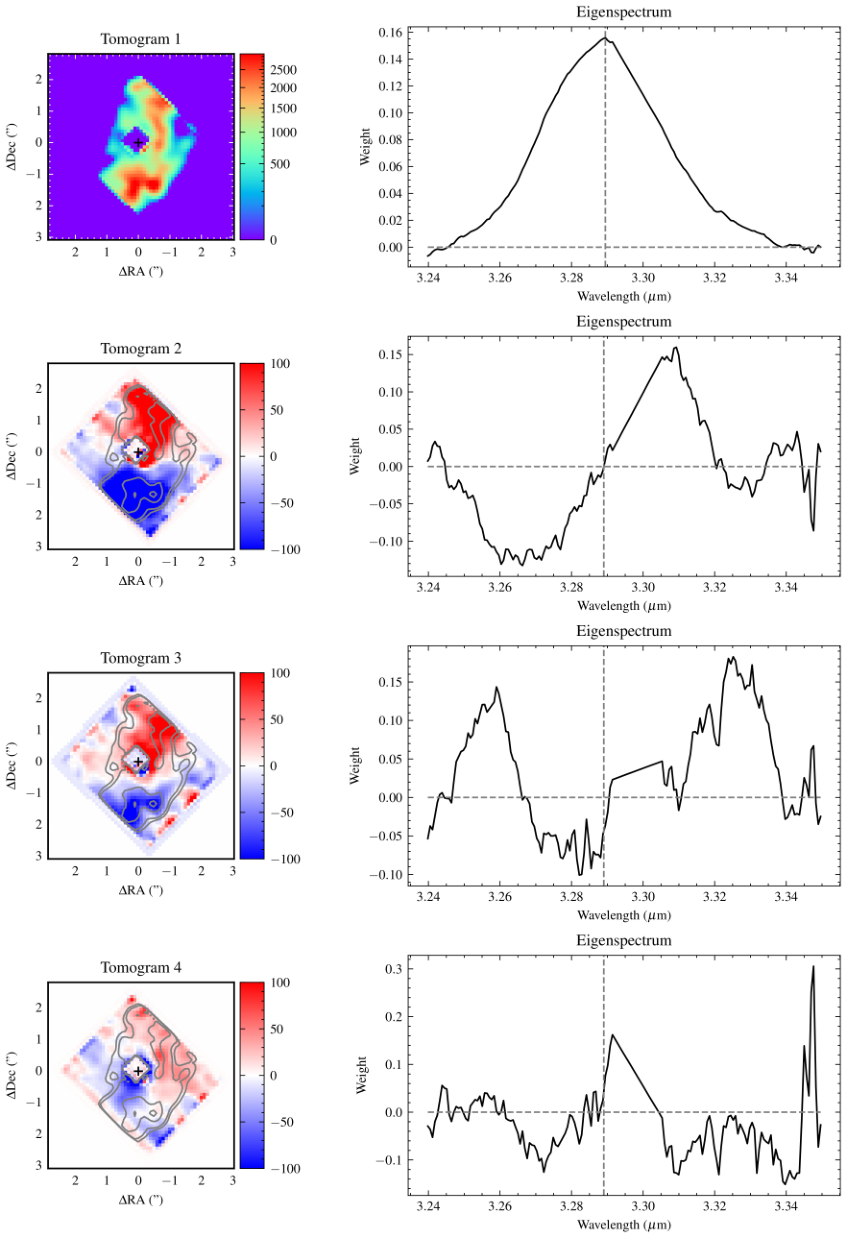
JWST IFU observations of 10 local Seyferts use PCA tomography of broad PAH bands to map dust-phase kinematics. The authors report neutral, larger PAHs sharing molecular and ionised-outflow signatures in NGC 5728 and NGC 7582, while 3.3 μm PAHs trace disks.

2026-03-04 · 2603.04358v1 · Research note

A Selection Aware View of Black Hole-Galaxy Coevolution at High Redshift

Francesco Ziparo, Stefano Carniani, Simona Gallerani, et al.

Forward-modeling broad-Hα selection in a JADES broad-line AGN sample at z≳4 yields an M_BH–M★ relation consistent in mean with local relations but with 0.63 dex intrinsic scatter, implying diverse early black-hole growth histories.

Figure 2 from Synthetic Spectral Library of Optically Thick Atmospheres for Little Red Dots

2026-03-02 · 2603.02317v1 · Research note

Synthetic Spectral Library of Optically Thick Atmospheres for Little Red Dots

Hanpu Liu, Yan-Fei Jiang, Eliot Quataert, et al.

A new LRD-tailored atmosphere library finds that The Egg’s continuum curvature, weak 1.6-μm H− kink, and Ca II triplet jointly favor an exceptionally dilute photosphere, challenging hydrostatic interpretations and providing testable near-IR spectral diagnostics.

Figure 2 from Extreme Emission Line Galaxies in CEERS Are Powered by Star Formation, not AGN

2026-02-26 · 2602.23310v1 · Research note

Extreme Emission Line Galaxies in CEERS Are Powered by Star Formation, not AGN

Kelcey Davis, Madisyn Brooks, Jonathan R. Trump, et al.

JWST/NIRSpec follow-up of CEERS extreme emission-line galaxies finds broad-line AGN contamination, but for spectroscopically extreme sources the narrow Hα component dominates. The authors therefore attribute the most extreme nebular emission primarily to young star formation, not AGN.

2026-02-23 · 2602.20247v1 · Research note

Little Red Dots: One Photometric Tag Concealing Diverse Spectroscopic Flavors of Massive Star Formation and Black Hole Activity

Pablo G. Pérez-González, Guillermo Barro, Stefano Carniani, et al.

A 249-object JWST spectroscopic compilation argues that photometrically selected Little Red Dots are spectroscopically heterogeneous composites of accreting black holes and young stars, but its mass, duty-cycle, and Wolf–Rayet interpretations remain model-dependent.

2026-02-13 · 2602.12548v1 · Research note

The Structure and Evolution of LRDs: Insights from JWST NIRSpec Medium and High Resolution Spectroscopy at $z\sim4$

Yuxuan Pang, Xin Wang, Cheng Cheng, et al.

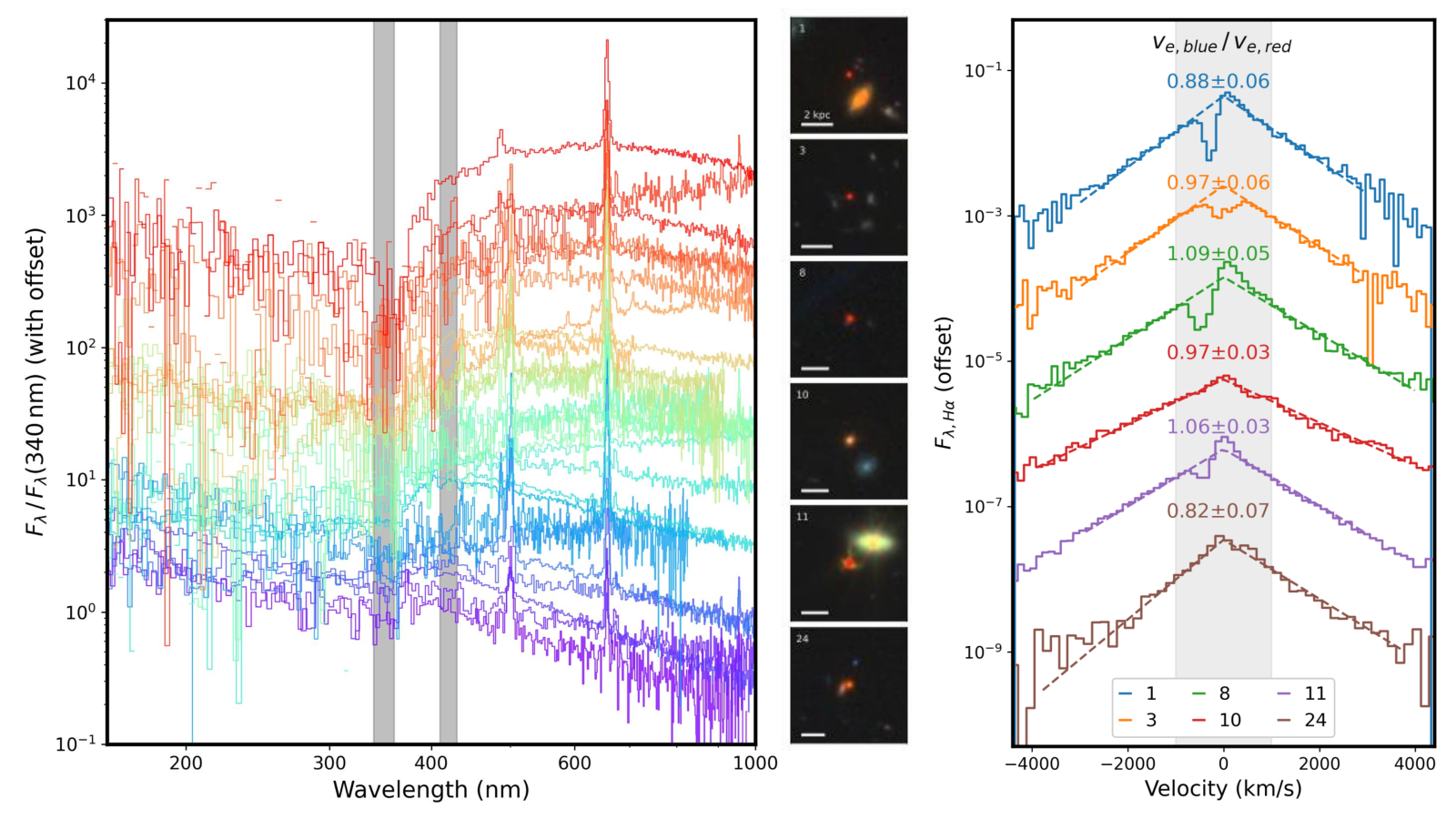
Medium/high-resolution JWST/NIRSpec spectra of 11 z~4 little red dots separate broad and narrow Balmer emission, linking broad Hα to the optical continuum while [O III] tracks UV light. The authors infer rapidly accreting 10^6–10^8 M⊙ black holes and propose a clumpy envelope.

Figure 1 from Direct pathway to the Early Supermassive Black Holes: A Red Super-Eddington Quasar in a Massive Starburst Host at $z=7.2$

2026-02-12 · 2602.12325v1 · Research note

Direct pathway to the Early Supermassive Black Holes: A Red Super-Eddington Quasar in a Massive Starburst Host at $z=7.2$

Qinyue Fei, Seiji Fujimoto, Gabriel Brammer, et al.

GNz7q at z=7.1899 combines a 10^7.55-M⊙, apparently super-Eddington black hole with a massive, rapidly star-forming host. The authors argue that its near-local BH-to-stellar mass ratio makes it a plausible progenitor channel for luminous z≈6 quasars.

2026-02-04 · 2602.04974v1 · Research note

Clustering of z~6.6 Quasars and [O III] Emitters Constrains Host Halo Masses and Duty Cycles in 25 ASPIRE Fields

Jiamu Huang, Joseph Hennawi, Elia Pizzati, et al.

JWST/ASPIRE clustering across 25 z≈6.6 quasar fields associates UV-bright quasars with substantially more massive minimum host halos than [O III] emitters, but the inferred ≈Myr quasar lifetime has a highly asymmetric, large uncertainty.

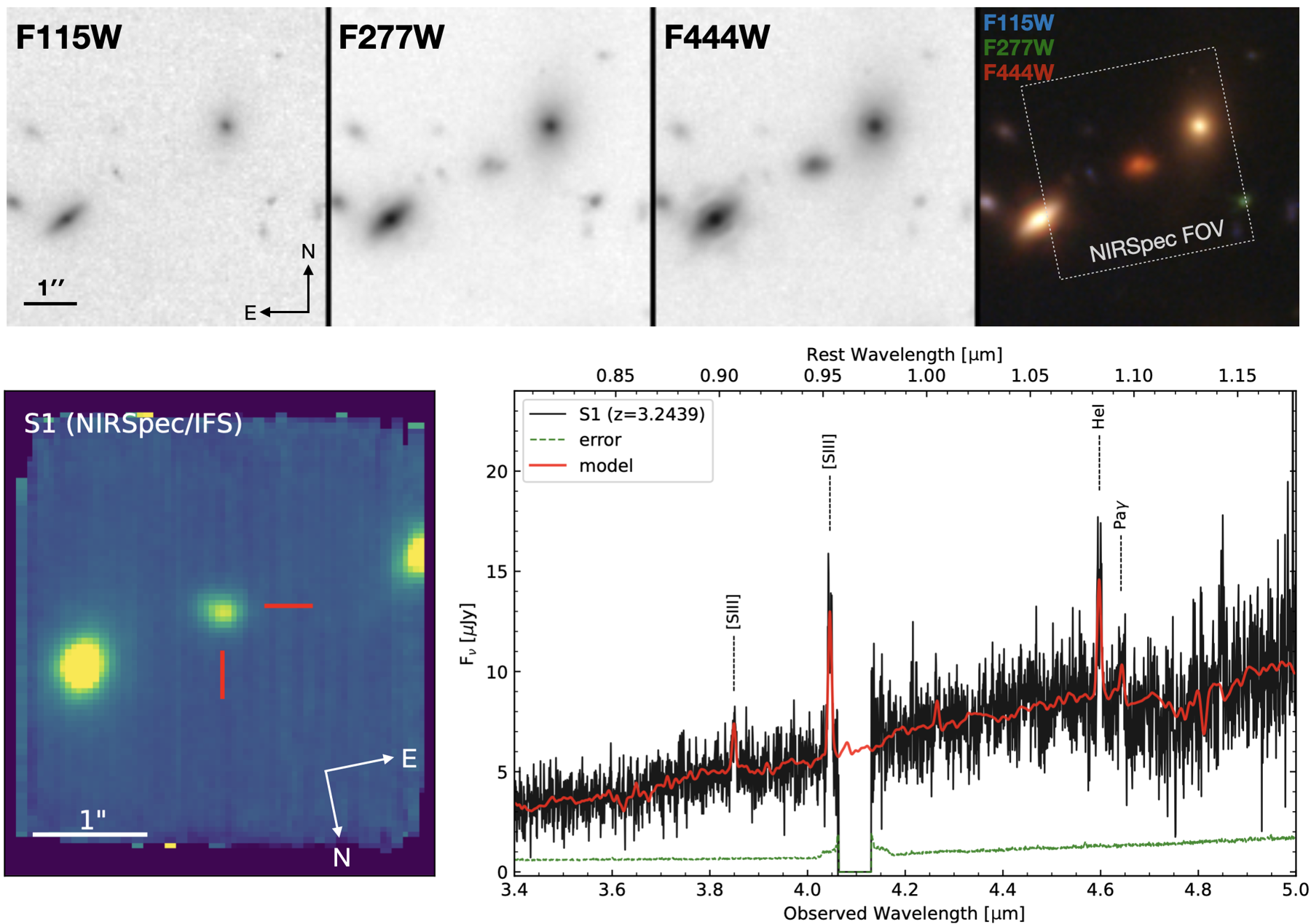
Figure 1 from From Grism to IFU: Revising the Redshift and Nature of the Massive Dusty Galaxy S1 with JWST and ALMA

2026-02-03 · 2602.03030v1 · Research note

From Grism to IFU: Revising the Redshift and Nature of the Massive Dusty Galaxy S1 with JWST and ALMA

Mengyuan Xiao, Longji Bing, Gabriel Brammer, et al.

Multi-line JWST/NIRSpec IFU spectroscopy moves dusty massive galaxy S1 from z=5.58 to z=3.2439, tracing the earlier single-line grism assignment to spectral overlap. ALMA continuum and revised SED fitting instead describe a compact, obscured, massive star-forming galaxy.

2026-01-29 · 2601.22214v1 · Research note

The Little Blue and Red Dots Rosetta Stones: Non-Gaussian broad lines, hot dust, and X-ray weakness

M. Brazzini, F. D'Eugenio, R. Maiolino, et al.

A two-object JWST comparison finds that a prototypical Little Red Dot and Little Blue Dot share broad, non-Gaussian Balmer emission, weak hot dust, and X-ray weakness, but differ sharply in helium emission and Balmer absorption.

2026-01-28 · 2601.20929v1 · Research note

Little Red Dot $-$ Host Galaxy $=$ Black Hole Star: A Gas-Enshrouded Heart at the Center of Every Little Red Dot

Wendy Q. Sun, Rohan P. Naidu, Jorryt Matthee, et al.

Using empirical [O III]-matched host subtraction for 98 JWST/NIRSpec LRDs, the authors infer a red, dense-envelope central component that dominates rest-optical light. The conclusion depends critically on assigning all [O III] to the host and on stack-based decomposition.

Figure 1 from Inside the cocoon: a comprehensive explanation of the spectra of Little Red Dots

2026-01-26 · 2601.18864v1 · Research note

Inside the cocoon: a comprehensive explanation of the spectra of Little Red Dots

A. Sneppen, D. Watson, J. H. Matthews, et al.

Self-consistent radiative-transfer modelling of z>3 LRD-like JWST spectra supports accreting ∼10^6 M⊙ black holes embedded in low-dust, dense ionized cocoons. The authors infer mixed inflow/outflow geometry and reproduce continuum breaks, absorption, and electron-scattering line wings.

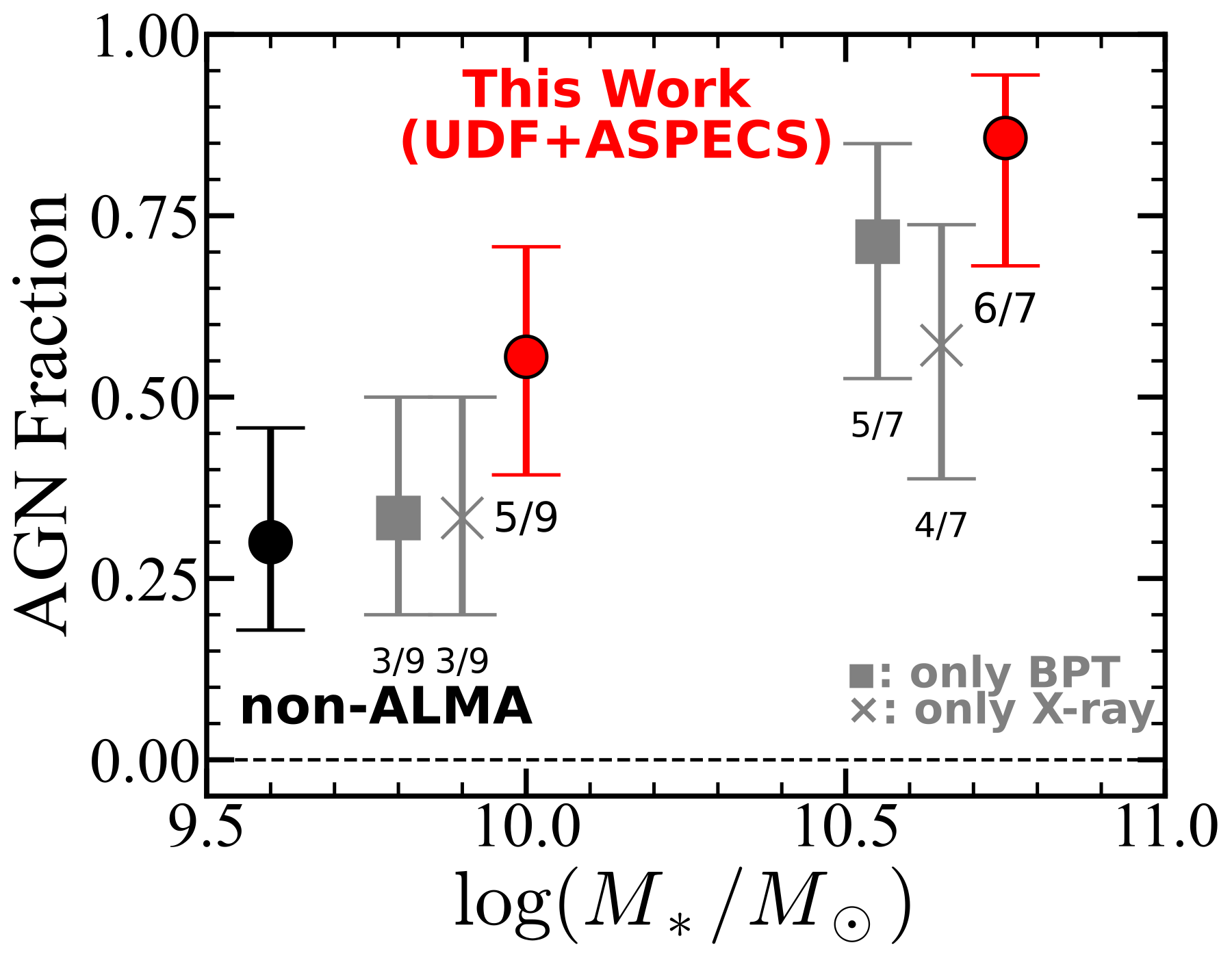
Figure 10 from JWST Spectroscopic Census of ALMA Faint Submillimeter Galaxies in the Hubble Ultra Deep Field

2026-01-26 · 2601.18149v1 · Research note

JWST Spectroscopic Census of ALMA Faint Submillimeter Galaxies in the Hubble Ultra Deep Field

Tomokazu Kiyota, Masami Ouchi, Daisuke Iono, et al.

JWST/NIRSpec spectroscopy of 16 ALMA-selected HUDF faint SMGs finds dusty, massive z=1–4 galaxies with mostly obscured AGN classifications, yet star-formation, metallicity, and bulk-ISM properties broadly consistent with comparable high-redshift star-forming populations.

2026-01-23 · 2601.16977v1 · Research note

ReveaLLAGN 1: JWST Emission-Line Spectra Reveal Low-Luminosity AGN with UV-Deficient SEDs and Warm Molecular Gas

Kameron Goold, Anil Seth, Mallory Molina, et al.

JWST NIRSpec/MIRI nuclear spectra of eight LLAGN plus Cen A associate decreasing [Ne V]-to-X-ray output below log(Lbol/LEdd)≈−3.5 with a UV-deficient ionizing SED, while finding warmer rotational H2 and predominantly nuclear silicate emission.

2026-01-23 · 2601.16710v1 · Research note

One H2 molecule per ten million H-atoms reveals sub-pc scale cold overdensities at z~4

P. Noterdaeme, S. Balashev, T. Berg, et al.

R≈120,000 ESPRESSO spectroscopy resolves exceptionally weak H2 at z=4.24 into cold, dense and warmer components. The authors interpret the narrow component as a ~0.01-pc atomic-gas overdensity, demonstrating that trace H2 can reveal otherwise elusive small-scale structure.

2026-01-16 · 2601.11466v1 · Research note

Pseudo Little Red Dot: an Active Black Hole Embedded in a Dense and Dusty, Metal-Poor Starburst Galaxy at z=5.96

Karina I. Caputi, Ryan A. Cooper, Pierluigi Rinaldi, et al.

JWST spectroscopy identifies a lensed z=5.96 “pseudo-LRD” whose red optical colour is Hα-line driven, yet whose broad Hα supports a ∼3×10^6 M⊙ black hole embedded in a dusty, dense, very metal-poor starburst.

2026-01-16 · 2601.11125v1 · Research note

Discovery of a gas-enshrouded broad-line AGN at z $\sim$ 7

Qianqiao Zhou, Xin Wang, Hang Zhou, et al.

JWST/HST observations of the lensed z≈6.87 galaxy A2744-z7DLA reveal damped Lyα absorption plus a statistically preferred broad Hα component, supporting a gas-enshrouded broad-line AGN interpretation while its UV–optical continuum remains predominantly stellar.

2026-01-15 · 2601.10573v1 · Research note

Origins of the UV continuum and Balmer emission lines in Little Red Dots: observational validation of dense gas envelope models enshrouding the AGN

Yoshihisa Asada, Kohei Inayoshi, Qinyue Fei, et al.

Across 28 z=5–7.2 LRDs, UV-to-Hα behavior resembles young starbursts rather than unobscured AGN, while nine blue broad-line controls resemble Type 1 AGN. The authors therefore favor opaque black-hole envelopes, but the correlations do not uniquely establish the ionizing mechanism.

2026-01-13 · 2601.08212v1 · Research note

Diverse Origins of Broad H$α$ Lines in Heavily Obscured AGNs Revealed by Multi-epoch Spectroscopy

Shoichiro Mizukoshi, Takeo Minezaki, Subaru Ubukata, et al.

Five-epoch spectroscopy of three AGNs with A_V>50 mag finds broad-Hα behavior is not uniform: Mrk 268 varies at 4.3σ, consistent with direct BLR emission, whereas MCG -3-34-64 and UGC 5101 favor outflow and/or scattering contributions.

2026-01-12 · 2601.07990v1 · Research note

Evidence of Feedback Effects in Low-luminosity Active Galactic Nuclei Revealed by JWST Spectroscopy

Lulu Zhang, Chris Packham, Erin K. S. Hicks, et al.

JWST 3–28 μm nuclear spectroscopy of four low-luminosity AGN associates weak high-ionization emission, shock-like line ratios, altered PAH populations, and non-thermal H₂ excitation with feedback, while leaving the proposed jet connection indirect.

2026-01-09 · 2601.06255v1 · Research note

GA-NIFS: high prevalence of dusty and metal-enriched outflows in massive and luminous star-forming galaxies at $z\sim3-9$

B. Rodríguez Del Pino, S. Arribas, M. Perna, et al.

JWST/NIRSpec IFU data identify ionized-outflow signatures in 14 of 40 regions of massive, non-AGN star-forming systems at z≈3–9. The authors infer dusty, metal-enriched but gravitationally retained gas, implying redistribution rather than efficient ejective feedback.

2025-12-20 · 2512.18421v1 · Research note

The evolution of obscured AGN across cosmic time -- A large quasar survey for the 2040s

Tanya Urrutia, Darshan Kakkad, Paula Sánchez-Sáez, et al.

This is a survey proposal, not a new AGN measurement: it argues that repeat optical MOS spectroscopy of >50 million multi-selected candidates to z~6.5 could quantify obscuration demographics while exposing selection biases among obscured populations.

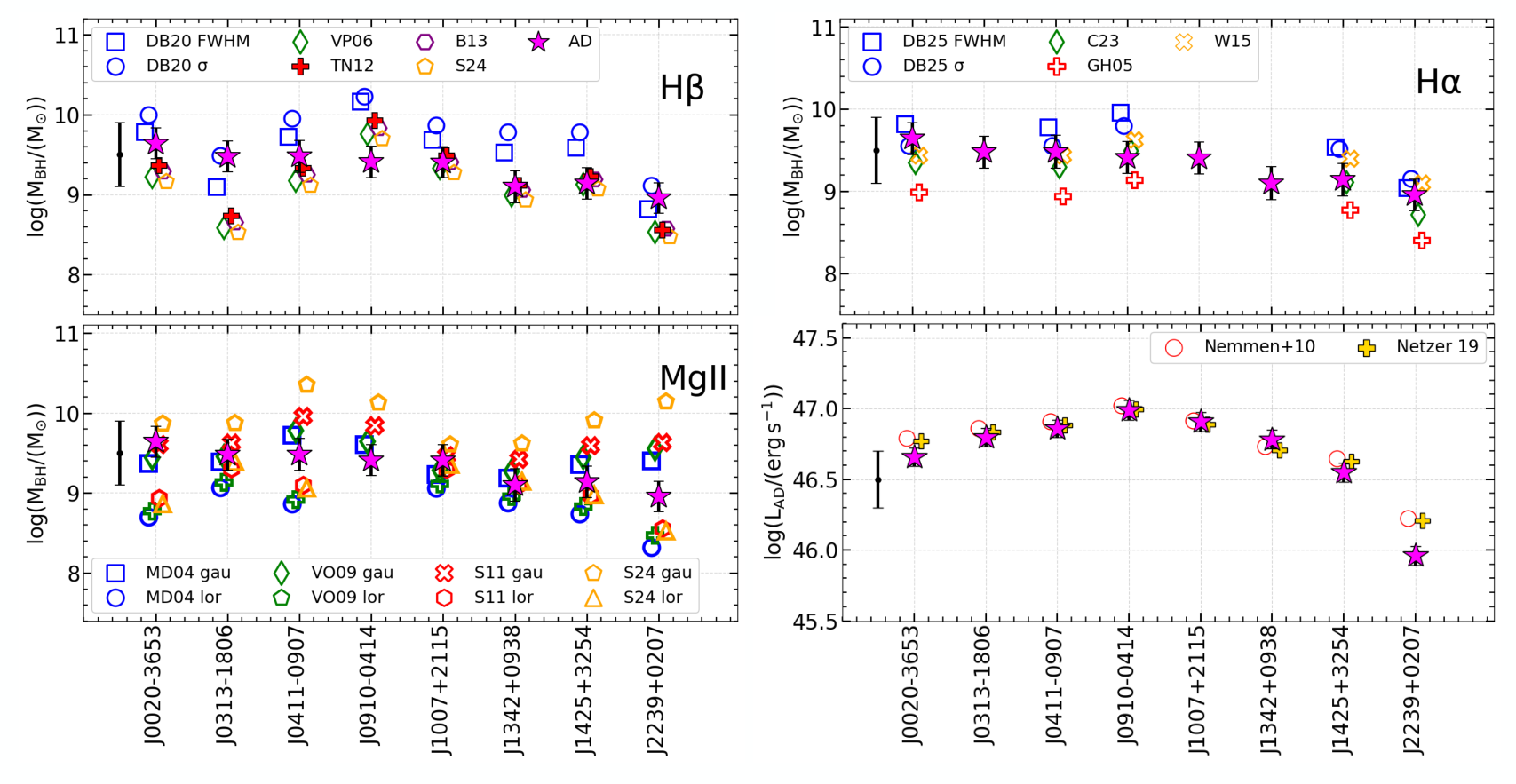
Figure 4 from The accretion of quasars at the epoch of reionisation: $JWST$ catches the primeval monsters slowly feasting

2025-12-18 · 2512.16981v1 · Research note

The accretion of quasars at the epoch of reionisation: $JWST$ catches the primeval monsters slowly feasting

B. Trefoloni, E. Nardini, S. Carniani, et al.

JWST/NIRSpec disc fits for eight luminous z≥5.9 quasars yield a sub-Eddington distribution, ⟨log λEdd⟩=−0.86. The authors argue that self-consistent disc luminosities and masses reduce apparent super-Eddington incidence relative to conventional single-epoch estimates.

Figure 1 from Shedding the envelope: JWST reveals a kiloparsec-scale [OIII]-weak Balmer shell around a z=7.64 quasar

2025-12-17 · 2512.15881v1 · Research note

Shedding the envelope: JWST reveals a kiloparsec-scale [OIII]-weak Balmer shell around a z=7.64 quasar

Julien Wolf, Eduardo Bañados, Xiaohui Fan, et al.

JWST/NIRSpec IFU data reveal Hβ emission to ~1.8 kpc around the z=7.64 quasar J0313−1806 but no significant [O III]. The authors favor dense, clumpy fossil-outflow gas, while the single-object data leave its geometry and evolutionary interpretation uncertain.

Figure 1 from From "The Cliff" to "Virgil": Mapping the Spectral Diversity of Little Red Dots with JWST/NIRSpec

2025-12-17 · 2512.15853v1 · Research note

From "The Cliff" to "Virgil": Mapping the Spectral Diversity of Little Red Dots with JWST/NIRSpec

Guillermo Barro, Pablo G. Perez-Gonzalez, Dale Kocevski, et al.

JWST/NIRSpec spectroscopy of 118 little red dots reveals a continuum–line sequence: red, curved Balmer-break SEDs give way to bluer, power-law-like systems. A galaxy plus enshrouded-black-hole model can reproduce the trend, but its physical decomposition remains non-unique.

2025-12-16 · 2512.14844v1

Doubling NIRSpec/IFS capability to calibrate the single epoch black hole mass relation at high redshift

Eleonora Parlanti, Bartolomeo Trefoloni, Stefano Carniani, et al.

Presents a NIRSpec/IFU reduction that exploits the red signal on NRS2 for medium‑resolution gratings, effectively doubling the usable wavelength coverage and recovering Hα beyond the nominal range; the authors also note the exposure‑time trade‑off when using adjacent dispersers. Applied to five z≈2 quasars with reverberation‑mapped MBH, the extended cubes enable joint Hβ–Hα measurements at R≈1000. Hβ‑based single‑epoch masses best match RM, while Hα recipes show ≈0.5 dex larger scatter; for the least‑massive, high‑λEdd object (MBH,RM≈10^7.5 M⊙, λEdd=0.8) all SE estimators overpredict by ~1 dex, suggesting a bias at high accretion. The work delivers the first high‑z SE calibrations from Hβ and Hα for the newfound early‑BH population, with uncertainties still limited by sample size.

2025-12-14 · 2512.12509v1 · Research note

THRILS -- The High-(Redshift+Ionization) Line Search: Program Description & Redshift Catalog

Taylor A. Hutchison, Rebecca L. Larson, Pablo Arrabal Haro, et al.

THRILS delivers deep JWST/NIRSpec G395M spectroscopy in two pointings, yielding 89 measured redshifts and empirical magnitude thresholds. Its >8-hour integrations expose faint lines inaccessible to shallower EGS spectroscopy, enabling targeted follow-up rather than population-level physical conclusions.